spacestr

🔔 This profile hasn't been claimed yet. If this is your Nostr profile, you can claim it.

Edit
TabletopNotes
Member since: 2026-10-15
TabletopNotes
TabletopNotes 1h

What Death Teaches Us About Systems Systemically-endorsed behavior. It’s what happens when the way we’re told to do things becomes so ingrained that doing those things that particular way becomes second nature. Raising your hand if you have a question, for example. We’re taught to do it in school. Rewarded when we do. Punished when we don’t. Eventually, if we need to ask something in a group setting, we unconsciously lift our hand to politely grab everyone’s attention. In roleplaying games, the system that is endorsing the behavior is more overt. Despite the adage that “anything is possible in a roleplaying game,” there’s a literal set of rules dictating how our characters can act. By extension, that limits the choices we, as players, end up making. Even if you’re punk AF and rebel, pushing your GM to house rule your idea, you’re still reacting to a rule or lack thereof in the system. Eventually, all of those choices we make at the table come together to create our story, and that story is influenced by the game. Ang, Jared, and I talked about this last week during GnomeStew No. 248 – What the System Wants. As I was prepping to record, there was one particular rule that kept nagging at my brain. A mechanic that, like dice, is so core — if not central — to so many systems that its absence is worthy of mention whenever someone describes the game: Death. The only thing more sure than taxes. The one thing guaranteed to come for us all. And here, on the cusp between October and November, as the northern hemisphere locks itself away for the long dark winter, Death creeps into our minds, makes itself a cup of tea, and takes up residence for a span. But if we examine the way our games handle death, we can learn a lot more about how the game wants you to play it. The influence it’s exerting over your stories, and how to harness that knowledge to create better campaigns. The Only Certainty In most TTRPGs with death mechanics, death is there as a threat and a consequence. This is what awaits your character should the dice fall not in their favor! OoooOOOOoooo! Finger waggle. Both the game part of roleplaying games and the story part require us to face some consequences for failure. Without repercussions for our actions, there’s no tension in the rolls or in the plot, and without that tension, both game and narrative stall out. So, having death on the table tells us a lot about the kind of story we’re ultimately able to tell. How? By setting the stakes. Let’s look at games like D&D and Pathfinder: they have numerous rules about what happens when you run out of hit points, and most of those rules involve whether or not that number comes back out of the negative or goes away completely. But those games also have ways to bring you back from the dead. A lot of ways, usually. Spells. Scrolls. Gods. Going into the underworld and dragging a soul back into a body (any body depending on your proclivities). That means that while death is a consequence, it’s a temporary one. It’s not the end. There’s hope, and that hope gives our characters the ability to stand up to insurmountable odds. Now, compare that to a game like Mothership, where death is (hopefully) the end of your character. As a more permanent consequence, death becomes a much bigger threat. The stakes are higher. The tension is greater. And that ramps up the ability of the game to scare us. Along with other aspects of the rules, Motherships death allows for systemically endorsed fear. Now, compare both of those to a game like Daggerheart or Legends in the Mist, where permanent character death is a decision the player makes, not the dice or the GM. What kind of stories do these systems encourage? I would argue that they are pushing players towards grander acts of daring do. Or at least, grand attempts (because we all know how dice are). But likewise, they challenge GMs to come up with consequences beyond simply dying. Death as a Lever Here’s the thing: in the grand scheme of storytelling, death is sort of boring. Sure, it can be sad. It can be a catalyst. It can be a number of things. But it’s hard to make the threat of death interesting on its own. In a schlocky horror film full of expendable teenagers with more libido than sense, the excitement doesn’t come from whether or not the characters are going to die. It comes from how it will happen. Similarly, the drama in A Fault in Our Stars doesn’t come from whether or not the main character will pass away. The drama comes from the relationships surrounding them. So look at the death mechanics of your game (or the lack thereof) and ask yourself how you can lean into them to enhance the way you’re telling your stories. And I’m not just talking to the GMs here. Players empower themselves by understanding how (and if) their characters can die. In that way, they’ll know how to react in life-or-death situations. Use the death mechanics as a lever to inform the stakes of your scenes and the attitudes of characters. Let’s say you want to run a more horrifying game of 5E D&D, but you don’t want to house rule the death mechanics. Lean into the fact that your player characters are going to be getting back up…but maybe their comrades won’t? Maybe they’re the only ones for whom death is not permanent? And maybe the BBEG knows this, so they don’t even bother to try to kill the PCs. Instead, they focus the folks they know they can off for good. Now, the stakes aren’t whether or not the PCs will die in the fight. The stakes are whether or not they can stop the monsters before the monsters kill their friends, family, and loved ones. Death Is Not the End Chasing the rabbit of endorsed behavior can start with the death mechanics, but it doesn’t have to end there. Investigating the systems you play inside is the first step on a longer journey to designing your own. Even if you have no aspirations to be a fully-fledged game designer, tinkering around with rules is rewarding on its own. You’ll approach your games with more knowledge and confidence, and you’ll make informed decisions that will lead to stronger stories in the end. What do you think are other Rosetta Stone-style mechanics that help us unlock the systemically endorsed behaviors of games? Let us know in the comments! https://gnomestew.com/what-death-teaches-us-about-systems/ #death #systems #eventually #rss #feeds #linksharing #qwibbit

#death #systems #eventually #rss #feeds
TabletopNotes
TabletopNotes 4d

Manage Rests Preorder Rise of the Lazy Gamemaster! Manage and clarify how often the characters rest to maintain the pacing and challenge of your RPG. How often characters rest in your RPG has a dramatic effect on the game. Too many rests and the characters enter every conflict armed with the full capabilities of their characters ready to burn. Too few rests and players can feel helpless and frustrated as their characters dwindle down to their last remaining hit point. Clarify how often your players can expect to rest given their current situation. Limit rests in longer and dangerous journeys to maintain the pacing of the game and keep challenges high. Let the Story Dictate Rests The easiest way to manage rests is to let the story dictate when and where the characters can rest. If the characters are on a long journey on a well-traveled road or exploring a safe city, it's likely they can take long rests without difficulty. If they're deep in a dungeon filled with monsters and few safe rooms, it's unlikely the characters can stop in the middle of a four-way hallway and rest for eight hours undisturbed. Most of the time the story can dictate how often the characters can rest. Even so, make it clear to your players what they can expect so they know how to manage their limited resources. Rests and Combat Challenge If our style of game focuses on maintaining the challenge of combat, how well rested the characters are is a major factor in how difficult they find combat encounters. Well-rested characters, particularly at high levels, have many more resources at their disposal and can often succeed in very difficult battles, sometimes with ease. Characters who faced several battles and expended many of their resources will have a harder time when facing difficult encounters. Bigger dungeons with fewer safe places to rest and story beats requiring the characters to push forward burn down character resources. Having fewer resources available makes later battles – like big boss fights – more difficult than if they went in with all of their resources intact. Some games, particularly more folk-heroic old-school style RPGs, don't assume well-balanced encounters designed to challenge the characters. Instead, battles are as hard or as easy as the situations leading up to them. That's fine too. Folk-heroic games often have fewer high-power character resources anyway. Describe Opportunities for Rests or the Lack Thereof Players don't understand what's going on in our RPGs about half the time. While the story and situation in our game may be clear in our minds, it isn't necessarily clear to our players. Players might not understand how often they should expect to rest in a given scenario. Tell them. Describe how often players can expect to rest. If you know they've reached a safe chamber in a dungeon, mention to the players that they can take the opportunity for a short rest without risk. If they've cleared out a chamber likely safe for eight hours or more, mention that they have the opportunity for a long rest without risk. If there's an existential threat that manifests should they take a long rest, make it clear. Likewise, when the characters enter dangerous locations for the first time, mention that their opportunities for rests will be rare, or even non-existent until they complete the dungeon, and that they should plan accordingly. State this up front so players know they must manage their resources accordingly. You can go a step further and mention that they may have only one or two opportunities for a short rest in such a place (assuming your RPG has short rests) and cannot take a long rest at all. It's fine to break out of the story of the game and make it clear what the players can expect. Managing Rests with Time Sensitive Quests While dangerous locations ensure characters can't take a lot of rests, 5e spells like Tiny Hut can make even dangerous locations safe. Use time-sensitive quests to push characters forward even when they have opportunities to safely rest. If the characters are trying to stop a villain from completing a ritual, mention that the villain will complete the ritual before the characters can complete a long rest. Likewise, if they're chasing a villain, let them know that villain may escape if the characters wait too long. Clarify that they'll fail in a quest if they take a long rest but short rests are possible. Again, be explicit. Just because the characters might have a way to rest safely doesn't mean the world waits for them to do so. Again, tell your players up front so they're not surprised and end up burning all their resources early. Use the following examples of time-sensitive quests to inspire your own situations that limit how often the characters can rest before something takes place. Cultists are completing a ritual. A villain is becoming more powerful. Relic hunters might find their treasure and escape. A magical portal might open or close. More powerful creatures might arrive. Reinforcements might arrive to replace defeated foes. The whole location might collapse. Prisoners might be executed. A villain might escape. A monument might be destroyed or become empowered. Interrupting Rests If rests come too quickly and easily, you may want to describe environmental circumstances that make longer rests impossible. Use the following examples to inspire your own ideas for environmental effects that make resting more difficult. Spectral wailing A character's disease will overtake them Planar instability Hostile environments (too cold, too hot) Psychic resonance Tectonic shifts The drive of an intelligent item A lifedraining effect Horrible nightmares Continual loud noises Safe Havens Some games like Level Up Advanced 5e include the concept of "havens". In Level Up Advanced 5e, characters can only remove certain effects by staying in dedicated safe havens which are rare. We can expand this idea by making it clear to our players that they can only take long rests in a safe haven – a location specifically conductive for true rests. The Nimble RPG likewise only allows safe rests in truly safe places. Think of these havens like the sparkly save point in a Final Fantasy game – rare and required for full rests. 13th Age Heal-Ups 13th Age 2nd Edition ties even more limitations to rests. In 13th Age 2nd edition, characters only gain a full heal-up after three or four challenging battles. Even if you rest for the night between scenes, you don't regain your abilities until you've faced your three or four battles (the exact number determined by the GM). This limitation on heal-ups focuses heavily on the mechanics of the game but ensures characters follow the game's intended model for the number of battles before a full rest. You don't have to take such a hard line with rests but you might make it clear to your players that they're intended to face several challenges before a rest and can't likely rest up until those challenges are met. Easy Short Rests, Hard Long Rests For games that include short and long rests, like D&D 2014, D&D 2024, and other 5e variants, you can clarify to your players that short rests are relatively abundant but long rests are harder to acquire. Use all of the tools we've talked about here to manage the story of rests if needed, or just make it clear that they can't take long rests until certain accomplishments have been met. Restful Opportunities The flip side of limiting rests is dropping opportunities for rests even when the circumstances wouldn't seem to offer it. You might decide the characters need a long rest to continue in a large dungeon, for example. Use the following list to inspire your own ideas for dropping opportunities for rests in the middle of hostile locations, like dungeons. Many of these examples can restore the characters as though they had taken a rest without actually requiring the time. A secret door leads to a lost healing fountain. The characters find potions that offer the equivalent of a rest. The villain's plans have been set back, offering time for a rest. A trapped celestial entity offers to restore the characters. A forgotten passage leads to a hidden room safe for rests. The characters find a magic item with a single-use extra-dimensional space suitable for a rest out of space and time. Shifting mosaics on the walls let characters enter a dream state that offers them a rest in a short time. A divine caster's god or patron bestows a restful blessing upon the party. Infighting between hostile factions draws attention away from the characters allowing for a restful interlude. Invigorated by their recent victories, the characters earn the equivalent of a rest. Control Rests and Control the Pacing and Challenge of your Games Take an active hand in managing how, when, and where rests become available to the characters in your game and you have better control of the pacing and challenge of your game. Players feel powerful and optimistic when rested, and vulnerable and cautious when they haven't rested in some time. Most of the time you can let the story dictate when the characters can rest. Other times you'll want to plan when and where the characters can take rests. Describe these limitations to your players so they can manage their resources. Manage rests to build a fast, fun, and action packed game. More Sly Flourish Stuff Each week I record an episode of the Lazy RPG Talk Show (also available as a podcast) in which I talk about all things in tabletop RPGs. Last Week's Lazy RPG Talk Show Topics Last week I was at Gamehole Con in Madison Wisconsin — a fantastic gaming convention. I managed to record and post three panels I was on including: Gamehole Con 2026: GM Tips Challenge Gamehole Con 2026: GM Tips Pacing Gamehole Con 2026: GM Tips Improv RPG Tips Each week I think about what I learned in my last RPG session and write them up as RPG tips. Here are this week's tips: Complement your players. What did they do well in the last scene or last game? Address the elements that make the game less fun for yourself and your players. Ask players to describe their rooms in their home base. Increase challenge with more monsters. Follow characters around the table when they’ve split up across locations in a scene. Keep a list of characters in front of you throughout a game. Ensure they’re each getting their time in the spotlight. Build or acquire the tools you need to improvise scenes and situations during your game. Related Articles Running a Dungeon Crawl The Beats of a Dungeon Crawl Tell, Don't Show Get More from Sly Flourish Articles Newsletter Bookstore Patreon Podcast YouTube Buy Sly Flourish's Books Rise of the Lazy Gamemaster City of Arches Return of the Lazy Dungeon Master Lazy DM's Companion Lazy DM's Workbook Forge of Foes Fantastic Lairs Ruins of the Grendleroot Fantastic Adventures Fantastic Locations Have a question or want to contact me? Check out Sly Flourish's Frequently Asked Questions. https://slyflourish.com/handling_rests.html?rss=1 #rests #managerests #players #lazygamemaster #story #challenge #dictate #combat #too #rpg #rss #feeds #linksharing #qwibbit

#rests #managerests #players #lazygamemaster #story
TabletopNotes
TabletopNotes 7d

Act With Intent The other night in my Blades in the Dark game, the players were looking for information and trying to fill a clock to reach their next clue. I asked one of the players what they wanted to do, and they clearly described an action their character wanted to take, but I could not see how that action would progress the clock they were working on. After a bit of discussion, I came to understand their intent and realized that while the action they stated would not directly move them closer to the clue, their intent would. Understanding their intent, I was able to reframe their action and the mechanics in a way that would help them carry out their intent. We played out their turn and moved closer to the clue. The takeaway from this is that in TTRPGs, actions matter, but intent might matter just a bit more. So let’s talk about it. Action vs Intent An action is what the character does in a given moment or turn. It could be swinging their sword at the guard, pushing over a stack of boxes, or asking where the person was last night. Actions can lead to making rolls, such as a combat check or a skill check. Intent is the outcome that the player hopes their action will achieve either directly or indirectly. The sword swing is intended to kill the guard, knocking over the boxes is intended to make crossing the room more difficult, asking where the person was last night is intended to catch them in a lie. The intent is the outcome that the player wants to see in the fiction. We say intent, not outcome, because often actions require a check of sorts, and that introduces randomization. The action may or may not deliver the intent. Why are both important to the narrative? It is possible for a player to just announce an action on their turn. It happens all the time in games. Most times, a player knows the intent but just states the action. For some games and for some styles of GMing, this works fine. There are reasons why knowing and even saying the intent can be important. In Powered by the Apocalypse games, sometimes the intent is the difference in what move gets triggered. Take, for example, a game of Dungeon World where two characters are in combat: a Fighter and a Wizard, and they are fighting an Ogre. The Ogre has closed with the Wizard and raises their club to attack the Wizard (with the intent of killing her). The player of the Fighter announces their action is to rush up to the Ogre and attack them. In this situation, there are two closely related moves that could be triggered. The first is Hack ‘n Slash, to simply attack the Ogre. The second is Defend, where the Fighter protects the Wizard from taking damage. Each move has its own rules for how it resolves. How the GM knows which one to apply depends on the Fighter’s intent. Are they there to kill the Ogre before it can attack the Wizard, or is their intent to prevent the Wizard from taking damage? Another reason for understanding intent is for the GM to understand how to resolve an action within the mechanics of the game. Let’s go back to the example of a character wanting to knock over a stack of boxes. The GM may not even need the player to make a check; knocking over the boxes is easy enough, but did the player intend to just make the room more difficult to cross? In which case, knocking the boxes over is an action that should not need a roll, since timing is not critical; once the boxes are scattered, the room is harder to traverse. Or does the player want to knock the boxes onto someone trying to enter the room and knock them down? In this case, a roll may be required to get the timing right. The action has not changed, but the intent informs the narrative, which helps the GM adjudicate the action. Finally, another reason for understanding intent is to help the GM understand how to describe the outcome when the check resolves, especially in the case of failure. When a roll resolves in the player’s favor, then the intent was carried out. In our boxes example where the player wants to knock the opponent down, a successful roll informs the GM that the character did indeed knock over the boxes and the opponent is now prone on the floor, while the character is unimpeded and unharmed. In games that use a partial success, that intent is important because the player still gets their intent, but it may be reduced in effect or come with a consequence. Back to the boxes, the character knocks over the boxes and does indeed knock the opponent prone, but in doing so throws themselves off balance and is also knocked prone. With a failure, understanding the intent allows the GM to narrate how the intent was not carried out and how it might be worse. The boxes once again, this time the character knocks over the boxes but misses the opponent, who dodges out of the way. The GM says that the boxes spill over the room, now making the area difficult terrain for everyone in the room, including our character. Intent adds a depth to the action. It is not something that should be kept secret and should be understood. What can everyone at the table do to make that happen? GM’s: Make sure you know the intent before they roll When a player declares their action, make sure you understand their intent. Sometimes it will be obvious, like an attack roll, but other times it might not be clear. When you are unsure of their intent, ask. Often the player will be able to clearly explain their intent, but there will be times when a player draws a blank or gets stuck. They may not be sure how to articulate their intent, or they may have just blurted out an action and not considered intent. In these cases, take a moment and bring clarity to that intent. When you both clearly understand the intent, then you can adjudicate how you want them to take their action, and then you can interpret the outcome framed with the intent. Players: Know Your Intent As you are thinking of your upcoming action, make sure that your intent is clear. If the action on its own will be clear, then state your action. If you are not sure the action informs the intent well enough, then when you declare your action, also state your intent: “I want to knock over that stack of boxes so that I knock the opponent prone.” In doing so, you will help to speed up the turn, help your GM to figure out how to adjudicate the roll, and help guide the outcome in the fiction. In this case, the GM can now work with you in the confines of the fiction to find an action that could achieve your intent. If you know the intent but are unsure of the action, you can also say that to the GM, “I want to knock him prone when he enters the room; is there a way I can do that?” In this case, the GM can now work with you in the confines of the fiction to find an action that could achieve your intent. Depending on the game you are playing, it may be a different move, or perhaps you need to spend a resource to narratively create the stack of boxes to knock over, etc. When you express your intent unsure of your action, you are creating an opportunity for you and the GM to find a way to bring that about in the game, which will be more satisfying for you than if you were to switch to another action because you did not know how to carry out your desired intent. A good GM will know how to use the rules to create the opportunity for your intent. I Intend to Finish This Article Players take lots of actions, and each action has an intent. By expressing the intent clearly with the action, the GM and player have an opportunity to make the action interesting and meaningful, regardless of outcome. As a GM, make sure you understand your player’s intent with each action, and players make sure you can communicate that intent, even if you don’t know the action that needs to be taken. When has knowing the intent of an action contributed to a great scene in your game? https://gnomestew.com/act-with-intent/ #intent #action #ogre #fighter #rss #feeds #linksharing #qwibbit

#intent #action #ogre #fighter #rss
TabletopNotes
TabletopNotes 9d

Gnomecast 248 – What the System Wants https://polygamero.us/wp-content/uploads/2026/10/GC_248_What-Systems-ask-for.mp3 Join Ang along with Josh and JT as they talk about how a game’s system informs the stories we tell with that game. Understanding the intentions behind a game’s design can help us both run and play games better, so let’s dive in! Links: United Wizards of the Coast – CWA Hope Dies Last The Witchy War MileHiCon https://gnomestew.com/gnomecast-248-what-the-system-wants/ #cwahope #unitedwizards #witchywar #joinang #warmilehicon #coast #links #rss #feeds #linksharing #qwibbit

#cwahope #unitedwizards #witchywar #joinang #warmilehicon
TabletopNotes
TabletopNotes 11d

Scenes and Situations Preorder Rise of the Lazy Gamemaster! The eight steps from Return of the Lazy Dungeon Master haven't changed for me over the past eight years and I've used them hundreds of times to prep my games with several different systems. What I do in each step has changed, however. Often I expanded each step and even moved some steps around to better fit my prep, my materials, and the games I run. One big change was moving the Strong Start into my Scenes step. The strong start is still a separate step – I just moved where I write it to my Scenes section to condense my notes and avoid either duplicating it or making the scenes outline incomplete (since the strong start is a scene but in a different spot in my notes). This change is a personal choice. Others prefer keeping the strong start separate in their notes which is totally fine. For me, the Scenes step has expanded. Scenes can cover a lot of ground now, for me. I might include big scenes like "discover the remains of the Scarlet Dawn at a cenotaph of Anu Akma". huge "catch all" scenes like "explore the Ossuary of Mot". boss battles like "face Putrescent Hestor at the Gateway to Evermaw". future quest choices like "Quests: find the dragonslayer sword, recover your stolen gold, or rescue Sultana Casmara Azrabahir". journey or story forks like "travel the wilds Gravesong Lowway or the more populated Scholars' Path". I'll even mash in some NPCs, monsters, locations, or other steps into my scenes if I think they fit. Michael, a reader of Return remarked that, for him, it's really valuable to ask two questions when coming up with a scene: What do the characters see when they arrive? What secret is going on here or what can the characters discover? I like these two questions a lot because they're focused on the characters and the players – a big drive for the eight steps overall. Scenes as Situations A criticism I see of the "scenes" step is that it's a railroad. Critics assume the scenes are pre-determined and pre-defined. They're not. Each scene can be its own situation with no pre-determined outcome and maybe not even with a pre-determined entrance. Characters might get involved in a scene in several ways and there are likely several ways the scene can play out. Keeping scenes open-ended is critical to our philosophy of playing to see what happens. For me, good scenes often have several ways for the characters to get involved. a reason to get involved. several ways the characters can approach the situation. several outcomes. Because of the wide variety of things we can jam into our scenes step, the idea of scenes as situations doesn't always perfectly apply, but it's a good model to ensure we're not just railroading the characters down a single path. Sometimes, though, our list of scenes really is a sequential path. If the characters crawl through the Ossuary of Mot to get to the gateway to Evermaw and then face Putrescent Hestor and his fiendish undead construct assassins, we can assume there will be a fight. But we don't know how that fight might play out. It's likely the characters succeed and get through the gate but who knows, Putrescent Hestor might be convinced to give up info instead of die at their hands. Other big scenes like "learn the secrets in Riddermound" could go lots of ways and we can set up our eight steps to support it. We know what secrets Riddermound has. We know the demon Ix convinced Dragon Lord Threx to slay his wife, Lady Gynan, believing her a traitor. We know Ix continues to torment Lord Threx in the barrow while the spirit of Lady Gynan wallows in misery. What happens as the characters uncover these secrets? Who knows! What path will they travel through the barrow and what will they learn along the way? Who knows! We just arrange the components and see how things play out. Scenes as Flexible Bubbles We can think of the scenes in our "scenes" step as flexible bubbles of stories and situations that might come up in our game. Scenes aren't calcified. We don't know what will happen in them. We don't know if they'll happen at all. Our games can go in lots of different ways as it plays out with our friends. The biggest intention of a scene is to help you feel like you have your hands around the next session you're going to run enough to feel comfortable running it. Outside of that goal, we can take the "scenes" step in lots of different directions just like the scenes themselves can go lots of different ways while we enjoy the journey. More Sly Flourish Stuff Each week I record an episode of the Lazy RPG Talk Show (also available as a podcast) in which I talk about all things in tabletop RPGs. Last Week's Lazy RPG Talk Show Topics Here are last week's topics with time stamped links to the YouTube video. No Show Next Week – Gamehole Con Two Minute Session Zeros Three Choices Rise of the Lazy Gamemaster to Layout Grotto of the Grandfather Into the Maelstrom Halloween Game Dragon Kings Crowdfunding Campaign One Ring on Free League Unbound Dark Halls for Shadowdark Disability Pride Dice WOTC Unionizes Why Improvise Monsters Patreon Questions and Answers Also on the Talk Show, I answer questions from Sly Flourish Patrons. Here are last week's questions and answers. Circumstances Over Mysteries (Phil A) Level 20 Dungeon (HP Lexicon) Talk Show Links Here are links to the sites I referenced during the talk show. Two Minute Session Zeros for Single Session Adventures Three Choices Down Among the Dead for Pirate Borg Dragon Kings Backerkit Campaign One Ring Character Building on on Free League Unbound Dark Halls for Shadowdark by Kobold Press Disability Pride Dice Dungeons & Dragons and Studio X Join United Wizards of the Coast - CWA Sign For Your Support for the D&D / MTG Union Last week I also posted a couple of YouTube videos on Two Minute Session Zeros and 2026-10-11 Lazy GM Prep. RPG Tips Each week I think about what I learned in my last RPG session and write them up as RPG tips. Here are this week's tips: Have clear goals and clear situations for investigations and mysteries. Clarify what decisions lead to what types of gameplay to your players. One route leads to a dungeon crawl. One route leads to a roleplay session. Prepare the answer to a mystery during prep. Don’t expect to improvise it during the game. Find ways to include action even in mysteries, and sessions focused on roleplay. Use around-the-table initiative during investigation and roleplay sessions to ensure players all get a chance in the spotlight. Prep maps and NPCs to make investigations and mysteries feel solid and grounded. Draw stick and block charts to show how rooms and chambers interrelate in larger exploration adventures. Related Articles Mashing Up the Eight Steps Five Scenes Scenes – The Catch-all Step of the Lazy Dungeon Master Get More from Sly Flourish Articles Newsletter Bookstore Patreon Podcast YouTube Buy Sly Flourish's Books Rise of the Lazy Gamemaster City of Arches Return of the Lazy Dungeon Master Lazy DM's Companion Lazy DM's Workbook Forge of Foes Fantastic Lairs Ruins of the Grendleroot Fantastic Adventures Fantastic Locations Have a question or want to contact me? Check out Sly Flourish's Frequently Asked Questions. https://slyflourish.com/scenes_and_situations.html?rss=1 #scenes #strongstart #lazygamemaster #lazydungeon #situations #putrescenthestor #dungeonmaster #path #return #mot #rss #feeds #linksharing #qwibbit

#scenes #strongstart #lazygamemaster #lazydungeon #situations
TabletopNotes
TabletopNotes 15d

Adventure Types in Rise of the Lazy Gamemaster Preorder Rise of the Lazy Gamemaster! Our Kickstarter for Rise of the Lazy Gamemaster continues to march on! If you haven't, please check out the campaign, enjoy the free 36 page PDF preview, and, if you dig it, support the project. Backing this Kickstarter is one of the best ways to support the work we do here at Sly Flourish. If you're already backing the project, please, share it with your friends! https://www.kickstarter.com/projects/slyflourish/rise-of-the-lazy-game-master?ref=2pmml2 Rise of the Lazy Gamemaster can be loosely broken up into four big sections: The eight steps of Lazy GM prep, each expanded with eight years of new experiences and feedback. Prepping and building lazy campaigns. Ten common adventure types. The Lazy GM's toolbox. We've covered what's new with the eight steps for lazy GM prep and the chapters covering prepping and running lazy campaigns. Today we're going to talk about adventure types. Next week we'll talk all about the Lazy GM Toolkit. Common Adventure Types I've been pondering adventure types ever since reading Robin Laws's Adventure Crucible. I wrote a series of articles on Sly Flourish covering adventure types but these articles aren't the same as what we cover in Rise of the Lazy Gamemaster. When considering adventure types, I had to consider what the most common adventure types were. When we're sitting down to prep and run our games, what common models do our games often fall into? I ended up with ten common models. For each of these models, I wanted to understand what made each model different from one another and how we can use the models to help us prepare and run our games. Here's the common approach we take for discussing each model in Rise of the Lazy Gamemaster: How do you prep for this adventure type? How do you customize the eight steps for this adventure type? What common procedures do you follow when running this adventure type? What are some common pitfalls when running this adventure type? How can they go wrong? What can you do to mitigate these pitfalls? Each adventure type includes lots of examples, including rollable tables, to show what an actual adventure looks like that follows this type and help you get into the weeds for preparing your adventures. The Ten Adventure Types Here's a list of the ten adventure types we cover in Rise of the Lazy Gamemaster. The list is loosely prioritized by the most to least common adventure types with some exceptions like "Mashups and the Undefined". Scene-based Adventures. The most common adventure type in which the characters follow through a series of scenes and situations. You can think of this as the "default" adventure type. Dungeon Crawls. A common adventure type in which the characters travel through a hostile location where each room might contain a unique danger. We included this adventure type in the free 36 page sample of Rise of the Lazy Gamemaster so you can see what these adventure types look like. Infiltrations and Heists. Adventures in which the characters infiltrate a fortress, stronghold, manor, or other location. There they must navigate neutral or hostile forces while achieving a goal. Infiltrations and heists often require planning ahead of time and subterfuge and stealth while engaging in the heist. Investigations and Mysteries. Adventures in which the characters investigate situations — often traveling from one location to another while gathering clues, talking to NPCs, and maybe fighting some hostile forces, but mostly they’re focused on learning the truth of a situation. Downtime. Adventures in which time spreads out and characters go on individual quests or conduct personal activities such as researching magic, meeting with old friends or comrades, learning important lore, building magic items, or engaging in other longer-term activities. Overland Exploration and Travel. Adventures in which the characters travel from one location to another. While this chapter talks about both hex-crawls and point-crawls, the lazy approach for exploration and travel is to set up an interesting situation between two locations. Roleplay and Intrigue. Sometimes our adventures focus on the conversations the characters have with the NPCs in the world — convincing them of a course of action, discovering clues, uncovering secrets, or otherwise changing the course of the campaign. Combat. Sometimes our adventures focus on combat. The characters get into a scrape with several groups of enemies, fighting waves of enemies, or facing dastardly bosses. Defense. In defense adventures, the characters must defend a location from a larger force. Defensive adventures focus on preparing the defense, engaging in reconnaissance, and facing off against the oncoming force. Mashups and the Undefined. Few adventures or sessions actually focus exclusively on one single adventure type. Instead, they're often a combination of several different adventure types or follow a model all on their own. This chapter talks about how to use the structures for prep and play from other adventure types and put them together to run your own particular adventure. Example Scenarios Rise of the Lazy Gamemaster also includes specific adventure scenarios for each adventure type. These adventure scenarios follow the eight steps — more filled out than you'd typically have for your own notes since I'm communicating the adventure type to you. Each of them follows along a campaign arc and can be used in several ways: They act as good examples of what game prep looks like when following the eight steps. They show how your prep might be different from one adventure type to another. They can inspire your own adventures. You can run them as one-shot adventures with some modifications for your own desires, your own world, and your own characters. You can run them as a full campaign arc if you dig the whole story. Bringing The Eight Steps To Your Own Adventures The adventure types described in Rise of the Lazy Gamemaster are designed to help bring further practicality to the eight steps of lazy GM prep. The steps themselves offer a solid framework for getting your hands around the prep for your game. When mixed with these adventure types, you know what you can focus on to support the style of play you and your players will enjoy in the next game you run. I hope you'll check out the Rise of the Lazy Gamemaster Kickstarter. We're really proud of it and overjoyed that so many folks are excited for the book. If you're already supporting it, thank you so much and please share it with your friends! https://www.kickstarter.com/projects/slyflourish/rise-of-the-lazy-game-master?ref=2pmml2 More Sly Flourish Stuff Each week I record an episode of the Lazy RPG Talk Show (also available as a podcast) in which I talk about all things in tabletop RPGs. Last Week's Lazy RPG Talk Show Topics Here are last week's topics with time stamped links to the YouTube video. Rise Kickstarter, Expanding Eight Steps, Lazy Campaigns Reddit AMA for Rise of the Lazy Gamemaster Mike on Mastering Dungeons, Tome Show, and Polygon ENNIE Voting Underway Exalted Funeral ENNIE Award Titles Backerkit Campaign En5ider Magazine Annual Hardcover from EN World Publishing Massive D&D Convention Building at Gencon Arcana Unleashed Deadfall for 11th to 20th level D&D Death Saves Black Label Campaign Setting Rise of the Lazy Gamemaster Campaign Prep and Play Lazy Dungeon Prep Patreon Questions and Answers Also on the Talk Show, I answer questions from Sly Flourish Patrons. Here are last week's questions and answers. What Is the Mourning? Spiral Development in Big Cities Talk Show Links Here are links to the sites I referenced during the talk show. Rise of the Lazy Gamemaster Kickstarter! Expanding Each of the Eight Steps Prepping and Running Lazy Campaigns Reddit AMA Mike on Mastering Dungeons Video Mike on Mastering Dungeons Podcast The Tome Show Spotlight on Mike Shea Rise of the Lazy Gamemaster Article on Polygon Rise of the Lazy Gamemaster Article on Techraptor Burn After Reading — The Lazy Loremaster ENNIE Voting Now Open Exalted Funeral ENNIE Nomination Backerkit Campaign EN5ider Magazine Annual by EN World Publishing Kickstarter Huge D&D Presence at Gencon Arcana Unleashed: Deadfall 11-20th campaign Death Saves — Dungeons & Dragons “Black Label” setting Last week I also posted a couple of YouTube videos on Modifying Published Adventures and Hunting Lashmaraq – Dragon Empire Prep Session 72. RPG Tips Each week I think about what I learned in my last RPG session and write them up as RPG tips. Here are this week's tips: Keep charts handy to be able to improvise monsters during the game. Give improvised monsters a single notable feature to make them unique and set them apart. Track damage with /s and Xs for five or ten points of damage inflicted. Round to the nearest five. Give adversaries unique weapons and armor in your descriptions. Know your group's tolerance and desire for descriptions of violence and gore. Ask them. Use clocks for countdowns or stages of success. Represent them with a die you spin up or down as things progress. Print maps. Write quick one or two word evocative labels. Related Articles The Rest of the Stuff in Rise of the Lazy Gamemaster Running Adventures – Mashups and the Undefined Announcing Rise of the Lazy Gamemaster! Get More from Sly Flourish Articles Newsletter Bookstore Patreon Podcast YouTube Buy Sly Flourish's Books Rise of the Lazy Gamemaster City of Arches Return of the Lazy Dungeon Master Lazy DM's Companion Lazy DM's Workbook Forge of Foes Fantastic Lairs Ruins of the Grendleroot Fantastic Adventures Fantastic Locations Have a question or want to contact me? Check out Sly Flourish's Frequently Asked Questions. https://slyflourish.com/adventure_types_in_rise.html?rss=1

TabletopNotes
TabletopNotes 15d

The Lazy GM's Toolbox in Rise of the Lazy Gamemaster Preorder Rise of the Lazy Gamemaster! The Rise of the Lazy Gamemaster Kickstarter marches on thanks to all of you who supported the project, shared it with your favorite GMs, and posted it on your favorite online haunts! If you haven't, please visit the project, check out the free preview, and pass along the following link: https://www.kickstarter.com/projects/slyflourish/rise-of-the-lazy-game-master?ref=bm1dia In previous articles we've talked about the following big focuses of the book: Expanding Each of the Eight Steps Prepping and Running Lazy Campaigns Adventure Types in Rise of the Lazy Gamemaster In a future article I'll cover Adventure Scenarios and other stuff. Today we're going to talk about the Lazy GM's Toolkit. Your Personal Toolbox of Proven GM Tips The Lazy GM's Toolkit is a huge chapter in Rise of the Lazy Gamemaster with over sixty tips, tricks, and tools I've gathered over the past eighteen years writing for Sly Flourish and my previous books. Some GM tools are little tricks you can keep in your mind. Others are actual physical tools to help you run games. Each tool is described in a succinct paragraph that goes right into how the tool works and what value it brings to your game. The 36 page preview includes a full list of all 60 (there's actually 61 now — I added one after the preview went live) so you can see what they all are. I thought I'd talk about a few examples and why they work well in the book. Example Lazy GM Tools Alarms and Timers. Not to be confused with "clocks" — alarms and timers are actually physical alarms and timers to help you keep track of the timing and pacing of your game. It's easy to lose track of time when you're in the flow of the game. Setting physical timers helps you ensure you're getting done what you want to get done and keeps you on track to run your game in the time you have. Book Tabs. I think many GMs fail to see the value in using physical books. Small adhesive tabs are a great tool to help us get more value out of our physical books. Even if you play online, having a reference book on hand with good tabs to your most-used sections can be faster than trying to dork around with a half-ass online search tool. Describing Killing Blows. A fantastic way to add some excitement to our games, "describe your killing blow" gets your players into the fiction of the game — breaking out of the mechanics of our games and into the world we all share. Dice Averages. Who really wants to roll 24d6 for a dragon breath? Who has that kind of time? Likewise, what if you find yourself with a static damage number but want to convert it to its dice equivalent? This table in Rise of the Lazy Gamemaster helps you convert any static number to any dice equivalent and vice versa. Domain List. When running in a homebrew campaign setting or in a published campaign setting that doesn't quite fill out the details of the world's pantheon as much as you like, we have a generic set of twenty theological domains — both good and evil — to help you fill in the world. A solid list of domains helps you flavor NPCs, quests, locations, monuments, and items. Escalation Die. The escalation die is a tool from 13th Age that works just as well in most d20 games. On the second round of combat, you put out a D6 on the 1 and add +1 to attacks (or damage or both). At the beginning of the next round, you move the D6 to the next highest number. This incremental bonus speeds up play and adds interesting tension. You can give the bonus to just characters or both characters and monsters. You can also let the die trigger other interesting effects in the battle similar to a clock (another tool in the toolbox). Flashbacks. From Blades in the Dark, flashbacks give players the opportunity, sometimes at a cost, to "flash back" to an earlier scene that might not have happened yet during the game. Perhaps they had bribed the guards or left a useful tool in just the right place. You might call for a check to see if they succeed or might use up some other form of in-game currency to determine if the flashback succeeds. Handouts. Handouts are a high-value activity that helps draw your players into the game, helps GMs focus on what's important, and brings a fun tactile feature to a game that otherwise occurs in dialog. The tool description discusses some fast and effective ways to make great handouts. Initiative Systems. Lots of different systems exist for managing initiative. Some methods are particular to one type of game but others can be used in several different RPG systems. This tool description talks about some of the fastest and easiest ways to manage turns in and out of combat. Mashing Up Random Encounters. One of my favorite tricks for getting more out of random encounter tables is to mix them up — either with different tables or by rolling twice and mashing up the results. This tool description digs into this concept. Player Roles. Some new and old games alike include roles not just for the characters in our games but for our players as well. This section describes roles like the cartographer, scribe, and the caller who helps coordinate the rest of the players around the decisions they want to make. Build Your Own Personal Toolbox The above tools are just a sample of the tools you'll find in the lazy GM's toolbox in Rise of the Lazy Gamemaster. With them, you can pick and choose the tools that fit best into your own personal toolbox, adding them alongside some of your own favorite tricks for running your own games. Michelle and I really hope you'll check out Rise of the Lazy Gamemaster. We're really excited to bring it into your hands and help GMs all over the world run great games for their friends. Check out the Kickstarter here and please share it with your friends! https://www.kickstarter.com/projects/slyflourish/rise-of-the-lazy-game-master?ref=bm1dia More Sly Flourish Stuff Each week I record an episode of the Lazy RPG Talk Show (also available as a podcast) in which I talk about all things in tabletop RPGs. Last Week's Lazy RPG Talk Show Topics Here are last week's topics with time stamped links to the YouTube video. Rise of the Lazy Game Master Articles Reading Rise of the Lazy Gamemaster Chapters Aloud Mike on Lots of Podcasts and Videos Throne and Bones Bundle of Holding Nimble Action Tracker Limithron's Pirate Map Collection for Pirate Borg Fingertip Isles by Jeff Stevens Attack the Light — Avenge the White Mare Perkins, Stephens, Thompson on Star Wars Saga Edition History Adventure Types in Rise of the Lazy Gamemaster The Value of Relics Patreon Questions and Answers Also on the Talk Show, I answer questions from Sly Flourish Patrons. Here are last week's questions and answers. Components of a Campaign Frame Talk Show Links Here are links to the sites I referenced during the talk show. Rise of the Lazy Gamemaster Prepping and Running Lazy Campaigns Adventure Types in Rise of the Lazy Gamemaster Mike on Morrus's Unofficial Tabletop RPG Talk Mike on Kobold Press's YouTube Talk Show Mike on Tabletop Journeys (YouTube) Mike on Tabletop Journeys (Podcast) Mike on PAGE's Friday Night Talk Show Nimble action tracker Thrones and Bones Bundle of Holding Limithron’s Pirate Map Collection Fingertip Isles by Jeff Stevens Attack the Light — Avenge the White Mare Reading D&D Aloud Podcast on Star Wars Saga Editon Last week I also posted a couple of YouTube videos on Hunting Lashmaraq – Dragon Empire Prep Session 73 and On Puzzles. RPG Tips Each week I think about what I learned in my last RPG session and write them up as RPG tips. Here are this week's tips: Mix simple and straightforward combat encounters with complex encounters with alternate goals. Use round-based countdown timers to ratchet up the tension in big encounters. Use several terrain features to add depth to big combat encounters. Run some battles in big areas where it takes effort to get from one side to another. Protect your bosses. Give each monster an interesting mechanical effect beyond just damage. Seek the tools and info you need to improvise monsters and encounters to go where the story takes you. Related Articles The Rest of the Stuff in Rise of the Lazy Gamemaster Announcing Rise of the Lazy Gamemaster! Expanding Each of the Eight Steps Get More from Sly Flourish Articles Newsletter Bookstore Patreon Podcast YouTube Buy Sly Flourish's Books Rise of the Lazy Gamemaster City of Arches Return of the Lazy Dungeon Master Lazy DM's Companion Lazy DM's Workbook Forge of Foes Fantastic Lairs Ruins of the Grendleroot Fantastic Adventures Fantastic Locations Have a question or want to contact me? Check out Sly Flourish's Frequently Asked Questions. https://slyflourish.com/lazy_gm_toolbox_in_rise.html?rss=1

TabletopNotes
TabletopNotes 15d

The Rest of the Stuff in Rise of the Lazy Gamemaster Preorder Rise of the Lazy Gamemaster! Only a few days remain for the Kickstarter for Rise of the Lazy Gamemaster! If you haven't checked it out or grabbed the free preview, please do and share the link with your friends! https://www.kickstarter.com/projects/slyflourish/rise-of-the-lazy-game-master?ref=87oswx Over the past few weeks I've dived into the four major sections of the book: Expanding Each of the Eight Steps Prepping and Running Lazy Campaigns Adventure Types in Rise of the Lazy Gamemaster The Lazy GM's Toolbox Today we're going to talk about a bunch of the other stuff you'll find in this book. Getting Started. The beginning of Rise of the Lazy Gamemaster focuses on how to get the most out of this book. You can find examples of these introductory chapters in the 36 page free preview on the Kickstarter page. It includes How to Read This Book, Top Tips for Lazy GMs, and Getting Started Running RPGs for brand new GMs. We intend for Rise to serve both veteran and new GMs so we wanted to be sure to give our best advice for getting started up front. Quest Models. After adventure types, we have a couple of chapters covering quest models in Rise including the simplest quest model, the three of five keys quest model, and the 3-2-1 quest model. These tried and tested models give the characters agency to choose their course and enough structure for you to build a solid campaign. We also have a chapter on brittle quest models that seem like good ideas but tend to fall apart in play. Example Adventure Scenarios. Rise of the Lazy Gamemaster definitely focuses on a "show, don't tell" approach with examples all throughout the book. In particular, we have nine adventure scenarios built using the eight steps of lazy GM prep — each focused on the adventure types highlighted in the book. You can use these example scenarios to get an understanding of what the eight steps of lazy GM prep look like, use them to inspire your own single-session games or longer campaigns, or use them directly as a mini-campaign. They're all set in the City of Arches setting but you can easily move them to your own homebrew or published campaign setting. Tables. All throughout Rise of the Lazy Gamemaster we have tons of random tables. Some of these tables are embedded right in particular chapters, others you'll find in a huge appendix in the back of the book. These tables serve multiple purposes. They give concrete examples of the topics presented in the book, like 20 strong starts or 20 ways to reveal secrets and clues. They also serve to inspire GMs to come up with their own ideas. GMs can also roll directly on these tables to help shake themselves out of a creative rut. We intend to release a PDF of all of the tables in a printable format so you can drop them into your custom GM screen or into your own GM's notebook. We'll include this table-focused PDF in the ebook package for the book — every backer of the book will get it. Maps. We dug deep into Dyson Logos's collection of commercially licensable maps to find twenty maps that fit the most common map-focused situations that come up in our RPGs. Dyson updated two of these maps from his earlier collection specifically to support this book! Because of the success of this Kickstarter, we donated money directly to Dyson for all of the fantastic support he gives to the RPG hobby. Our goal is to make Rise of the Lazy Gamemaster the most comprehensive lazy GM book available, with a big focus on practical table-usable, tips, and tools to help you run your games. Hopefully, from the above and our previous descriptions of the book, you agree! Please support the Kickstarter campaign and share it with your friends! https://www.kickstarter.com/projects/slyflourish/rise-of-the-lazy-game-master?ref=87oswx More Sly Flourish Stuff Each week I record an episode of the Lazy RPG Talk Show (also available as a podcast) in which I talk about all things in tabletop RPGs. Last Week's Lazy RPG Talk Show Topics Here are last week's topics with time stamped links to the YouTube video. Rise of the Lazy Gamemaster Kickstarter Continues Adventure Types and the Lazy GM Toolkit Signed SF Books at Inkwell Ideas at Gencon Booth 150 and Rock and Roar samples Rise of the Lazy GM Interview and Mentions Ship of the Dead with Bob, Grace, and Ginny Di Free Core20 Adventure and Playtest Rules Doom—Dust of the Disintegrator Gencon next week and D&D World of Warcraft Archives of Nethys Deal with Paizo Lazy GM Toolkit in Rise of the Lazy Gamemaster The Variables in Combat Complexity Patreon Questions and Answers Also on the Talk Show, I answer questions from Sly Flourish Patrons. Here are last week's questions and answers. D&D Monster Manual Versus A5E Monstrous Menagerie Handling Big Battles Off Screen Why PDFs When They Suck? Talk Show Links Here are links to the sites I referenced during the talk show. Rise of the Lazy Gamemaster Kickstarter! Adventure Types in Rise of the Lazy Gamemaster The Lazy GM's Toolbox in Rise of the Lazy Gamemaster Rock and Roar in print with free samples TTRPG Insider Interview JP Coovert video Ship of the Dead with Bob, Grace, and Ginny Torment Temple by Scott Fitzgerald Gray World of Warcraft for D&D Doom-Dust of the Disintegrator: Deluxe Edition Paizo and Archives of Nethys figure things out Last week I also posted a couple of YouTube videos on High Value GM Tricks and Nezari Stormclaw — Dragon Empire Prep Session 74. RPG Tips Each week I think about what I learned in my last RPG session and write them up as RPG tips. Here are this week's tips: Lots of monsters bring a bigger threat than a few bigger monsters. Find the system that best matches what you want and what your players want. Have a standing explicit house rule that if a power or mechanic or ability makes the game less fun for you or your players, that you can address it and change it together. Flavor your game with unique gods and factions but be careful exposing too many of them at once. Consider potential downtime activities, customized for the characters in your game, when a downtime session is coming up. Keep a list of your system's skills in front of you so you know what kind of checks to ask for. Strong starts don’t need to derail your existing story. Let them propel it forward. Related Articles Announcing Rise of the Lazy Gamemaster! The Lazy GM's Toolbox in Rise of the Lazy Gamemaster Expanding Each of the Eight Steps Get More from Sly Flourish Articles Newsletter Bookstore Patreon Podcast YouTube Buy Sly Flourish's Books Rise of the Lazy Gamemaster City of Arches Return of the Lazy Dungeon Master Lazy DM's Companion Lazy DM's Workbook Forge of Foes Fantastic Lairs Ruins of the Grendleroot Fantastic Adventures Fantastic Locations Have a question or want to contact me? Check out Sly Flourish's Frequently Asked Questions. https://slyflourish.com/the_rest_of_rise.html?rss=1

TabletopNotes
TabletopNotes 15d

Types of Lightning Rods for D&D and 5e Preorder Rise of the Lazy Gamemaster! Lightning Rods are monsters selected to showcase specific character abilities in our D&D and 5e games. You can learn more about this concept in my article, Lightning Rods – Showcase Powerful Character Abilities, and in the book Forge of Foes by myself, Scott Fitzgerald Gray, and Teos Abadia. For an easy cheat-sheet, there are two types of monsters that work well as lightning rods: One or two big brutes Hordes of weaker enemies Big brutes with poor dexterity, wisdom, and charisma are great lighting rods for spells like banishment, hypnotic pattern, charm monster, dominate monster, and other single-target control-type spells. When we know characters lean heavily on such powerful monster-removal spells (often called “save or suck” spells), we might include big brutes in our battles specifically so characters can control them as part of our encounter design. "Tank" style characters like fighters, paladins, and barbarians also love locking down and controlling brutes so they can't smush wizards, bards, and other characters with lower defensive capabilities. Hordes of weaker enemies are great lightning rods for spells and abilities that hit a group of creatures. Players love to hit big piles of monsters with fireball, cone of cold, sleep, hypnotic pattern, spirit guardians, Turn Undead, and similar spells and abilities. Those two types of monsters and groups of monsters are an easy shorthand when you want to include monster types into an encounter that shows off character abilities. Mostly Valuable At 5th Level and Above It isn't until 5th level in our 5e games that characters really start to define themselves. Thus, you likely don't need to worry about setting up lightning rods until 5th level or above. These levels are when we start to see spells like fireball, multiple attacks from melee attackers, and other new abilities begin to shine. This power growth continues from 5th level and onward – when the use of lightning rods really showcases new character abilities. Lightning rods aren’t as vital in lower level play as they can be in higher levels. Let's break down some specific monster types and situations ideal for each of the twelve character classes in D&D and other 5e games. The bullets under each class describe what type of monster works well to showcase that class’s abilities. Barbarian Big brutes dealing damage the barbarian can resist. Low AC, high hit point monsters barbarians can hammer with lots of damage. Bard Monsters they can charm. Monsters susceptible to the spells they typically cast. Cleric Undead. Creatures vulnerable to radiant damage. Outsiders able to be banished. Druid Big monsters to tank if often shapeshifting into big beasts using Circle of the Moon. Monsters susceptible to the spells the druid uses. Fighter Big monsters with low AC and high hit points. Several monsters able to be dropped in a single hit for multiattack. Monsters that provoke opportunity attacks. Monsters that promote the use of a battle master's maneuvers. Monk Monsters with low constitution saving throws for stunning strike. Monsters far away that the monk can reach with their increased speed. Monsters that fire arrows at the monk. Paladin Monsters vulnerable to radiant damage. Undead or other monsters that trigger the paladin's higher damage modifier for divine smite. Monsters that force characters to make saving throws when the paladin can boost those saves within an aura. Ranger Monsters at longer ranges to shoot with a bow. Monsters able to be entangled. Monsters that run away or hide that the ranger can track with hunter's mark. Rogue Monsters able to be easily hit with sneak attack. Lots of opportunity for cover in the encounter (not a monster specifically but it matters a lot for a rogue). Opportunities to pick a monster's pocket in or out of combat. Sorcerer Lots of little monsters to hit with area attack spells. Multiple targets for twin spells. Counterspell opportunities for subtle spell use. Warlock Ranged monsters able to be blasted with eldritch blast, particularly ones susceptible to the warlock's improved invocations for eldritch blast. Monsters susceptible to the spells the warlock chose. Wizard Lots of little monsters to hit with area attack spells. Lots of monsters to be controlled with any control spells the wizard selected. Battlefields to be sliced up with walls of fire, stone, or force. Enemy spellcasters the wizard can counterspell. Talk To Your Players Every level or so, ask your players what spells and abilities they have that they enjoy using or want to use more. Write their comments down. Take note of the spells and abilities each of the characters has. If you can, look at their character sheets to see what abilities they have that don't get a lot of use. Experiment with different kinds of monsters in different situations to see how the characters (and their players) react. Give the characters their opportunities to shine. More Sly Flourish Stuff Each week I record an episode of the Lazy RPG Talk Show (also available as a podcast) in which I talk about all things in tabletop RPGs. Last Week's Lazy RPG Talk Show Topics Here are last week's topics with time stamped links to the YouTube video. Rise of the Lazy Gamemaster Final Days — Articles and Appearances Plate Mail Games Audio Tracks for your RPG Big Gencon News World of Warcraft and D&D Dark Sun Greyhawk Crown of the Witch Queen Star Wars D&D Universes Beyond is a Burned Brand Partnerships for FR, Ravenloft, and Eberron D&D Icons is Weird Death Saves is Weird Too Search, New App, and other D&D Beyond Stuff Free League Unbound, New One Ring, Dungeon World 2, Keith Baker Daggerheart Setting, New Vampire Masquerade The Other Stuff in Rise of the Lazy Gamemaster Patreon Questions and Answers Also on the Talk Show, I answer questions from Sly Flourish Patrons. Here are last week's questions and answers. Handling Missing Players Should Exploration and Roleplaying Have Stronger Procedures? Do the Eight Steps Work with All RPGs? Talk Show Links Here are links to the sites I referenced during the talk show. Rise of the Lazy Gamemaster Kickstarter! The Lazy GM's Toolbox in Rise of the Lazy Gamemaster The Rest of the Stuff in Rise Geeknative Interview with Mike Shea by Egg Embry Mike on One Hit Point Podcast (YouTube) Mike on One Hit Point Podcast (Spotify) Mike on Gnome Stew’s Gnomecast Mystic Arts on Eight Steps and Rise Shadomain — Tales From the Tavern Q&A With Mike Shea Plate Mail games RPG audio files Kickstarter D&D Announcements World of Warcraft Dark Sun Greyhawk Adventure Star Wars Universes Beyond Ghostfire does Ravenloft; Kobold Press does Forgotten Realms; Visionary Productions does Eberron D&D Icons Death Saves D&D Beyond LFG Gencon interviews by Crit Hit the Giant Free League Unbound New One Ring backerkit campaign coming Dungeon World 2 Beta New Daggerheart setting by Keith Baker New Vampire the Masquerade Last week I also posted a YouTube video on Ruins of Numera — Dragon Empire Prep Session 75. RPG Tips Each week I think about what I learned in my last RPG session and write them up as RPG tips. Here are this week's tips: Reiterate quest goals at the beginning of a session to get your players back on track. Show characters what happened before at locations they visit along a journey. Show how enemy factions inter-relate to one another. Use a mix of hand drawn maps, printed maps, terrain, tokens, and miniatures. You don’t have to use just one style. When bringing in alternate players, try to make sessions more episodic so they enjoy their temporary visit. Limit magic item construction or training to a number of downtime sessions. Building a magic sword might take three downtime sessions. When running a lot of monsters, pool damage done in a single tally and remove the last monster hit whenever the tally crosses the hit points of one monster. Related Articles Lightning Rods – Showcase Powerful Character Abilities D&D's Nastier Specials The Two-Word Cure to Overpowered Characters Get More from Sly Flourish Articles Newsletter Bookstore Patreon Podcast YouTube Buy Sly Flourish's Books Rise of the Lazy Gamemaster City of Arches Return of the Lazy Dungeon Master Lazy DM's Companion Lazy DM's Workbook Forge of Foes Fantastic Lairs Ruins of the Grendleroot Fantastic Adventures Fantastic Locations Have a question or want to contact me? Check out Sly Flourish's Frequently Asked Questions. https://slyflourish.com/types_of_lightning_rods.html?rss=1

TabletopNotes
TabletopNotes 15d

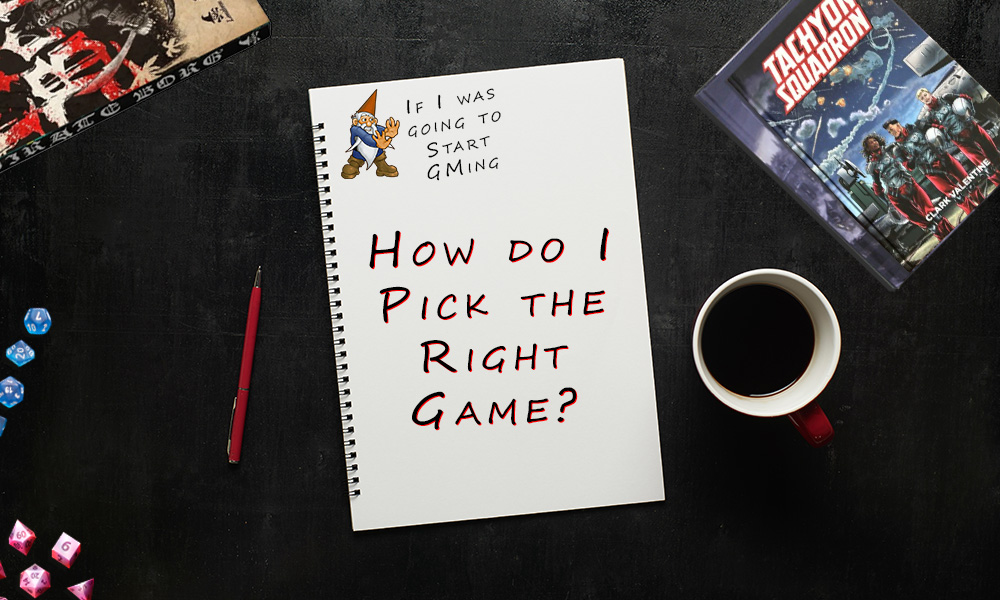
How do I Pick the Right Game? Part of the “If you were going to start GMing” series The TL:DR Answer: Know thyself and thy group. Picking the right game is all about making sure you and your group are gonna have fun. To do that you need to know yourself and your group. If you’re not sure about what would be fun for you, I have some questions you can answer to guide you to a game you’ll enjoy. The Questions What kind of games do you like playing? Tactical battles, dungeon crawling, heists, mysteries, resource management, survival, exploration, dramatic interactions, world building, timeline building, deck builders, city builders, other kinds of games my brain can’t pull from its dark recesses. What kind of game play do you think you’ll enjoy based on the games you like playing? As a GM do you think you’ll like having the tactical play of grid based combat? Would you rather facilitate the unraveling of mysteries while the players try to solve things before a timer runs out and the bad guys get away with it? Do you want to craft places for your players to break into and steal stuff from, where heat gets generated by their actions and if they cause too much trouble or take too long they blow the job or get caught? Are you more interested in games that are about narrative storytelling about the characters and their lives? Games that are more on that dramatic side where phrases and motivations on their character sheets change over time as you provide those dramatic situations they’ve let you know they’re interested in before and during play? Is it about building or building up kingdoms, worlds, universes, or even timelines with your friends, either through prompts or resource management? There are games that do all of these things and more. What’s your favorite genre? Fantasy, Dark Fantasy, Urban Fantasy, Romantasy, Post Apocalyptic Fantasy, Muppet Fantasy (It’s called the Land of Erm), there’s a lot of Fantasy out there. But there’s also Cyberpunk, Pirate adventure, Arthurian Fantasy, Space Opera, Soap Opera, Horror, Super Heroes, Super Anti-Heroes, Interpersonal Drama, Political Drama, Hospital Drama, a Drama Drama, Shakespearean, Espionage, Police Procedural, Hard Sci-Fi, Splatter Punk, Steampunk, Artpunk, Altpunk, I mean if you can think it there’s probably a insert word-punk version of it somewhere. I’m sure I’m missing a few thousand of these. What’s your favorite tone? Goofy, serious, grim dark, whimsical, satirical, adventurous, epic, horror, hopeful, bleak, eerie, suspenseful, romantic, tragic, comedic, satirical, gritty, mysterious, heroic, melancholic, nostalgic, unsettling, lighthearted, intimate, surreal, stonered. Stonered is probably not a tone but Dude Where’s My Car might beg to differ. Do you want a bunch of support for the game you’re going to run? Dungeons & Dragons 5e and 5.5e has the most because it’s everywhere, but there are plenty of subreddits, Discords, YouTube videos, and blogs for other games out there. Call of Cthulhu if you want some 1920’s cosmic existential mystery horror, but it can also do modern. Delta Green is a smaller game but has a lot of community support if you prefer a more modern take on existential horror with tragic drama and spy game play. Daggerheart is newer but has plenty of people writing about the game and making content for it if you want a different flavor of kitchen sink fantasy that’s not D&D. The Marvel Multiverse RPG is decently supported if you want some super hero game play. There are many others, especially a lot of the OSR (Old School Renaissance) or NSR (New School Revolution/Rules) games that have very active communities, which I would say the BORG games fit inside. That’s MorkBorg. If that’s too weird for you, check out PirateBorg. Do you like complex or lighter rules? This one’s a little trickier but I’m gonna say Dungeons & Dragons is in that medium complexity so we have a starting point. It has classes and subclasses for your player characters. There are three kinds of d20 rolls. Spell casting can get to be a lot of load management for players at later levels. There’s a lot of simple math, adding up several numbers from dice and modifiers off your character sheet. There’s also a number of edge case rules. So lots of potential rules packages in feats, spells, class features to layer on top of the core rules. That’s medium complexity to me. Also medium. Blades in the Dark and other Forged in the Dark games. They have lots of procedures to be followed and require you to understand position and effect so you can improvise many answers to situations based on dice rolls made. The procedures also have a lot of actions that players can take which the GM will need to react to. There’s also a part of the game where away from the table the GM should be updating the factions and what they’re doing as part of the prep. Lighter would be other PbtA games. (That’s Powered by the Apocalypse) They do require a lot of spotlight management, so controlling the flow of play since who gets to take their turn is entirely dictated by the GM, but the rules are mostly up front and contained on a small amount of move sheets and playbooks. It only requires rolling 2d6 and adding one number along with potentially advantage or disadvantage. The most complex thing is understanding fictional positioning as a concept and leaning into it. The Borg Games and Shadowdark are also pretty easy to pick up and play. More complex would be games like Pathfinder 2e and Draw Steel. They have more mechanisms to learn and understand, more resources to potentially manage, and more difficult action economies and player builds to deal with, along with complex adversary mechanics. Draw Steel has a subsystem for longer challenges and a subsystem for negotiation on top of its very involved combat system. Pathfinder has bigger numbers and math than a lot of games, with some moving target number threshold play where criticals come into play. The vast amount of material and character build concepts also can be a lot. That said, they’re great games, and would be great picks for you if that kind of play is enjoyable. Putting it Together What kind of games do you like playing? What kind of game play do you think you’ll enjoy based on the games you like playing? What’s your favorite genre? What’s your favorite tone? Do you want a bunch of support for the game you’re going to run? Do you like complex or lighter rules? Answering these questions should give you a decent starting place for finding a game you’ll have a good time GMing. Now you need to find some games. The internet is a great place for getting some help figuring that part out. Just Google, Edge, Bing or whatever search engine you prefer some questions about what you’ve learned by going through these questions. For instance: What Tabletop RPGs do Space Opera? I hit enter on Google and some of the top results were Starfinder, Traveller, Stars Without Number, Scum & Villainy, Star Wars: Edge of the Empire, and Star Trek Adventures. I wouldn’t classify all of those as Space Opera but it’s a space to start. So I followed up with “Which ones are Rules Light?” That’s when I went in and started reading some reddit posts, websites like RPG.net, watched a few YouTube videos at 1.5 speed, checked out some posts from RPGG (RPG Geek). I still wasn’t there or happy with what I was reading and seeing so I added a mechanic to my question which was: what games do small ship to ship combat? The one that kept coming up in the different places I was reading was Tachyon Squadron for a more cinematic aerial combat maneuver game. A description of Top Gun in space sold me on checking it out but I put Warbirds with their Space Age expansion, Stars without Number, and Scum and Villainy on my list just in case I didn’t like Tachyon Squadron. Now it was time to do a little reading. Find Your Joy The questions are starting places for you to find your joy in gaming. While answering all of them gives you some pretty decent insight into what you’ll probably enjoy, you’ll still need to find out if your friends would also enjoy the game. If you want to find out what they enjoy you can just ask them these questions too and figure out where your enjoyment overlaps. I hope this helps at least give you a place to get started when it comes to finding a game you’ll want to GM. Also, let me know how you figure out what games are your joy. I’d love to see other methods of getting games we can enjoy to the table. https://gnomestew.com/how-do-i-pick-the-right-game/

Welcome to TabletopNotes spacestr profile!

About Me

Tabletop roleplaying, game-master ideas, and delightful imaginary trouble. Unofficial automated fan RSS; content belongs to its owners. Unofficial fan feed; not affiliated with source publishers.

Interests

  • No interests listed.

Videos

Music

My store is coming soon!

Friends