spacestr

🔔 This profile hasn't been claimed yet. If this is your Nostr profile, you can claim it.

Edit
This Day in Aviation (Unofficial)
Member since: 2026-10-16
This Day in Aviation (Unofficial)
This Day in Aviation (Unofficial) 22m

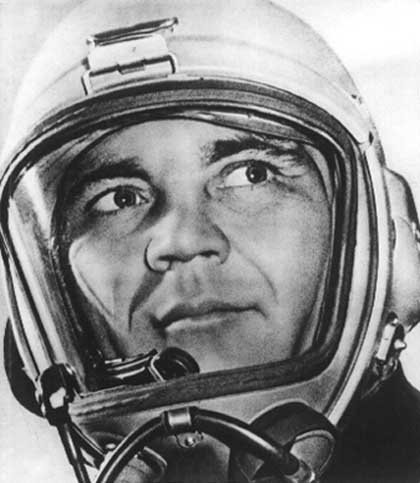
31 October 1959 Colonel Georgy Konstantinovich Mosolov (testpilot.ru) 31 October 1959: At Joukovski-Petrovskoe, U.S.S.R., Гео́ргий Константи́нович Мосоло́в (Georgy Konstantinovich Mosolov), chief test pilot for Mikoyan-Gurevich, flew a prototype of the MiG-21 interceptor identified as the E-66, to set a Fédération Aéronautique Internationale (FAI) World Record for Speed Over a 15-to-25 Kilometer Straight Course. His speed averaged 2,388 kilometers per hour (1,483.8 miles per hour).¹ The МиГ-21 prototype identified by the symbol E-66 is known at the Mikoyan Design Bureau as the E-6\3. Its first flight took place in December 1958. It is powered by a Tumansky 11F-300 afterburning turbojet engine. (A Wikipedia article suggests that this airplane was rebuilt to different configurations several times, with designations changed accordingly.) Mosolov’s FAI altitude record of 28 April 1961 was also flown in a MiG-21 prototype called E-66. (FAI Record File # 8661) Photographs and motion picture film of that airplane show it marked with red numerals “31” on the forward fuselage. The Mikoyan-Gurevich E-6T\1 prototype, “31 Red,” flown to a world record altitude by Colonel Mosolov, 28 April 1961. (Wings of Russia) Colonel Mosolov was interviewed for an article in Air & Space Smithsonian Magazine. He told writer Tony Reichhardt that after completing the speed record course, he was 125 miles (201 kilometers) from base at 44,000 feet (13,411 meters). Low on fuel, he shut down the turbojet engine and began a long glide. He twice unsuccessfully attempted to restart the engine for the landing, but was forced to glide all the way to the runway. After landing, the fuel system was drained. Only 8 liters (2.1 gallons) remained. Colonel Georgy Konstantinovich Mosolov, Soviet Air Forces. Hero of the Soviet Union. (testpilot.ru) Georgy Konstantinovich Mosolov was born 3 May 1926 at Ufa, Bashkortostan, Union of Soviet Socialist Republics. He was educated at the Central Aviation Club, where he graduated in 1943, and then went to the Special Air Forces School. In 1945 he completed the Primary Pilot School and was an instructor at the Chuguev Military Aviation School (Kharkiv, Ukraine). In 1953 Mosolov was sent to the Ministry of Industrial Aviation Test Pilot School at Ramenskoye Airport, southeast of Moscow, and 6 years later, to the Moscow Aviation Institute. He was a test pilot at the Mikoyan Experimental Design Bureau from 1953 to 1959, when he became the chief test pilot. Georgy Mosolov set six world speed and altitude records. He was named a Hero of the Soviet Union, 5 October 1960. On 11 September 1962, an aircraft that Colonel Mosolov was flying suffered a catastrophic compressor failure at Mach 2.15 and began to break apart. Severely injured, Mosolov ejected from the doomed airplane at Mach 1.78. He survived but his test flying career was over. His recovery took more than a year, and though he was able to fly again, he could not resume his duties as a test pilot. This Mikoyan-Gurevich E-152A, NATO code name “Flipper,” is one of the many MiG-21 prototypes flown by Georgy Mosolov. ¹ FAI Record File Number 9062 © 2017, Bryan R. Swopes https://www.thisdayinaviation.com/31-october-1959/ #rss #feeds #linksharing #qwibbit

#rss #feeds #linksharing #qwibbit
This Day in Aviation (Unofficial)
This Day in Aviation (Unofficial) 1h

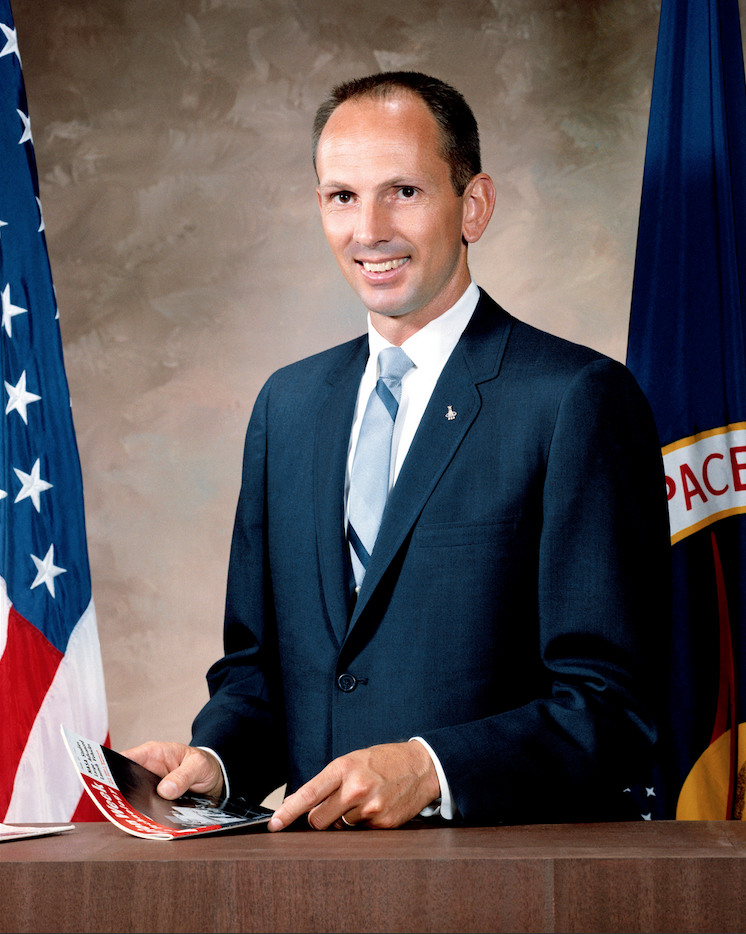
31 October 1964 Captain Theodore Cordy Freeman, United States Air Force. (National Aeronautics and Space Administration S64-31476) 31 October 1964: Captain Theodore Cordy Freeman, United States Air Force, was a member of the NASA Astronaut Corps. He was one of fourteen pilots who had been selected for the third group of candidates in October 1963. At 10:01 a.m., Saturday morning, Captain Freeman took off from Ellington Air Force Base, Houston, Texas. He was on the first of two planned training flights, flying a Northrop T-38A-50-NO Talon, 63-8188, Northrop serial number N.5535. The weather was reported as scattered clouds at 2,000 feet (607 meters), with visibility 7 miles (11.3 kilometers) in haze. He returned to the airfield at 10:38 for touch and goes, but was instructed to exit traffic pattern because of arriving aircraft. At 10:46, Freeman called Ellington Tower, reporting that he was 5 miles (8 kilometers) southwest, inbound. He received no response and 30 seconds later, reported that he was breaking out to the east. The tower acknowledged this transmission and instructed Freeman to make another approach. At 10:47, Freeman called, “Roger, be about two minutes.” There were no further transmissions. Ted Freeman’s T-38 struck a Lesser Snow Goose (Chen caerulescens) in the vicinity of the airport. These birds weigh between 4½ to 6 pounds (2.1–2.7 kilograms). The impact resulted in damage to the left side of the airplane’s forward canopy. Both engines flamed out. Lesser Snow Goose (Chen caerulescens). (Gary Swant/Montana Standard) Unable to reach runway at Ellington, Freeman turned away from the airfield to avoid buildings, lowered the landing gear and headed for an open field. At approximately 100 feet (30 meters), he fired his ejection seat. The altitude was too low to allow his parachute to open and Freeman was killed when he struck the ground. The T-38 crashed at 10:48 a.m., 1 mile (1.6 kilometers) south of Ellington Air Force Base, between Highway 3 and the Gulf Freeway. (The Miami News, Sunday, 1 November 1964, Page 3A, Columns 1–3) Wings of Lesser Snow Goose and fragments of Freeman’s T-38 canopy. (National Aeronautics and Space Administration S64-38117) Investigators found blood and feathers in the cockpit. Suspecting a bird strike, a search was carried out and on 12 November, the remains of a snow goose along with fragments of the T-38’s canopy were found approximately 3 miles (4.8 kilometers) southeast of Ellington AFB, and about 4 miles (6.4 kilometers) from the crash site. At 10:58 a.m., Charles Alden Berry, M.D., Chief of the Manned Space Flight Center Medical Operations Office, declared Captain Freeman dead at the scene. The Chief of the Astronaut Office, Deke Slayton, and Dr. Berry went to the Freeman home and made the formal notification to Mrs. Freeman. Following an autopsy, Captain Freeman’s remains were transported to the Arlington National Cemetery, at Arlington, Virginia, for burial. The marker for Captain Freeman’s grave, Section 4, Lot 3148, Grid AA-11. (Heroic Relics) Midshipman Theodore Cordy Freeman, United States Naval Academy. (1953 Lucky Bag) Theodore Cordy Freeman was born 18 February 1930 at Haverford, Pennsylvania. He was the fourth child of John T. Freeman, a carpenter, and Catherine Thomas Wilson Freeman. Ted Freeman attended Lewes High School, in Lewes, Delaware. He graduated in 1948, and was ranked academically third in his class. While still in high school, Freeman qualified for a private pilot’s license. He then studied at the University of Delaware at Newark. While at the University of Delaware, Freeman received an appointment to the United States Naval Academy at Annapolis, Maryland, and entered as a midshipman, United States Navy, 17 June 1949. He graduated with a bachelor of science degree on 5 June 1953. Along with 129 of his classmates, Midshipman Freeman elected to be commissioned as a second lieutenant, United States Air Force. Later that same afternoon, Second Lieutenant Theodore Cordy Freeman, United States Air Force, married Miss Faith Dudley Clark of Orange, Connecticut, at the First Presbyterian Church in Annapolis. They would have a daughter, Faith Huntington Freeman, born at Bryan, Texas, 18 July 1954. Miss Faith Huntington Freeman and Mrs. Theodore Cordy Freeman (née Faith Dudley Clark), circa 1963. (Larry Clark/Calisphere: Los Angeles Public Library, Valley Times Photo Collection 00120974) Second Lieutenant Freeman trained as an Air Force pilot at Hondo and Bryan Air Bases in Texas. He was promoted to the rank of first lieutenant in February 1955 and awarded his pilot’s wings. Freeman was then sent for fighter training at Nellis Air Force Base, Las Vegas, Nevada. In 1955, Lieutenant Freeman was stationed in Okinawa. On his return to the United States, he was assigned to George Air Force Base in California. 1st Lieutenant Theodore Cordy Freeman, United States Air Force, with a North American Aviation, Inc., F-100 Super Sabre, circa mid-1950s. (United States Air Force) In 1960, Freeman earned a master’s degree in aeronautical engineering at the University of Michigan at Ann Arbor. While there, he was promoted to the rank of captain. Captain Freeman entered the Air Force Experimental Test Pilot School at Edwards Air Force Base, California, on 3 January 1962 and graduated 17 August 1962. Next he attended the Aerospace Research Pilot School. After completing that course, Freeman remained at the school as an instructor and served as a flight test engineer at Edwards. By this time, Ted Freeman was an experienced pilot with over 3,300 flight hours. Astronaut Group Three. Ted Freeman is standing, fourth from left. Front Row, left to right: Edwin E. Aldrin, Jr., William A. Anders, Charles A. Bassett II, Alan L. Bean, Eugene A. Cernan and Roger B. Chaffee. Back Row, Michael Collins, R. Walter Cunningham, Donn F. Eisele, Theodore C. Freeman, Richard F. Gordon Jr., Russell L. Schweickart, David R. Scott, and Clifton C. Williams.(National Aeronautics and Space Administration, S63-18765 or GPN-2000-001476) In October 1963, Captain Freeman was selected as a member of NASA’s Astronaut Group Three. The Group was announced to the public on 18 October. Ted Freeman arrived at the Manned Space Flight Center, Houston, Texas, on 15 January 1964. He and his family resided on Blanchmont Lane in Nassau Bay, southeast of Houston. Freeman was not assigned to a specific flight, but Group Three was intended for the Apollo Program. Ten of the fourteen astronauts went to The Moon. NASA Astronauts Major Edwin Eugene (“Buzz”) Aldrin, Jr., and Captain Theodore Cordy (“Ted”) Freeman, Friday, 30 October 1964. (National Aeronautics and Space Administration) Northrop T-38A-35-NO Talon 60-0582 in flight near Edwards Air Force Base, California. (United States Air Force) The T-38 was the world’s first supersonic flight trainer. The Northrop T-38A Talon is a pressurized, two-place, twin-engine, jet trainer. Its fuselage is very aerodynamically clean and uses the “area-rule” (“coked”) to improve its supersonic capability. It is 46 feet, 4.5 inches (14.135 meters) long with a wingspan of 25 feet, 3 inches (7.696 meters) and overall height of 12 feet, 10.5 inches (3.924 meters). The one-piece wing has an area of 170 square feet (15.79 square meters). The leading edge is swept 32º. The airplane’s empty weight is 7,200 pounds (3,266 kilograms) and maximum takeoff weight is approximately 12,700 pounds (5,761 kilograms). Northrop T-38A-55-NO Talon 64-13302 on takeoff at Edwards AFB. (Chad Bellay, United States Air Force 051017-F-0000S-002) The T-38A is powered by two General Electric J85-GE-5 turbojet engines. The J85 is a single-shaft axial-flow turbojet engine with an 8-stage compressor section and 2-stage turbine. The J85-GE-5 is rated at 2,680 pounds of thrust (11.921 kilonewtons), and 3,850 pounds (17.126 kilonewtons) with afterburner. It is 108.1 inches (2.746 meters) long, 22.0 inches (0.559 meters) in diameter and weighs 584 pounds (265 kilograms). The T-38A has a maximum speed of Mach 1.08 (822 miles per hour/1,323 kilometers per hour) at Sea Level, and Mach 1.3 (882 miles per hour/1,419 kilometers per hour) at 30,000 feet (9,144 meters). It has a rate of climb of 33,600 feet per minute (171 meters per second) and a service ceiling of 55,000 feet (16,764 meters). Its range is 1,140 miles (1,835 kilometers). Between 1959 and 1972, 1,187 T-38s were built at Northrop’s Hawthorne, California, factory. As of 4 September 2018, 546 T-38s remained in the U.S. Air Force active inventory. The U.S. Navy has 10, and as of 30 October 2018, the Federal Aviation Administration reports 29 T-38s registered to NASA. Northrop T-38A-35-NO Talon 60-0582 rolls inverted, northeast of Edwards Air Force Base, California. (United States Air Force) © 2018, Bryan R. Swopes https://www.thisdayinaviation.com/31-october-1964/ #airforce #freeman #captainfreeman #statesair #cordyfreeman #unitedstates #theodorecordy #ellingtonair #snowgoose #october #rss #feeds #linksharing #qwibbit

#airforce #freeman #captainfreeman #statesair #cordyfreeman
This Day in Aviation (Unofficial)
This Day in Aviation (Unofficial) 1d

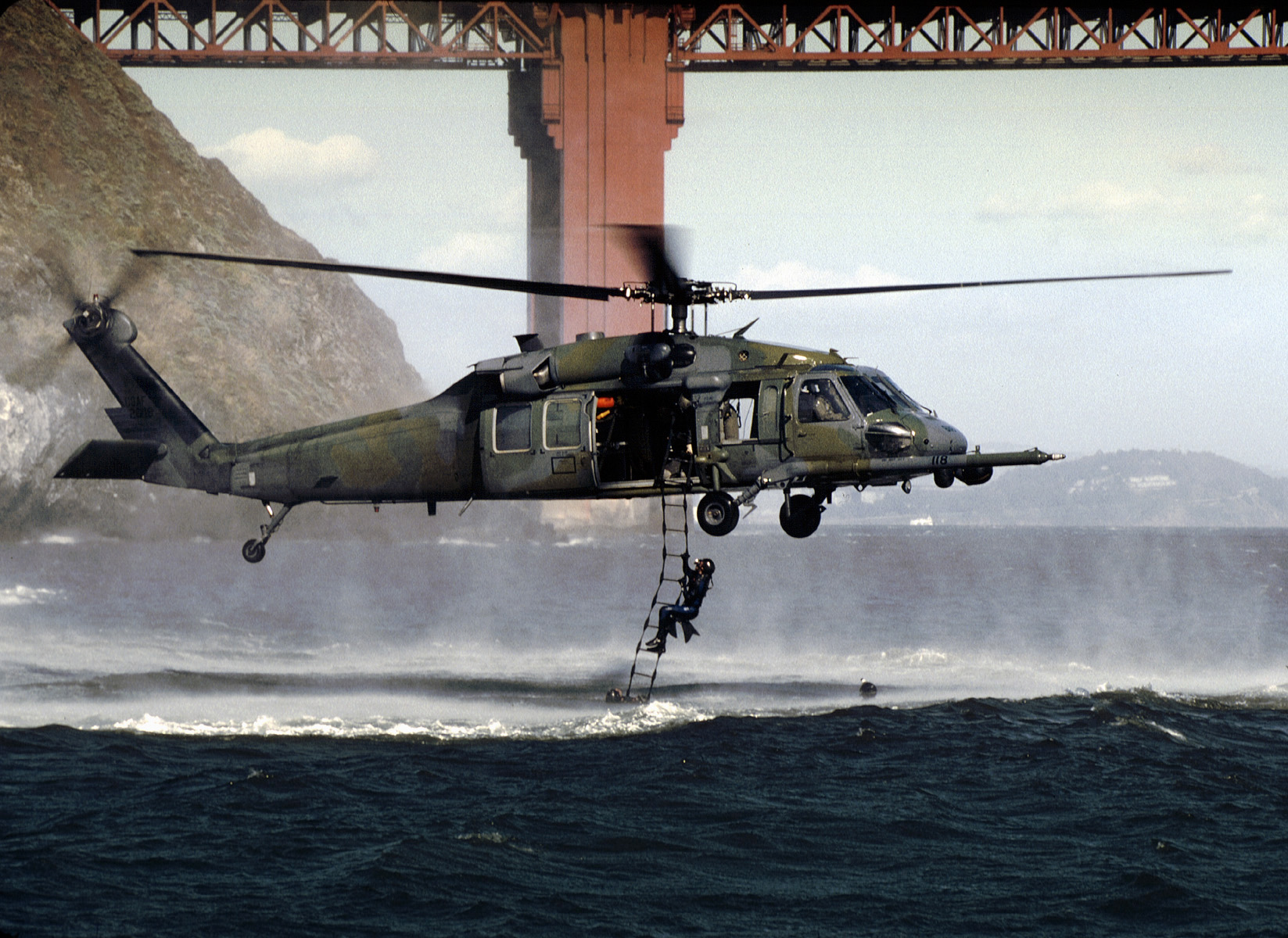
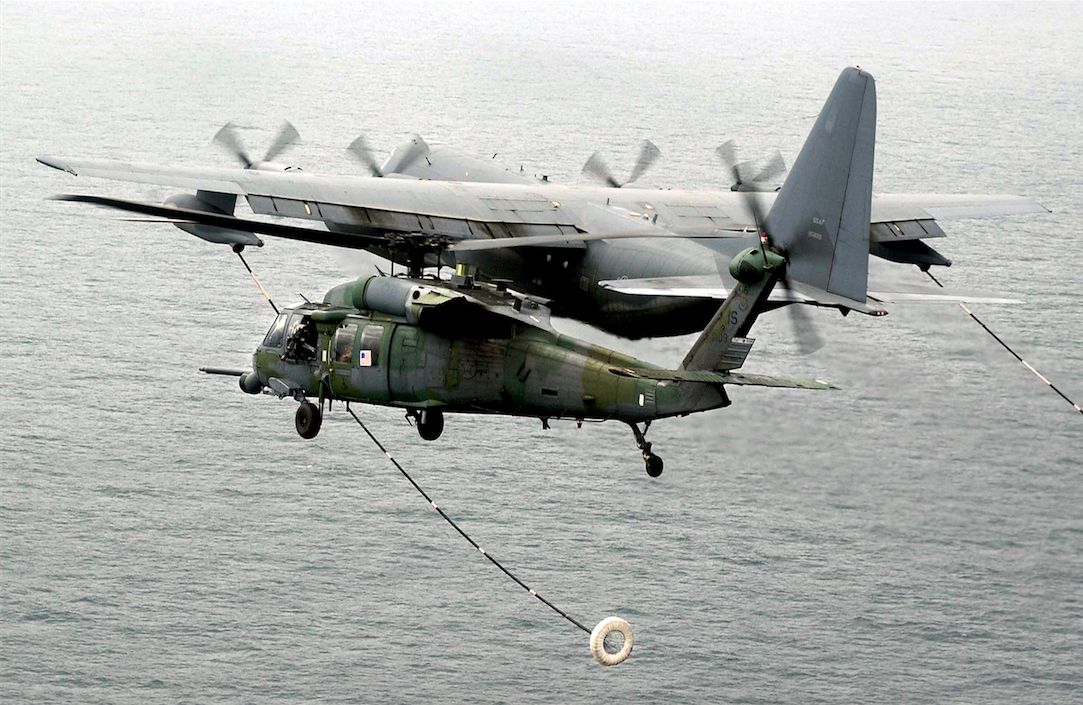
30 October 1991 Sikorsky HH-60G Pave Hawk 88-26118 of the 129th Rescue Wing, California Air National Guard, recovers pararescue jumpers during a training mission outside of San Francisco’s Golden Gate. (Technical Sergeant Lance Cheung, United States Air Force 021107-O-9999G-001) 30 October 1991: United States Air Force Sikorsky HH-60G Pave Hawk, 88-26110, call sign “Jolly 110,” assigned to the 106th Rescue Wing, New York Air National Guard, headed out into a hurricane that would become known as “The Perfect Storm.” Aboard were Major C. David Ruvola, pilot; Captain Graham Buschor, co-pilot; Staff Sergeant James R. Mioli, flight engineer; and pararescue jumpers Technical Sergeant John Spillane and Technical Sergeant Arden Rick Smith. Their mission was to attempt to rescue the crew of the fishing vessel Andrea Gail, 250 miles (400 kilometers) out to sea. Due to the severity of the storm—a weather buoy located 264 miles (425 kilometers) south of Halifax, Nova Scotia, reported a wave height of 100.7 feet (30.7 meters) on 30 October, the highest ever recorded in that part of the Atlantic Ocean—the Pave Hawk crew was unable to make the rescue and had to return to their base. Having already refueled from the Lockheed HC-130 Hercules tanker three times during the mission, and with low fuel, a fourth refueling was needed for the helicopter to make it back to the mainland. Because of the the extreme turbulence and lack of visibility, Jolly 110 could not make contact with the refueling drogue trailing behind the Hercules. Major Ruvola made more than 30 attempts, but finally both drogues had been damaged by the severe conditions. With just twenty minutes of fuel remaining, Jolly 110 would have to ditch in the middle of “The Perfect Storm.” Sikorsky HH-60G Pave Hawk 88-26109, a sistership of “Jolly 110,” ready for refueling from a Lockheed MC-130P Combat Shadow, 69-5828. This helicopter was destroyed 7 January 2014, when it crashed off the coast of England following multiple bird strikes at 130 knots. The four-man crew was killed. (Technical Sergeant Justin D. Pyle, United States Air Force 030728-F-6701P-045 Technical Sergeant Arden R. Smith, Pararescue Jumper, 106th Rescue Wing, New York Air National Guard. (United States Air Force) Unable to refuel, Major Ruvola made the decision to ditch the helicopter into the sea while the engines were still running. At 9:30 p.m., the Sikorsky’s number one engine flamed out from fuel starvation. With one engine still operating, Ruvola held the Pave Hawk in a hover over the raging ocean while Buschor, Mioli, Spillane and Smith jumped. When the number two engine flamed out, Ruvola put the Pave Hawk into a hovering autorotation. Its blades came to a sudden stop when they hit the face of an oncoming wave. Ruvola was about 15 feet (4.6 meters) under water by the time he was able to escape from the sinking helicopter. The Pave Hawk had gone down 90 miles (145 kilometers) south of Montauk Point in 100-knot (185 kilometers per hour) winds and 80-foot (25 meter) waves. After five hours in the water, four airmen were rescued by USCGC Tamaroa (WMEC-166), a 48-year-old former U.S. Navy fleet tug, operated by the Coast Guard since the end of World War II as a medium endurance cutter. The search for Rick Smith continued for a week. He was never found. USCGC Tamaroa (WMEC-166). (United States Coast Guard) USCGC Tamaroa’s rescue boat approaches Satori. (United States Coast Guard) USCGC Tamaroa (WMEC-166) pitches and rolls in heavy seas during the rescue of Satori, a 32-foot sail boat, 29 October 1991. (United States Coast Guard) The U.S. Air Force HH-60G Pave Hawk is medium-sized twin-engine combat search-and-rescue (CSAR) helicopter, developed from the Army UH-60A Black Hawk transport. These helicopters were upgraded with an extendable probe for air-to-air refueling and additional fuel tanks in the cabin. They were given the project name Credible Hawk. The Credible Hawks were further upgraded to the MH-60G Pave Hawk standard, which incorporated an inertial navigation system, GPS, and Doppler radar for precision navigation. Low-light television, infrared cameras and night vision systems allowed the MH-60G to operate at night and very low altitude. The Pave Hawk is equipped with an Automatic Flight Control System (AFCS), a very sophisticated autopilot which incorporates automatic hover capability. Some of the MH-60G Pave Hawks received further upgrades for the special operations mission. Helicopters dedicated to CSAR were redesignated HH-60G. A rescue hoist capable of lifting 600 pounds (272 kilograms) from a 200-foot (60.7 meter) hover is incorporated on the upper right side of the fuselage. Sikorsky HH-60G Pave Hawk, 88-26107, sister ship of 88-26110, which was lost in “The Perfect Storm.” (United States Air Force) The HH-60G is operated by a crew of two pilots, a flight engineer and gunner. For rescue operations, pararescue jumpers, the famous “P.J.s,” are added to the crew. The helicopter has an overall length of 64 feet, 11 inches (19.787 meters) with rotors turning. The fuselage is 49 feet, 10 inches (15.189 meters) long and 7 feet, 9 inches (2.362 meters) wide. Overall height (rotors turning) is 16 feet, 11 inches (5.156 meters). The HH-60G has a four-bladed fully-articulated main rotor with elastomeric bearings. It has a diameter of 53 feet, 8 inches (16.358 meters) and turns counterclockwise as seen from above. (The advancing blade is on the helicopter’s right.) The main rotor turns 258 r.p.m., resulting in a blade tip speed of 728 feet per second (222 meters per second). The blades were built with titanium spars and used two different airfoils and a non-linear twist (resulting in a net -16.4°). The outer 20 inches (0.508 meters) were swept aft 20°. The four-blade bearingless tail rotor assembly is mounted on the right side of a pylon in a tractor configuration. The tail rotor turns clockwise as seen from the helicopter’s left side. (The advancing blade is below the axis of rotation.) The tail rotor has a diameter of 11 feet (3.353 meters) and each blade has a chord of 0.81 feet (0.247 meters) and -18° twist. The tail rotor turns 1,214 r.p.m. and has a tip speed of 699 feet per second (213 meters per second). Because the Black Hawk’s engines are behind the transmission, the aircraft’s center of gravity (c.g.) is also aft. The tail rotor plane is inclined 20° to the left to provide approximately 400 pounds of lift (1.78 kilonewtons) to offset the rearward c.g. Sikorsky HH-60G Pave Hawk 88-26106 at William J. Fox Field, Lancaster, California. (Alan Radecki) Power is supplied by two General Electric T700-GE-701C turboshaft engines which are mounted on top of the fuselage on either side of the transmission and main rotor mast. They have a Maximum Continuous Power rating of 1,662 shaft horsepower, each, at Sea Level on a Standard Day. Maximum Power (10 minute limit) is 1,890 shaft horsepower, and the One Engine Inoperative (OEI) rating is 1,940 shaft horsepower (2½ minute limit.) The -701C is 3 feet, 10 inches (1.684 meters) long), 1 foot, 3.6 inches (0.396 meters) in diameter and weighs 458 pounds (208 kilograms). The helicopter’s main transmission is rated for a maximum 3,400 horsepower. Sikorsky HH-60G Pave Hawk 91-26403, 33rd Rescue Squadron, Kadena Air Base, Okinawa, Japan, 2001. (Master Sergeant Val Gempis, United States Air Force 010502-F-1740G-002) The HH-60G has a cruise speed of 184 miles per hour (296 kilometers per hour) and its maximum speed is 224 miles per hour (361 kilometers per hour). The service ceiling is 14,000 feet (4,267 meters) and maximum range is 373 miles (600 kilometers). The hover ceiling, in ground effect (HIGE) is approximately 10,000 feet (3,048 meters), and out of ground effect (HOGE) is about 6,000 feet (1,830 meters). Defensive armament consists of two GAU-18A .50-caliber machine guns. Captain Marisa Catlin, 83rd Expeditionary Rescue Squadron, flies a Sikorsky HH-60G Pave Hawk, 89-26212, over the Kunar Province, Afghanistan, 9 February 2011. (Captain Erick Saks, United States Air Force) The U.S. Air Force initially purchased 112 HH-60G Pave Hawk helicopters, though as of May 2016, 96 remain in service. Most of these are approaching their design airframe lifetime limit of 7,000 flight hours. Several have passed 10,000 hours. The Air Force will replace them with a new HH-60W, a combat rescue helicopter based on the Sikorsky UH-60M Black Hawk. 21 U.S. Army UH-60Ls were modified to replace HH-60G losses. Sikorsky HH-60W 14-4483. (Sikorsky, a Lockheed Martin Company) The next CSAR helicopter, the HH-60W, based on the Sikorsky UH-60M, made its first flight 17 May 2019. Low-rate production of 10 new Combat Rescue Helicopters was authorized 24 September 2019. The Air Force plans to purchase 113 “Whiskeys.” On 5 November 2020, the first two HH-60Ws were delivered to Moody AFB, near Valdosta, Georgia. A Sikorsky HH-60W, 14-1482, at the Sikorsky Development Flight Test Center, Jupiter, Florida, 7 October 2019. (Sikorsky, a Lockheed Martin Company) © 2019, Bryan R. Swopes https://www.thisdayinaviation.com/30-october-1991/ #pavehawk #technicalsergeant #airnational #statesair #nationalguard #airforce #rescuewing #unitedstates #october #yorkair #rss #feeds #linksharing #qwibbit

#pavehawk #technicalsergeant #airnational #statesair #nationalguard
This Day in Aviation (Unofficial)
This Day in Aviation (Unofficial) 1d

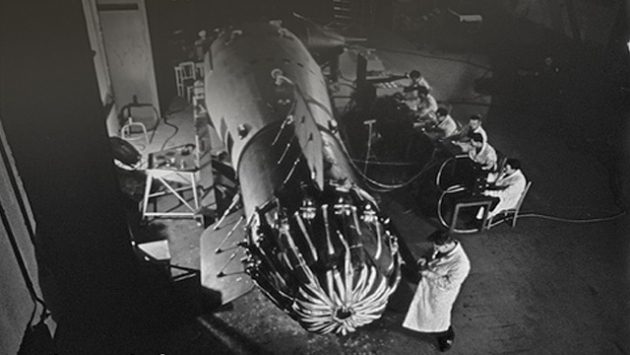
30 October 1961 Tupolev Tu-95V No. 5800302 carrying the RDS-220 bomb. 30 October 1961: At 9:30 a.m., specially modified Tupolev Tu-95V “Bear A” bomber, No. 5800302, under the command of Major Andrey Ergorovich Durnovtsev of the 409th Heavy Bomber Air Regiment, departed Olenegorsk Air Base, 92 kilometers (57 miles) south of Murmansk, at 9:30 a.m. The bomber carried a nine-man crew, including co-pilot Captain Mikhail Konstantinovich Kontrdratenko and navigator Major Ivan Nikoforovich Klesch. The Tu-95 was accompanied by a Tupolev Tu-16 instrumentation ship (No. 3709), under the command of Colonel Vladimir Fedorovich Martynenko. Some sources say that the two bombers were escorted by a flight of fully-armed fighters. Major Durnovtsev’s mission was to carry out the Soviet Union’s 130th nuclear weapons test. The Tu-95 carried a single RDS-220, a three-stage radiation-implosion thermonuclear bomb. It was 8 meters (26.25 feet) long, with a diameter of 2.1 meters (6.89 feet), and weighed approximately 27,000 kilograms (59,525 pounds). The bomb was variously known as “Big Ivan” or “Tsar Bomba” (King of Bombs). Fully assembled RDS-220 three-stage radiation implosion thermonuclear bomb, with retarding parachute in place, at Arzamas-16 . The Tu-95 dropped the RDS-220 from an altitude of 10,500 meters (34,449 feet) over the D-II test range, 15 kilometers (9 miles) north of the Mityushikha Strait on Novaya Zemlya. The bomb was retarded by parachute to allow the Bear time to escape the blast effects. After falling for 3 minutes, 8 seconds, at 11:33 a.m., the bomb detonated 4,000 meters (13,123 feet) above the surface of Novaya Zemlya. A bright flash of light lasted for 30 seconds and finally faded away after 70 seconds. 45 seconds after detonation, the nuclear cloud reached a height of 30 kilometers (19 miles), then spread outward, reaching a maximum diameter of 95 kilometers (59 miles). Major Durnovtsev’s Tupolev Tu-95V “Bear A,” carrying the RDS-220 bomb to the target. A Tu-16 instrumentation aircraft is just behind, on the bomber’s left quarter. The RDS-220 bomb just after drop from the Tupolev Tu-95V Bear. The retarding parachute is beginning to deploy. RDS-220 (“Big Ivan”) with first stage parachute deployed. Major Durnovtsev’s Tu-95 was approximately 39 kilometers (24 miles) away for “ground zero” at the time of the explosion. As it continued to fly away from the blast, the shock waves finally caught up to bomber at a distance of 115 kilometers (71 miles), 8 minutes, 20 seconds after they had released the bomb. At the same time, a secret United States Air Force Boeing JKC-135A Stratotanker instrumentation aircraft, Speed Light Bravo, 55-3127, had flown closer to ground zero to gather data about the air burst. It was so close that its special anti-radiation paint was scorched. (55-3127 was later converted to the NKC-135A airborne laboratory configuration to support the Limited Test Ban Treaty of 1963. It was returned to tanker configuration in the 1980s. Later, 55-3127 served as a test bed aircraft for the Aeronautical Systems Division at Wright-Patterson. It was retired to Davis-Monthan Air Force Base in 1992.) Speed Light Bravo, Boeing JKC-135A Stratotanker 55-3127. (Robert Reedy Collection, San Diego Air & Space Museum, PictionID: 46542671) After the nuclear explosion data was analyzed by the Foreign Weapons Evaluation Panel (the “Bethe Panel”) the RDS-220 yield was estimated at 57 megatons. This was the largest nuclear weapon detonation in history. It was also the “cleanest,” with 97% of the energy yield produced by fusion. Relative to the size of the explosion, very little fallout was produced. Tsar Bomba fireball over Novaya Zemlya, 11:32 a.m., 30 October 1961. The fireball has reached a diameter of 5 miles (8 kilometers). Shock waves reflecting off of the ground caused the slight flattening of the bottom of the fireball. All buildings in the town of Severny, 55 kilometers (34.2 miles) from Ground Zero, were destroyed. Wooden buildings as far as 200 kilometers (124 miles) were destroyed or heavily damaged. A visible shock wave in the air was seen at a distance of 700 kilometers (435 miles). The shock wave from the explosion traveled around the world three times. The mushroom cloud of Tsar Bomba climbs into the stratosphere. Following the test, Major Durnovtsev was promoted to the rank of Lieutenant Colonel and named Hero of the Soviet Union. The crater created by the Tsar Bomba test, 30 October 1961. Bear No. 5800302 was ordered in 1955 and completed in 1956. The Tupolev Tu-95 is a long range strategic bomber. It is 151 feet, 6 inches (46.2 meters) long with a wingspan of 164 feet, 5 inches (50.10 meters). The wings are swept at a 35° angle. The bomber is powered by four Kuznetsov NK-12M turboprop engines, producing 14,800 shaft horsepower, each, and turning 8-bladed counter-rotating propellers. It weighs 90,000 kilograms (198,416 pounds) empty, with a maximum takeoff weight of 188,000 kilograms (414,469 pounds). The Bear has a maximum speed of 920 kilometers per hour (572 miles per hour) and an unrefueled range of 15,000 kilometers (9,321 miles). (The Bear A is capable of inflight refueling.) Service ceiling is 13,716 meters (45,000 feet). Approximately 72 of these aircraft remain in service with the Russian Federation. The current variant is the Tupolev Tu-95MS “Bear H.” Recently, individual bombers have been taken out of service to be modernized by the Beriev Aircraft Company at Taganrog, Russia. The modernized Bear is designated Tu-95MSM. It is expected that 20 Tu-95s will be upgraded. No. 5800302 was damaged by the blast. It was removed from service and placed on display at teh Tambov Higher Military Aviation Engineering School. A current production Tupolev Tu-95MS Bear H strategic bomber. (Royal Air Force) Андрей Егорович Дурновцев (Andrey Ergorovich Durnovtsev) was born 14 January 1923 at Verkhney, a village in the Krasnoyarsk Krai of Siberia. He graduated from high school in 1940. Durnovtsev was inducted into the Red Army 19 July 1942 and sent to the Irkutsk Military School of Aviation Mechanics, graduating in November 1943. He was promoted to sergeant. Sergeant Durnovtsev request assignment for pilot training, and was sent to the 8th Military Aviation School for initial flight training. In August 1945, he was sent to complete training in long-range bombers at the Engels Military Aviation Pilot School (VAUL). He graduated in 1948. Lieutenant Durnovtsev next attended the Ryazan Higher Officers’ School, studying the combat application of long-ranger bombers. He was assigned as a pilot with the 330th Bomber Aviation Regiment. Durnovtsev served as an aircraft commander, detachment commnder, then deputy squadron commander. Lieutenant Colonel Durnovtsev was named Hero of the Soviet Union by decree of the Presidium of the Supreme Soviet, 7 March 1962, “for courage and bravery shown in the development of new military equipment.” Lieutenant Colonel Drnovtsev retired in 1965. During his military career, he had been awarded the Gold Star Medal, the Order of Lenin, the Order of the Red Star, and the Medal for Military Merit. Lieutenant Colonel Andrey Ergorovich Durnovtsev, Hero of the Soviet Union, died in Kiev, 24 October 1976, at the age of 53 years. Майор Андрей Дурновцев Lieutenant Colonel Andrey Ergorovich Durnovtsev, Hero of the Soviet Union. A recently declassified 40-minute video of the test can be viewed on YouTube at: © 2020, Bryan R. Swopes https://www.thisdayinaviation.com/30-october-1961/ #majordurnovtsev #october #tupolev #bigivan #bear #novayazemlya #air #ergorovichdurnovtsev #andreyergorovich #ivannikoforovich #rss #feeds #linksharing #qwibbit

#majordurnovtsev #october #tupolev #bigivan #bear
This Day in Aviation (Unofficial)
This Day in Aviation (Unofficial) 1d

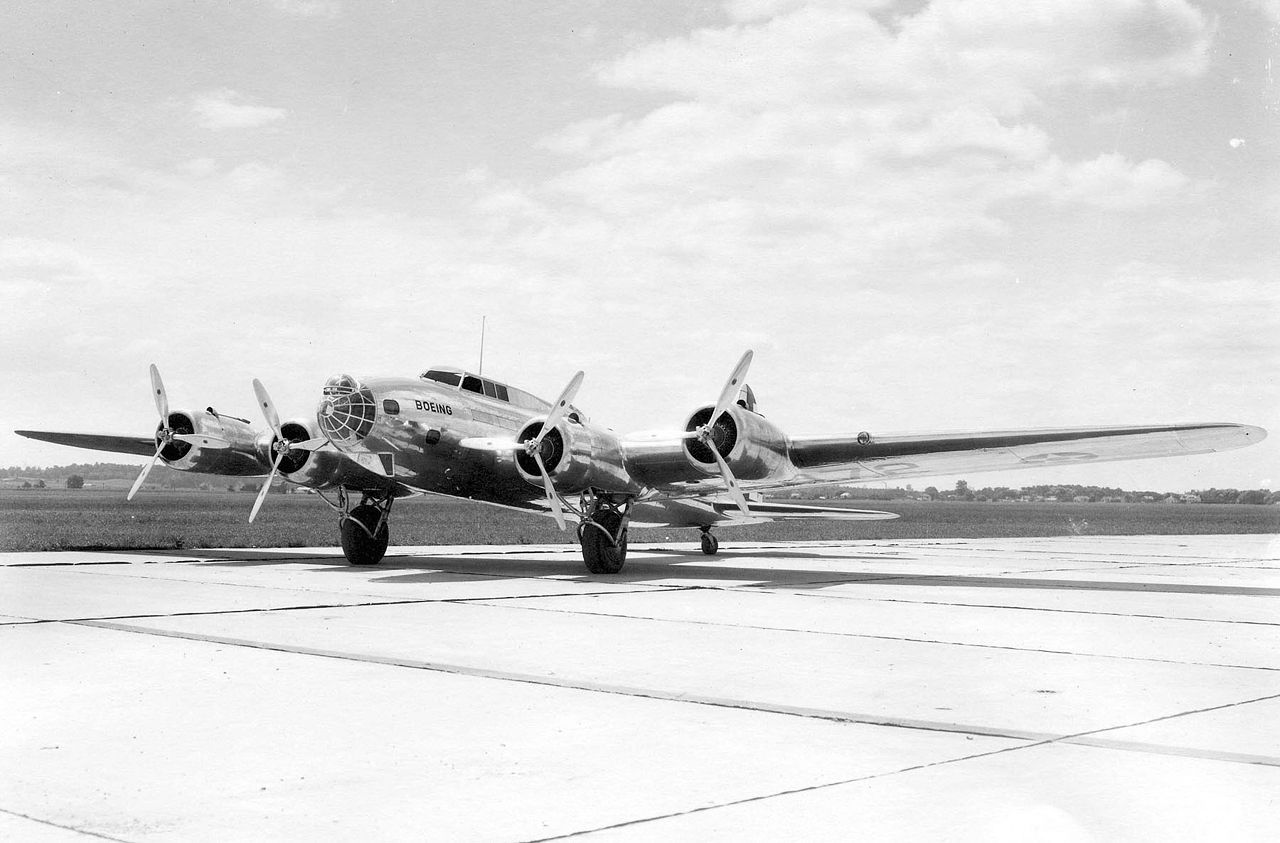
30 October 1935 The Boeing Model 299 X13372 (XB-17), prototype four-engine heavy bomber. (United States Air Force 060706-F-1234S-002) Major Ployer Peter Hill, Air Corps, United States Army (1894–1935) 30 October 1935: While undergoing evaluation by the United States Army Air Corps at Wright Field, northeast of Dayton, Ohio, the Boeing Model 299 Flying Fortress, X13372 ¹—the most technologically sophisticated airplane of its time—took off with Major Ployer Peter Hill as pilot. The largest land airplane built up to that time, the XB-17 “seemed to have defensive machine guns aimed in every direction.” A Seattle Times newspaper reporter, Roland Smith, wrote that it was a “flying fortress.” Boeing copyrighted the name. Major Hill was the Chief of the Flying Branch, Material Division, at Wright Field. This was his first flight in the airplane. The co-pilot was the Air Corps’ project pilot, Lieutenant Donald Leander Putt. Boeing’s Chief Test Pilot, Leslie R. Tower, and company mechanic C.W. Benton were also on board, as was Henry Igo of the Pratt & Whitney Aircraft Company. Mark H. Koogler, a civilian aircraft mechanic at Wright Field, was also aboard. Immediately after takeoff, the 299 suddenly pitched up, stalled and crashed, then caught fire. Three men, Igo, Benton and Putt, were able to escape from the wreck despite injuries. The wreck of the Boeing Model 299, X13372, burns after the fatal crash at Wright Field, 30 October 1935. (United States Air Force 060710-F-1234S-001) First Lieutenant Robert K. Giovannoli, a test pilot assigned to the Material Division at Wright Field, saw the crash and immediately went to help. He made two trips into the burning wreck to rescue Hill and Tower, though later they both died of their injuries. On October 30, 1935, a Boeing plane known as the “flying fortress” crashed during a military demonstration in Ohio — shocking the aviation industry and prompting questions about the future of flight. (Air Corps, United States Army 52793) Lt. Robert K. Giovannoli Lieutenant Giovannoli was awarded the Soldier’s Medal and the Cheney Award for his heroic rescue of two men from the burning wreck of the Boeing Model 299. His citation reads: The President of the United States of America, authorized by Act of Congress, July 2, 1926, takes pleasure in presenting the Soldier’s Medal to First Lieutenant Robert K. Giovannoli, United States Army Air Corps, for heroism, not involving actual conflict with an enemy, displayed at Wright Field, Dayton, Ohio, 30 October 1935. When a Boeing experimental bomber crashed and burst into flames, Lieutenant Giovannoli, who was an onlooker, forced his way upon the fuselage and into the front cockpit of the burning plane and extricated one of the passengers. Then upon learning that the pilot was still in the cockpit, Lieutenant Giovannoli, realizing that his own life was in constant peril from fire, smoke, and fuel explosions, rushed back into the flames and after repeated and determined efforts, being badly burned in the attempt, succeeded in extricating the pilot from an entrapped position and assisted him to a place of safety. General Orders: War Department, General Orders No. 4 (1936) Burned-out wreck of the Boeing Model 299, NX13372, still smoldering after the crash at Wright Field, Ohio, 30 October 1935. (United States Air Force 060710-F-1234S-002) The Cheney Award is a bronze medal awarded annually to honor acts of valor, extreme fortitude or self-sacrifice in a humanitarian interest performed in connection with aircraft (not necessarily military). It memorializes U.S. Army Air Service Lieutenant Bill Cheney, who was killed in action on 20 January 1918. The award was initiated by his family. It has been called the “Peacetime Medal of Honor.” The official investigation of the crash determined that the prototype bomber’s flight crew had neglected to release the flight control gust locks which are intended to prevent damage to the control surfaces while on the ground. Test Pilot Tower recognized the mistake and tried to release the control locks, but could not reach them from his position in the cockpit. Cockpit of the Boeing Model 299. (United States Air Force 060706-F-1234S-004) Experts wondered if the Flying Fortress was too complex an airplane to fly safely. As a direct result of this accident, the “check list” was developed, now required in all aircraft. Only one page of the Model 299’s logbook was filled in. (Museum of Flight) After several years of testing, the Model 299 went into production as the B-17 Flying Fortress. By the end of World War II, 12,731 B-17s had been built by Boeing, Douglas and Lockheed Vega. Hill Air Force Base, north of Salt Lake City, Utah, was named in honor of Major Ployer Peter Hill, U.S. Army Air Corps. The co-pilot, Lieutenant Putt, remained in the service and eventually achieved the rank of Lieutenant General, U.S. Air Force. He died in 1988. Robert Giovannoli, 1925. (The Kentuckian) Robert Kinnaird Giovannoli was born at Washington, D.C., 13 March 1904, the second of two sons of Harry Giovannoli, a newspaper editor, and Carrie Kinnaird Giovanolli. His mother died when he was six years old. Giovannoli graduated from Lexington High School at Lexington, Kentucky, in 1920 and then attended the University of Kentucky, where, in 1925, he earned a Bachelor of Science degree in Mechanical Engineering (B.S.M.E.). He was a member of the Phi Delta Theta (ΦΔΘ) and Tau Beta Phi (ΤΒΦ) fraternities, treasurer of the sophomore class, and president of the American Institute of Electrical Engineers. He was employed by the General Electric Company at Schenectady, New York. Giovannoli enlisted in the United States Army in 1927. After completing the Air Corps Primary Flying School at Brooks Field, and the Advanced Flying School at Kelly Field, both in San Antonio, Texas, he was commissioned as a second lieutenant in the Air Corps Reserve, 20 October 1928. Lieutenant Giovannoli was called to active duty 8 May 1930. In 1933, he was assigned to a one year Engineering School at Wright Field. He then was assigned to observe naval aircraft operations aboard USS Ranger (CV-4) in the Pacific Ocean. On 8 March 1936, just a few days after returning from his temporary assignment with the Navy, Lieutenant Giovannoli was killed when the right wing of his Boeing P-26 pursuit, serial number 32-414, came off in flight over Logan Field, near Baltimore, Maryland. Boeing P-26 32-414 at Barksdale Field, 23 January 1934. (Air Service, United States Army) At the time of his death, Lieutenant Giovannoli had not yet been presented his medals. First Lieutenant Robert Kinnaird Giovannoli, Air Corps, United States Army, was buried at the Bellevue Cemetery, Danville, Kentucky. In 1985, the Robert Kinnaird Giovannoli Scholarship was established to provide scholarships for students in mechanical engineering at the University of Kentucky College of Engineering. A formation of Boeing B-17 Flying Fortresses during World War II. (United States Air Force 060517-F-1234S-001) ¹ At that time, experimental and restricted category aircraft were prohibited from displaying the letter “N” at the beginning of their registration mark. © 2018, Bryan R. Swopes https://www.thisdayinaviation.com/30-october-1935/ #unitedstates #wrightfield #boeingmodel #statesarmy #aircorps #lieutenantgiovannoli #october #ployerpeter #peterhill #flyingfortress #rss #feeds #linksharing #qwibbit

#unitedstates #wrightfield #boeingmodel #statesarmy #aircorps
This Day in Aviation (Unofficial)
This Day in Aviation (Unofficial) 1d

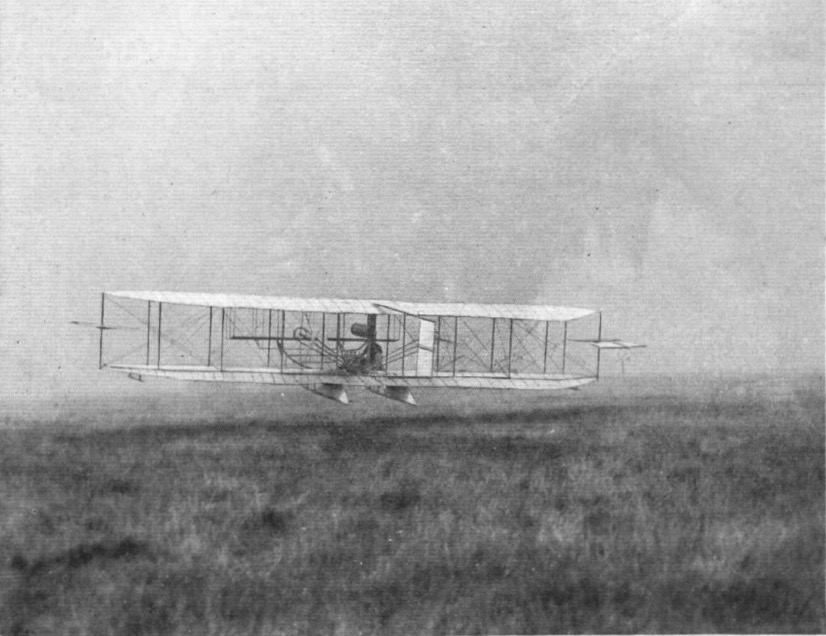
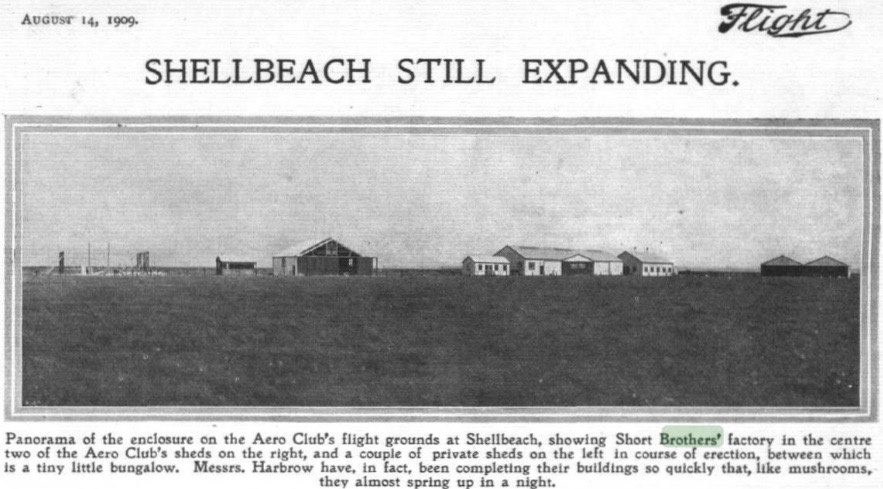
30 October 1909 “Mr. Moore-Brabazon flying at Shellbeach on the short biplane on which he won the “Daily Mail” £1,000 Prize on Saturday last.” (Flight, Vol. I, No. 45, 6 November 1909, at Page 703) “The Daily Mail offers a prize of £1,000 to the aviator covering in a heavier-than-air machine the greatest total distance across country, either in England or in France, officially recorded by either the French or English Aero Club, in the twelve months dating from the morning of August 15th, 1909, to the evening of August 14th, 1910.” 30 October 1909: John Theodore Cuthbert Moore-Brabazon, (later, 1st Baron Brabazon of Tara, G.B.E., M.C., P.C.) won a £1,000 prize sponsored by the Daily Mail when he flew his Short Biplane No. 2 on a circular flight of one mile (1.609 kilometers). Flight, Vol. I, No. 33, 14 August 1909, Page 493. At the Royal Aero Club flying field at Shellbeach, Isle of Sheppey (on the northern coast of Kent, in the Thames Estuary), Moore-Brabazon took off, turned around a post that had been set at a distance of one-half mile (0.804 kilometers), and returned to land next to the airplane’s launching rail. The duration of Brabazon’s flight was 2 minutes, 36½ seconds. (Flight, Vol. I, No. 45, 6 November 1909, at Page 701) Short Brothers Ltd., founded in 1897 as a balloon manufacturer, began building airplanes in 1908. It was the first company to build production airplanes. The Short Biplane No. 2 was designed by Horace Leonard Short. It was similar to the Wright Brothers Model A Flyer, which Short Brothers had been building under license in the United Kingdom. Rather than the Wright’s system of wing-warping, the Biplane No. 2 used ailerons. The first production batch consisted of six airplanes. Front view of Moore-Brabazon’s Short No. 2. “Mr. J. T. C. Moore-Brabazon’s new biplane, designed and constructed by Messrs. Short Bros., with which he has been making flights at Shellbeach, being brought up to the starting rail after a flight.” Cropped image. (Flight, Vol. I, No. 41, 9 October 1909, Page 631) Front quarter view of Moore-Brabazon’s Short No. 2. “Getting Mr. Moore-Brabazon’s Short biplane in place on to the starting rail.” Cropped image. (Flight, Vol. I, No. 41, 9 October 1909, Page 633) “Side view, on the starting rail, of Mr. Moore Brabazon’s Short No. 2 biplane, just constructed by Messrs. Short Bros.” Cropped image. (Flight, Vol. I, No. 41, 9 October 1909, Page 633) “Three-quarter view, from the back, of the Short biplane, constructed for Mr. Moore-Brabazon.” Cropped image. (Flight, Vol. I, No. 41, 9 October 1909, Page 632) The Biplane No. 2 was 32 feet, 0 inches in length (9.754 meters) with a wingspan of 48 feet, 8 inches (14.834 meters). Its gross weight was 1,485 pounds (674 kilograms). The Short Biplane No. 2 was powered by a water-cooled, normally-aspirated 8.990 liter (548.602-cubic-inch) Green Engine Co., Ltd., D.4 single overhead camshaft inline 4-cylinder engine, which produced 61.6 horsepower at 1,150 r.p.m., and turned two wooden 2-bladed propellers in a pusher configuration, by means of chain drive. The Green engine produced 67.8 horsepower at 1,210 r.p.m. during a 7 minute maximum power test. The Green D.4 was 44 inches (1.118 meters) long, 33½ inches (0.851 meters) high and 17 inches (0.432 meters) wide. It weighed 287 pounds (130.2 kilograms) with the flywheel. The Short Biplane No. 2 had a maximum speed of approximately 45 miles per hour (72 kilometers per hour). Green D.4 gasoline engine, designed by Gustavus Green, 1909. Copper waterjackets encase the individual cast steel cylinders which are bolted to the aluminum crankcase. (The Book of Modern Engines and Power Generators, vol. III, 1912) The Royal Aero Club began issuing pilot certificates in 1910. The first, Certificate No.1, went to J.T.C. Moore-Brabazon. J.T.C. Moore-Brabazon’s pilot license, Royal Aeronautical Club Aviator’s Certificate No. 1. (Royal Air Force Museum) © 2018, Bryan R. Swopes https://www.thisdayinaviation.com/30-october-1909/ #shortbiplane #dailymail #october #page #flight #shortbrothers #aeroclub #august #shellbeach #leonardshort #rss #feeds #linksharing #qwibbit

#shortbiplane #dailymail #october #page #flight
This Day in Aviation (Unofficial)
This Day in Aviation (Unofficial) 1d

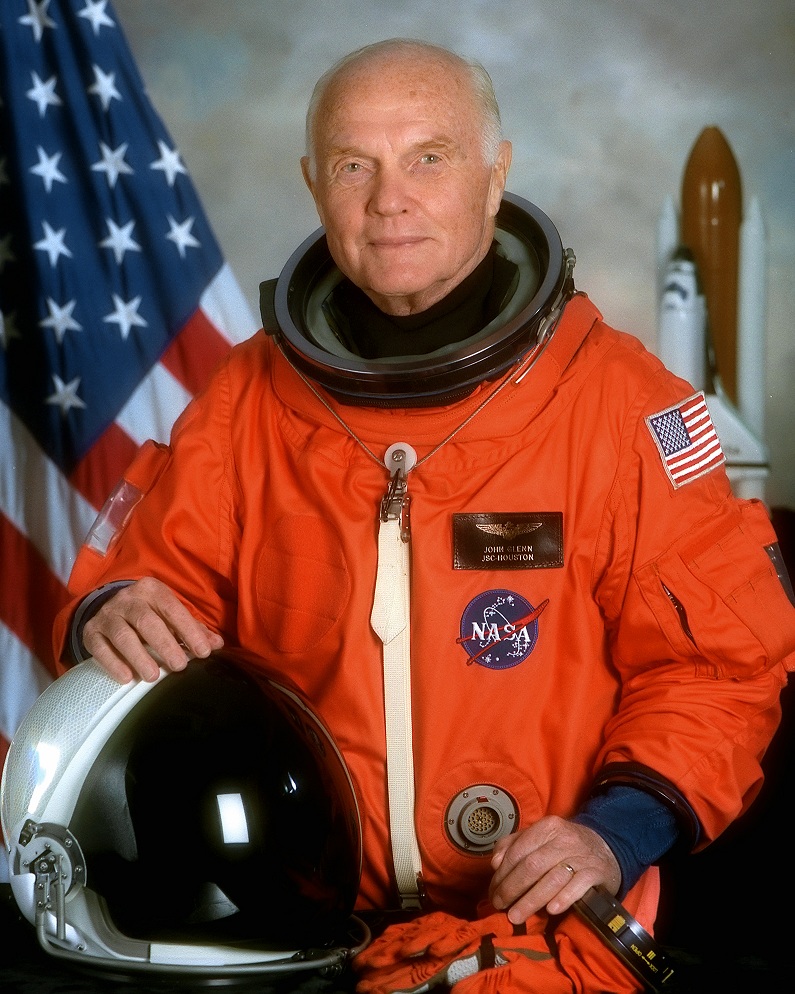
29 October 1998 Senator John Herschel Glenn, Jr., 14 April 1998. (National Aeronautics and Space Administration S98-06862, or GPN-2000-001175) 29 October 1998: Senator John Herschel Glenn, Jr., the first American to orbit the Earth, returned to space as a member of the Discovery STS-95 crew. At the age of 77, John Glenn was the oldest human to fly into space. Space Shuttle Discovery (OV-103) lifted off from Launch Complex 39B at the Kennedy Space Center, Cape Canaveral Florida, at 2:19:34 p.m., Eastern Standard Time (19:19:34 UTC), 29 October 1998. It was Discovery‘s twenty-fifth mission. The mission commander was Curtis Lee Brown, Jr. The pilot was Steven Wayne Lindsey. The three Mission Specialists were Stephen Kern Robinson, Scott Edward Parazynski, M.D., and Pedro Francisco Duque Duque (European Space Agency). The payload specialists were Chiaki Naitou Mukai, M.D., Ph.D. (National Space Development Agency of Japan), and John Glenn. Space Shuttle Discovery (STS-95) launches at Launch Complex 39B, Kennedy Space Center, Cape Canaveral, Florida, 2:19:34 p.m., EST, 29 October 1998. This was Discovery’s twenty-fifth flight. (National Aeronautics and Space Adminisitration PIA 9901499) Medical experiments performed on Glenn were intended to help understand human aging. The STS-95 mission elapsed time was 8 days, 21 hours, 44 minutes, 2 seconds. Combined with Senator Glenn’s orbital flight of 20 February 1961 aboard the Mercury space vehicle, Friendship 7, his total space mission time is 9 days, 2 hours, 39 minutes, 49 seconds. He had completed 137 orbits of the Earth. In late November 2016, Glenn was admitted to Ohio State University Wexner Medical Center at Columbus, Ohio. He died there, 8 December 2016, at the age of 95 years. Interesting Trivia: This was the first mission in which a space shuttle carried NASA’s original “meatball” insignia, rather than the “worm” logotype. © 2026, Bryan R. Swopes https://www.thisdayinaviation.com/29-october-1998/ #october #space #johnherschel #johnglenn #discovery #spaceshuttle #nationalaeronautics #capecanaveral #launchcomplex #kennedyspace #rss #feeds #linksharing #qwibbit

#october #space #johnherschel #johnglenn #discovery
This Day in Aviation (Unofficial)
This Day in Aviation (Unofficial) 1d

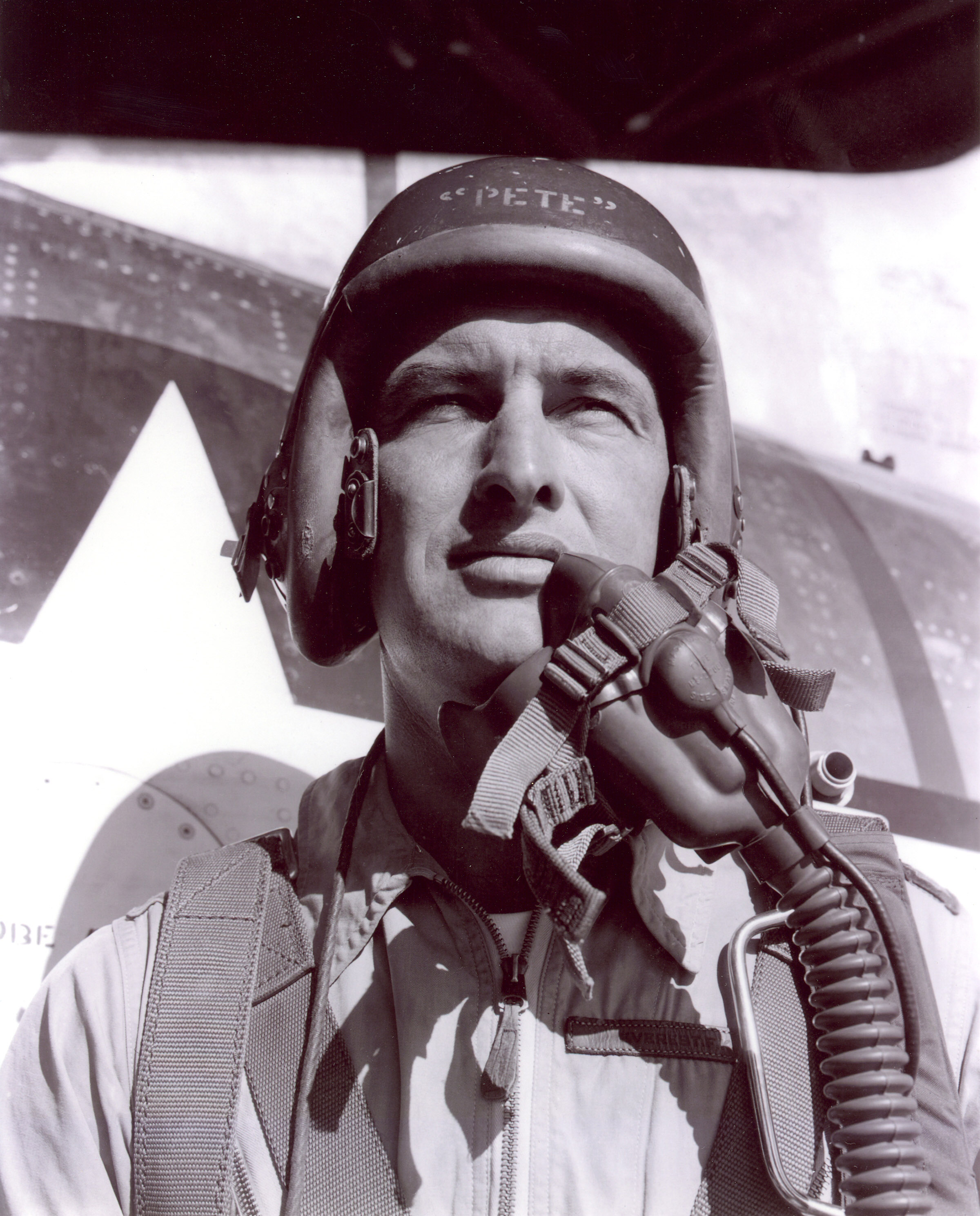
29 October 1953 North American Aviation YF-100A Super Sabre 52-5754 during a speed record attempt at the Salton Sea, 29 October 1953. (San Diego Air & Space Museum Archives, Catalog #: 01_00092970) 29 October 1953: Lieutenant Colonel Frank Kendall (“Pete”) Everest, United States Air Force, flew a new prototype air superiority fighter, North American Aviation’s YF-100A Super Sabre, serial number 52-5754, over the 3 kilometer and 15 kilometer courses at the Salton Sea, in the Colorado Desert of southeastern California. Flying four runs over the short course, Everest averaged 757.75 miles per hour (1,219.48 kilometers per hour). Although this was 4.80 miles per hour (7.725 kilometers per hour) faster than the FAI record set three weeks earlier by Lieutenant Commander James B. Verdin, U.S. Navy, with a Douglas XA4D-1 Skyray,¹ it was not fast enough to establish a new world record under FAI rules, which required that a new record exceed the previous record by 1%. Lieutenant Colonel Frank Kendall Everest, Jr., United States Air Force. (United States Air Force 071204-F-9999J-037) Next came four speed runs over the 15-to-25 kilometer course. All runs were made with the Super Sabre flying within 100 feet (30 meters) of the ground. The official Fédération Aéronautique Internationale (FAI) average speed was 1,215.298 kilometers per hour (755.151 miles per hour)—0.99 Mach. ² The course at the Salton Sea was used because its surface lies 235 feet (72 meters) below Sea Level. The denser air causes undesired transonic effects to occur at lower speeds, but the higher air temperatures help to delay them, allowing the pilot a greater margin of control during the speed record runs. Lieutenant Colonel Frank Kendall Everest, United States Air Force, and the North American Aviation YF-100A Super Sabre, 52-5754, 29 October 1953. (San Diego Air & Space Museum Archives, Catalog #: 01_00092971) Frank Kendall (“Pete”) Everest, Jr., was born 10 Aug 1920, at Fairmont, Marion County, West Virginia. He was the first of two children of Frank Kendall Everest, an electrical contractor, and Phyllis Gail Walker Everest. Attended Fairmont Senior High School, Fairmont, West Virginia, graduating in 1939. He studied at Fairmont State Teachers College, also in Fairmont, West Virginia, and then studied engineering at the University of West Virginia in Morgantown. Pete Everest enlisted as an aviation cadet in the United States Army Air Corps at Fort Hayes, Columbus, Ohio, 7 November 1941, shortly before the United States entered World War II. His enlistment records indicate that he was 5 feet, 7 inches (1.703 meters) tall and weighed 132 pounds (59.9 kilograms). He graduated from pilot training and was commissioned as a second lieutenant, Air Reserve, 3 July 1942. Lieutenant Frank Kendall Everest, Jr., Air Corps, United States Army. (schultzy) 2nd Lieutenant Everest married Miss Avis June Mason in Marion, West Virginia, 8 July 1942. they would have three children. He was promoted to 1st Lieutenant, Army of the United States, 11 November 1942. He was assigned as a Curtiss-Wright P-40 Warhawk pilot, flying 94 combat missions in North Africa, Sicily and Italy. He was credited with shooting down two German airplanes and damaging a third. Everest was promoted to the rank of Captain, 17 August 1943. Captain Frank Kendall (“Pete”) Everest, Air Corps, Unitred States Army, with his Curtiss-Wright P-40 Warhawk, North Africa, circa 1943. (West Virginia State Archives) In 1944, Everest was returned to the United States to serve as a flight instructor. He requested a return to combat and was then sent to the China-Burma-India theater of operations where he flew 67 missions and shot down four Japanese airplanes. Everest was appointed commanding officer of the 29th Fighter Squadron (Provisional), 5th Fighter Group (Provisional) at Chihkiang, China, in April 1945. He was himself shot down by ground fire in May 1945. Everest was captured by the Japanese and suffered torture and inhumane conditions before being freed at the end of the war. He was promoted to the rank of major, 1 July 1945. He was returned to the United States military 3 October 1945. Following World War II, Major Everest was assigned as a test pilot at Wright-Patterson Air Force Base, Ohio, before going west to the Air Force Flight Test Center at Edwards Air Force Base, California. Major Everest was returned to the permanent rank of first lieutenant, Air Corps, 19 June 1947, with date of rank retroactive to 3 July 1945. At Edwards, Pete Everest was involved in nearly every flight test program, flying the F-88, F-92, F-100, F-101, F-102, F-104 and F-105 fighters, the XB-51, YB-52, B-57 and B-66 bombers. He also flew the pure research aircraft, the “X planes:” the X-1, X-1B, X-2, X-3, X-4 and X-5. Pete Everest flew the X-1B to Mach 2.3, and he set a world speed record with the X-2 at Mach 2.9 (1,957 miles per hour, 3,149.5 kilometers per hour) which earned him the title, “The Fastest Man Alive.” He was the test pilot on thirteen of the twenty X-2 flights. In 1957, Lieutenant Colonel Everest was awarded the Harmon Trophy “for the most outstanding international achievements in the arts and/or science of aeronautics for the preceding year,” and also received the Octave Chanute Award “for an outstanding contribution made by a pilot to the art, science and technology of aeronautics.” Major Frank Kendall Everest, Jr., United States Air Force Air Force, with the Bell X-2 supersonic research rocketplane, on Rogers Dry Lake at Edwards AFB, California, 1956. (United States Air Force) Frank Everest returned to operational assignments and commanded a fighter squadron, two combat crew training wings, and was assigned staff positions at the Pentagon. On 20 November 1963, Colonel Everest, commanding the 4453rd Combat Crew Training Squadron, flew one of the first two operational McDonnell F-4C Phantom II fighters from the factory in St. Louis, Missouri, to MacDill Air Force Base, Tampa, Florida. In 1965, Pete Everest was promoted to the rank of brigadier general. He was assigned as commander of the Aerospace Rescue and Recovery Service. General Everest retired from the Air Force in 1973 after 33 years of service. Shortly after he retired from the Air Force, on 5 April 1973, Sikorsky Aircraft appointed General Everest its Chief Test Pilot. The manufacturer was developing the S-70 Black Hawk and S-76 commercial helicopters at the time. During his military career General Everest was awarded the Air Force Distinguished Service Medal; Legion of Merit with two oak leaf clusters (three awards); Distinguished Flying Cross with two oak leaf clusters (three awards); Purple Heart; Air Medal with one silver and two bronze oak leaf clusters (seven awards); Air Force Commendation Medal with one oak leaf cluster (two awards); Presidential Unit Citation with two bronze oak leaf clusters (three awards); Air Force Gallant Unit Citation; Prisoner of War Medal; American Campaign Medal; European-African-Middle Eastern Campaign medal with four bronze stars; Asiatic-Pacific Campaign Medal with two bronze stars; World War II Victory Medal; National Defense Service Medal; Armed Forces Expeditionary Medal; Vietnam Service Medal; Air Force Longevity Service Award with one silver and two bronze oak leaf clusters (seven awards); Air Force Small Arms Expert Marksmanship Ribbon; and the Republic of Vietnam Campaign Medal with 1960– device. General Everest was rated as a Command Pilot, and a Basic Parachutist. Brigadier General Frank Kendall Everest, Jr. United States Air Force (Retired), died at Tucson, Arizona, 1 October 2004 at the age of 84 years. Brigadier General Frank Kendall Everest, Jr., United States Air Force. (United States Air Force 060407-F-JZ507-705) The North American Aviation F-100 Super Sabre was designed as a supersonic day fighter. Initially intended as an improved F-86D and F-86E, the “Sabre 45” soon developed into an almost completely new airplane. The YF-100A prototype made its first flight 25 May 1953, and the F-100A entered service 27 September 1954, with the 479th Fighter Wing, George Air Force Base, California, 38 miles (61 kilometers) southeast of Edwards Air Force Base. The Super Sabre had a 49° 2′ sweep to the leading edges of the wings and horizontal stabilizer. The total wing area was 385.2 square feet (35.79 square meters). The wings had an angle of incidence of 0°, with no twist or dihedral. The ailerons were placed inboard on the wings and there were no flaps, resulting in a high stall speed in landing configuration. The horizontal stabilizer was moved to the bottom of the fuselage to keep it out of the turbulence created by the wings at high angles of attack. The F-100A had a distinctively shorter vertical fin than the YF-100A. The upper segment of the vertical fin was swept 49° 43′. There were two service test prototypes, designated YF-100A, followed by the production F-100A series. The first ten production aircraft (all of the Block 1 variants) were used in the flight testing program. The F-100A Super Sabre was 47 feet, 1¼ inches (14.357 meters) long with a wingspan of 36 feet, 6 inches (11.125 meters). With the shorter vertical fin, the initial F-100As had an overall height of 13 feet, 4 inches (4.064 meters), 11 inches (27.9 centimeters) less than the YF-100A. Chief Test Pilot George Schwartz Welch in the cockpit of the North American Aviation YF-100A Super Sabre, 52-5754, at Los Angeles International Airport. (North American Aviation, Inc.) The F-100A had an empty weight of 18,135 pounds (8,226 kilograms), and its maximum takeoff weight was 28,971 pounds (13,141 kilograms). It had an internal fuel capacity of 744 gallons (2,816 liters) and could carry two 275 gallon (1,041 liter) external fuel tanks. The new air superiority fighter was powered by a Pratt & Whitney Turbo Wasp J57-P-7 engine. The J57 was a two-spool axial-flow turbojet which had a 16-stage compressor section (9 low- and 7 high-pressure stages) and a 3-stage turbine (2 high- and 1 low-pressure stages). Its continuous power rating was 8,000 pounds of thrust (35.586 kilonewtons). The Military Power rating was 9,700 pounds (43.148 kilonewtons) (30-minute limit). Maximum power was 14,800 pounds (43.148 kilonewtons) with afterburner (5-minute limit). The engine was 20 feet, 9.7 inches (6.342 meters) long, 3 feet, 3.9 inches (1.014 meters) in diameter, and weighed 5,075 pounds (2,303 kilograms). Later production aircraft used a J57-P-39 engine, which had the same ratings. North American Aviation YF-100 Super Sabre 52-5754 parked on Rogers Dry Lake at Edwards Air Force Base, California. after its first flight, 25 May 1953. (United States Air Force 530525-F-9999X-1001) The Super Sabre was the first U.S. Air Force fighter capable of supersonic speed in level flight. The YF-100A had a maximum speed of 660 miles per hour (1,062 kilometers per hour) at 43,350 feet (13,213 meters). During testing, 52-5754 reached Mach 1.44 in a dive. The service ceiling was 52,600 feet (16,033 meters). Range with internal fuel was 422 miles (679 kilometers). North American Aviation YF-100A Super Sabre 52-5754 over Edwards Air Force Base, California, 25 May 1953. North American Aviation, Inc. 180-0-4 G) The production F-100 was armed with four M39 20 mm autocannons, capable of firing at a rate of 1,500 rounds per minute. The ammunition capacity of the F-100 was 200 rounds per gun. North American Aviation built 199 F-100A Super Sabres at its Inglewood, California, plant before production shifted to the F-100C fighter bomber variant. Approximately 25% of all F-100As were lost in accidents. North American Aviation YF-100A Super Sabre 52-5754 banks away from a chase plane during a test flight. (United States Air Force 060905-F-1234S-053) ¹ FAI Record File Number 9871 ² FAI Record File Number 8868 © 2019, Bryan R. Swopes https://www.thisdayinaviation.com/29-october-1953/ #unitedstates #frankkendall #statesair #airforce #kendalleverest #saltonsea #supersabre #westvirginia #northamerican #october #rss #feeds #linksharing #qwibbit

#unitedstates #frankkendall #statesair #airforce #kendalleverest
This Day in Aviation (Unofficial)
This Day in Aviation (Unofficial) 2d

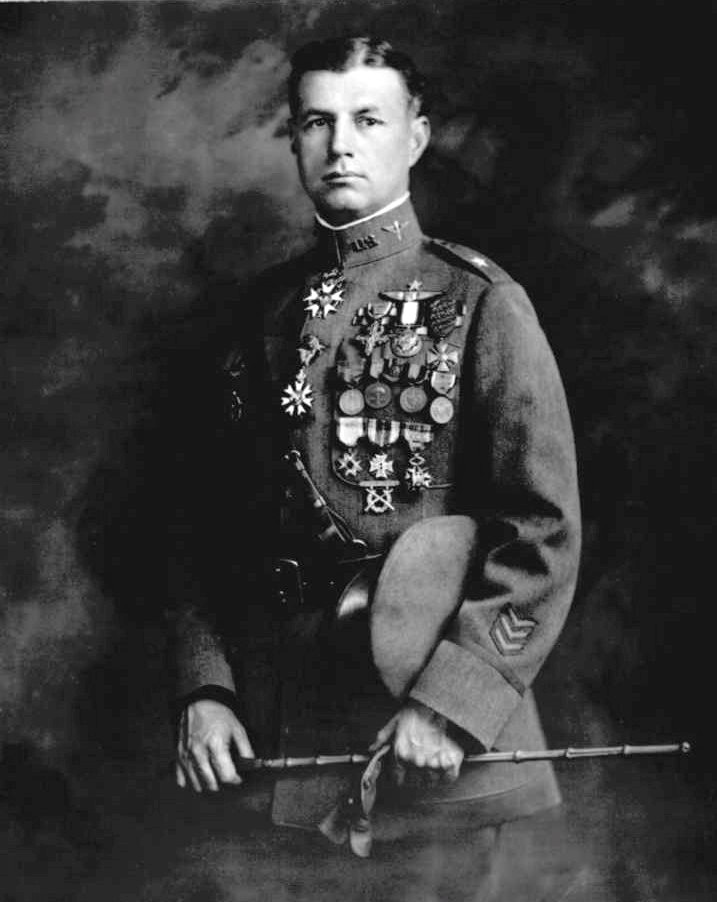
28 October 1925 Colonel William Mitchell, Air Service, United States Army, stands to hear charges read at his court-martial, 25 October 1925. (United States Air Force 021002-O-9999G-023) 28 October 1925: The court martial of Colonel William (“Billy”) Mitchell, Air Service, United States Army, began at Washington, D.C. For his criticism of the U.S. Navy’s leadership in regard to a number of deadly aviation accidents, he was charged with eight counts of insubordination. (Mitchell had been returned to his permanent rank of colonel after completing his term as Assistant Chief of the Air Service, during which he retained the temporary rank of brigadier general that he had held during World War I.) Billy Mitchell had been the senior American air officer in France during World War I. He was a determined advocate for the advancement of military air power and encouraged his officers to compete in air races and attempt to set aviation records to raise the Air Service’ public profile. He gained great notoriety when he bombed and sank several captured German warships to demonstrate the effectiveness of airplanes against ships. Ex-USS Alabama (BB-8) hit by a white phosphorous bomb dropped by one of Billy Mitchell’s bombers, 23 September 1921. ((United States Air Force 020903-O-9999J-007) His outspoken advocacy resulted in the famous Court Martial of Billy Mitchell, in which a military court consisting of twelve senior Army officers found Mitchell guilty of insubordination. He was reduced in rank and suspended for five years without pay. Major General Douglas MacArthur (later, General of the Army, a five-star rank) said that the order to serve on the court was, “. . . one of the most distasteful orders I ever received.” Mitchell resigned from the Army and continued to advocate for air power. He died in 1936. After his death, President Franklin D. Roosevelt elevated Billy Mitchell to the rank of Major General on the retired officers list. The North American Aviation B-25 twin-engine medium bomber was named “Mitchell” in recognition of General Mitchell’s efforts to build up the military air capabilities of the United States. Brigadier General William Mitchell, Air Service, United States Army. (University of Wisconsin, Milwaukee/NavSource) © 2016, Bryan R. Swopes https://www.thisdayinaviation.com/28-october-1925-2/ #unitedstates #airservice #billymitchell #statesarmy #october #airforce #colonelwilliam #worldwar #general #majorgeneral #rss #feeds #linksharing #qwibbit

#unitedstates #airservice #billymitchell #statesarmy #october
This Day in Aviation (Unofficial)
This Day in Aviation (Unofficial) 2d

28 October 1936 “Portrait of a Hero of the Soviet Union, Pilot A.B. Yumashev,” by Pyotr Konchalovsky, 1941. Oil on canvas, 140 x 111 cm. Russian Museum, St. Petersburg, Russia. A.B. Yumashev, 1939. (Central Archive of Cinema, Photographic and Phonographic Documents in St, Petersburg) 28 October 1936: Flying a four-engine Tupolev TB-3 bomber near Tchelcovo, U.S.S.R., Юмашев Андрей Борисович (Andrey Borisovich Yumashev, A.B. Yumashev, A. Youmachev, André Youmacheff), with a crewman named Kalachnikov, set a Fédération Aéronautique Internationale (FAI) World Record for Altitude With a 5,000 Kilogram (11,023 pounds) Payload, reaching 8,980 meters (29,462 feet).¹ This was the fourth world altitude record set by Yumashev with the TB-3. The transport variant of the Tupolev TB-3 is identified as the ANT-6. For the 28 October flight, Yumashev’s airplane was powered by four air-cooled, supercharged, 30.104 liter (1,837 cubic inches) Shvetsov ASh-62 nine-cylinder radial engines, rated at 1,000 horsepower at 2,200 r.p.m., each. This engine was developed from the earlier Shvetsov M-25, which was a license-built version of the Wright Aeronautical Corporation R-1820 Cyclone. The previous month, Andrey Yumashev had set three similar world records. At that time the TB-3 had been powered by four liquid-cooled, supercharged, 46.928 liter (2,863.7 cubic inches) displacement, Mikulin AM-34FRN 60° V-12 engines with gear reduction, rated at 1,200 horsepower at 2,000 r.p.m. Interestingly, this engine had a different piston stroke length for the left and right cylinder banks, resulting in different displacement for each bank. On 11 September, Yumashev had flown the TB-3 to an altitude of 8,116 meters (26,627 feet) with a 5,000 kilogram payload.² On 16 September, he reached 6,605 meters (21,670 feet) while carrying 10,000 kilograms (22,046.23 pounds).³ Finally, on 20 September the Andrey Yumashev and the TB-3, this time with crewman Cheverdinsky, reached 2,000 meters (6,562 feet) with a 12,000 kilogram (26,455.47 pounds) payload.⁴ Soviet Air Force Tupolev TB-3 heavy bombers. The Tupolev TB-3 was a four-engine heavy bomber built of a steel framework with corrugated steel skin panels. It had fixed landing gear. Initially, each main gear supported two wheels in a bicycle configuration. This was later changed to a single wheel and tire. While most were powered by liquid-cooled V-12 engines, various combinations of propellers were used. Some airplanes used wooden two-bladed propellers, while some used four-bladed propellers on the inner two engines. Later bombers used four-bladed propellers on all engines, while some ANT-6 transports used metal three-bladed variable-pitch propellers. The first prototype had flown in 1930 and the TB-3 was in service until 1939, by which time it was obsolete. There were still more than 500 when the Great Patriotic War began in 1941. In addition to service as a heavy bomber, it also flew cargo and was a paratroop transport. Tupolev ANT-6-4AM-34RVN, No. 209, “Aviaarktika,” modified for an August 1937 polar expedition. The airplane and its six-man crew disappeared. Major General Andrey Borisovich Yumashev was born at St. Petersburg, Russian Empire, in March 1902. He entered the army in 1918, serving with artillery units. In 1924 he trained as a pilot, serving as a combat pilot until 1927 when he became a test pilot at the Research and Testing Institute of the Air Force. Over the next ten years he tested fighters, bombers, and transports, and was appointed Test Pilot First Class. In addition to the four payload-to-altitude world records above, from 12–14 July 1937 he was copilot of a Tupolev ANT-25 which flew from Moscow to San Jacinto, California, across the North Pole.⁵ Yumashev flew the Ilyushin DB-3 long-range bomber during the Soviet Finnish War of 1940 (“The Winter War.”) During the Great Patriotic War, he commanded the 2nd Independent Fighter Aviation Squadron in defense of Moscow, then the 237th Fighter Regiment at the Kalinin Front. He served as deputy commander of the 3rd Air Force at the Kalinin Front and then the 1st Air Army on the Western Front. By the spring of 1943, he was in command of the 6th Fighter Air Corps at the Central front. By 1944, General Yumashev commanded the Eastern Front Air Defense and the Southern Front Air Defense. He participated in the attacks against Königsberg and Berlin at the end of World War II. A. B. Yumashev retired from the Soviet military in 1946. He then went on to become an accomplished artist. During his military service, General Yumashev was named Hero of the Soviet Union, twice was awarded the Order of Lenin, and five times the Order of the Red Banner. He was also awarded the Order of the Red Star. Major General Andrey Borisovich Yumashev died at Moscow, Russia, U.S.S.R., 20 May 1988. Major General Andrey Borisovich Yumashev, Soviet Air Force (1902–1988) (testpilot.ru) ¹ FAI Record File Number 8291 ² FAI Record File Number 8209 ³ FAI Record File Number 10412 ⁴ FAI Record File Number 8730 ⁵ FAI Record File Number 9300 © 2017, Bryan R. Swopes https://www.thisdayinaviation.com/28-october-1936/ #rss #feeds #linksharing #qwibbit

#rss #feeds #linksharing #qwibbit

Welcome to This Day in Aviation (Unofficial) spacestr profile!

About Me

Unofficial automated RSS/Atom links from the source This Day in Aviation, covering Inspected native titles/text: “15 October 1957. Original creators are credited at the source; follow original links. Zaps support the independent feed operator, not the source creators.

Interests

  • No interests listed.

Videos

Music

My store is coming soon!

Friends