spacestr

đź”” This profile hasn't been claimed yet. If this is your Nostr profile, you can claim it.

Edit
MBARI (Unofficial)
Member since: 2026-10-15
MBARI (Unofficial)
MBARI (Unofficial) 3h

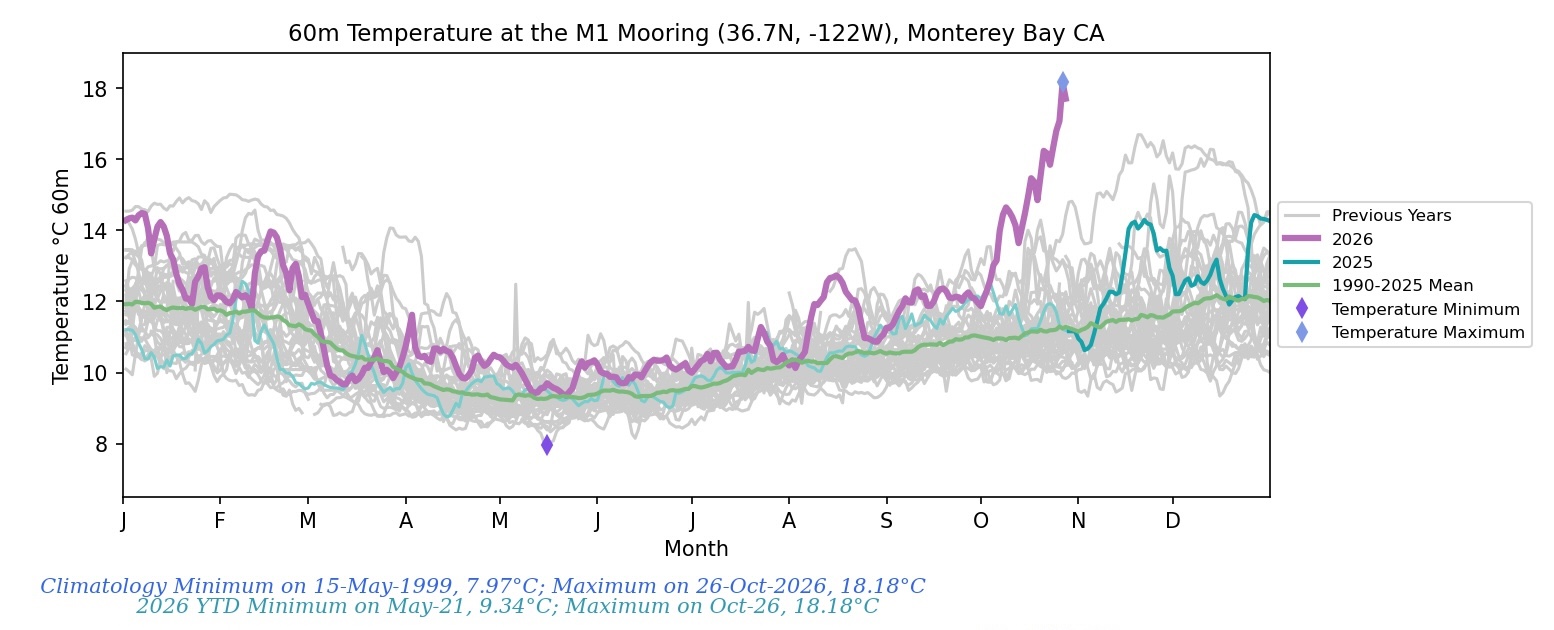
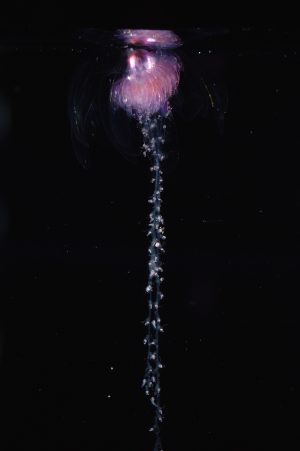
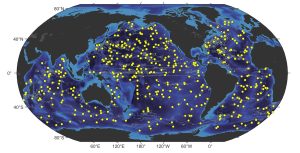
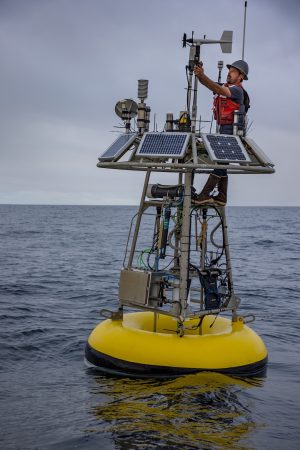
MBARI researchers observe the arrival of El Niño in Monterey Bay Over the past month, MBARI researchers have detected the first signals of an extreme El Niño in Central California: an influx of warm water and sightings of southern species. Why It Matters El Niño events have significant impacts on marine ecosystems and coastal communities. MBARI research and technology are providing data needed to monitor ocean health and advise resource managers assessing coastal geohazards. For more than 30 years, MBARI technology has recorded real-time data about Monterey Bay, from oceanographic conditions at the surface to biological surveys in the depths of Monterey Canyon. These data are integral to understanding our changing ocean and underpin the institute’s efforts to monitor the impacts of the incoming El Niño, which has been predicted to be among the strongest since the beginning of modern oceanography. Over the past month, MBARI researchers have detected the first signals of an extreme El Niño reaching Monterey Bay. MBARI moorings have recorded an anomalously strong influx of warm water at depth, while recent MBARI expeditions have observed warm-water species typically found farther south. “The 2026–27 El Niño has been forecast to be one of the strongest ever. Temperatures measured at an MBARI mooring have confirmed this for Monterey Bay, with the warmest temperatures observed in close to 40 years,” said MBARI Senior Scientist Francisco Chavez, an internationally recognized authority on El Niño. “MBARI scientists have been closely tracking the strengthening El Niño in the equatorial Pacific. Oceanographic data and biological observations now clearly show evidence that a strong El Niño has arrived in Central California.” Tracking El Niño The El Niño Southern Oscillation (ENSO) is a natural climate pattern in the Pacific Ocean with global implications for weather and ocean health. The atmosphere and ocean are closely linked, and an El Niño event develops when trade winds relax, and the Pacific’s warmest waters near Asia flow back towards the Americas. The warming of the Central and Eastern Pacific can increase global temperatures, alter atmospheric patterns, raise sea levels along coastlines, and affect marine ecosystems. GO-BGC has deployed nearly 500 autonomous floats that provide near real-time data on global ocean health. This network has been vital for tracking El Niño strengthening in the equatorial Pacific. Image courtesy of GO-BGC The Global Ocean Biogeochemistry Array (GO-BGC)—a collaborative initiative led by MBARI scientists Ken Johnson and Yui Takeshita and funded by the US National Science Foundation—collects real-time data on ocean health using a global network of hundreds of robotic biogeochemical Argo floats. Scientists have been monitoring data from GO-BGC floats deployed in the equatorial Pacific to track the developing El Niño. In late September, GO-BGC float data revealed an increase in water temperature, alongside a decrease in concentrations of dissolved carbon dioxide and nitrate, a chemical signature indicating weakened equatorial upwelling. Both are telltale signs of a strengthening El Niño. The ecological impacts were quickly evident. The equatorial Pacific is typically a region of high plankton productivity, but GO-BGC floats have already logged a sharp decline in chlorophyll concentrations, an indicator of phytoplankton biomass. “The GO-BGC floats show ecosystem properties before El Niño, in the event, and after, allowing a direct assessment of ocean change. Short-term climate oscillations like El Niño can be a harbinger of longer-term ocean change. These observations will improve our ability to forecast the future,” said Johnson. Monitoring Monterey BaySince 1989, instruments on MBARI M1 mooring have collected nearly continuous meteorological and oceanographic data. Image: Lori Eanes © Monterey Bay Aquarium MBARI’s moorings in Monterey Bay have been continuously collecting oceanographic data in Monterey Bay since the early 1990s as part of the long-term Monterey Bay Time Series. The M1 mooring is an important monitoring station located in the center of the bay. This mooring is tethered to an anchor on the seafloor at the mouth of the Monterey Canyon, approximately 1,100 meters (3,600 feet) underwater. Attached to the M1 buoy and along the cable from the surface to a depth of 300 meters (984 feet) are various scientific instruments that measure environmental conditions such as conductivity (salinity), temperature, depth, oxygen, chlorophyll, and currents. Instruments on the surface buoy gather meteorological data, including solar radiance, wind, pressure, and air temperature. These scientific data are collected around the clock and are made available online. MBARI scientists have been closely monitoring the development of El Niño in the equatorial Pacific, looking for signs of its arrival in California. Last week, Senior Scientist Francisco Chavez and MBARI’s Biological Oceanography Group recorded an anomalous warming at depth, a definitive signature of the arrival of El Niño. The temperature at 60 meters (approximately 200 feet), the depth of the thermocline that marks the transition from the ocean’s surface to its depths, has been steadily rising. As of October 26, the temperature reached 18.18 degrees Celsius (64.72 degrees Fahrenheit), surpassing the time series record high set on November 19, 1997, during a previous El Niño event. “This current El Niño has been forecasted to be one of the strongest of the modern record and the M1 mooring confirms this forecast for Monterey Bay,” said Chavez. “Our data show temperatures more than seven degrees centigrade over the long-term average. This warming has raised sea level by 16 centimeters, or about six-and-a-quarter inches.” MBARI has built a time series with nearly 40 years of hourly ocean temperature records in the heart of Monterey Bay at a depth of 60 meters (approximately 200 feet) underwater. All years are plotted as thin gray lines; the average year is the green line, and the current year is plotted in purple with the remainder of the previous year in dark green. The warmest measurement ever to date was observed on October 26, 2026. Image: Francisco Chavez © 2026 MBARI MBARI scientists are closely monitoring daily temperature logs from the M1 mooring to see if the warming trend continues to intensify. Data from the M1 mooring and other MBARI monitoring stations will provide vital context for ecological observations in the months ahead. The deepening of the thermocline pushes nutrient-rich water below the depth of upwelling, lowering ocean productivity. El Niño brings the warmest water to Monterey Bay during the winter, when ocean productivity is already low, but the effects linger for several months. The strongest biological impacts of El Niño will occur in the spring. The first harbingers of change in marine life Already, MBARI scientists have logged sightings of warm-water species that are rarely seen offshore of Central California. During recent blue-water scuba diving operations, MBARI researchers observed gelatinous animals that typically live in tropical waters and were brought north into Central California by El Niño. Image: Lena Vincent © 2026 MBARI While conducting blue-water scuba diving operations just west of Davidson Seamount during a recent expedition aboard MBARI’s flagship research vessel David Packard, Senior Scientist Steven Haddock and members of the Biodiversity and Biooptics Team observed a winged comb jelly (Ocyropsis sp.) and a rose siphonophore (Athorybia rosacea), both species that live in tropical waters. During recent maintenance at the M1 buoy, MBARI divers reported schools of halfmoon fish (Medialuna californiensis), a species more commonly found in Southern California. “Our team has been sequencing the genomes of ctenophores from a variety of ocean environments. Typically, we collect tropical species like Ocyropsis while diving near Hawaii. Finding large reproductive individuals right in our own backyard was a real surprise,” said Haddock. The influx of warmer water impacts marine life and ecosystems. Species accustomed to cooler water typically retreat northward, often causing cascading effects on the ocean food web. Seabirds are especially vulnerable to shifting food supplies, while whales find their habitat and feeding grounds compressed near the coast. MBARI researchers typically encounter the ctenophore Ocyropsis in the tropical waters of Hawaii. Image: Steven Haddock © 2026 MBARI MBARI researchers typically see the siphonophore Athorybia during their fieldwork in Mexico. Image: Anik Grearson © 2026 MBARI From the surface to the deep The impacts of El Niño are not limited to the ocean’s surface. Senior Scientist Bruce Robison and the Midwater Ecology Team have studied the midwater community in Monterey Bay for more than 30 years. Using MBARI’s remotely operated vehicles and, now, autonomous robots, they have collected a trove of animal observations in this expansive habitat between the ocean’s surface and seafloor. ROV Doc Ricketts and other advanced underwater technologies enable MBARI researchers to monitor the impacts of El Niño on deep-sea ecosystems. Image: Giovanna Sainz © 2026 MBARI MBARI’s Midwater Time Series allows our researchers and collaborators to observe seasonal patterns in community composition, but also observe changes over larger timescales. This and other time series projects at MBARI are vital resources for revealing the impacts of El Niño in Monterey Bay. During a recent expedition aboard the research vessel David Packard, the team encountered several species that are not often seen in Monterey Bay. Using MBARI’s remotely operated vehicle Doc Ricketts, the team observed several juvenile pelagic red crabs (Grimothea planipes). While MBARI has observed adult pelagic red crabs in Monterey Bay, we have never seen juveniles this far north. The expedition team also caught a quick glimpse of several Humboldt squid (Dosidicus gigas). Historically, the distribution of this large, powerful predator has been centered in the warm, eastern equatorial Pacific. Occasionally, the squid population expands, spreading poleward along the coasts of both North and South America, often associated with El Niño events. In the past, their arrival has decimated populations of commercially important species like Pacific hake (Merluccius productus) and restructured the pelagic food web in Monterey Bay. Large numbers of pelagic red crabs (Grimothea planipes) visit Monterey Bay during El Niño years, but MBARI has never observed juveniles of this warm-water crustacean this far north. Image: © 2026 MBARI “As a rule, these warm-water species are uncommon here in the cool depths of Monterey Bay. These sightings are likely the first indicators of a transition in deep midwater community composition and structure, linked to the impending El Niño,” said Robison. MBARI was part of a 30-year study that monitored the abyssal seafloor offshore of Central California. This research found that El Niño influences communities 4,000 meters (roughly 2.5 miles) underwater. Marine snow, sinking bits of dead plankton, poop, and other organic material, is a critical food supply for the deep seafloor. El Niño-driven changes in ocean productivity at the surface eventually ripple to the depths below. MBARI researchers have already begun deploying instruments to study how the 2026–2027 El Niño will affect deep-sea communities. Sharing our dataCeNCOOS gathers data from a variety of ocean instruments, from anchored moorings to autonomous gliders (pictured), deployed by organizations across California. Image: Calista Kerba © 2026 MBARI The ocean plays a vital role in our daily lives. El Niño has significant societal impacts, not just along the California coast, but across the globe. Resource managers and policymakers require robust data about El Niño to make informed decisions about fisheries, coastal flooding hazards, and more. MBARI researchers are mobilizing to gather data about the ecological impacts of El Niño on Monterey Bay and across Central California. MBARI is committed to sharing our research, technology, data, and expertise with decision-makers. The Central and Northern California Ocean Observing System (CeNCOOS) is a research collaboration housed at MBARI that provides the information and expertise needed to sustain ocean health. CeNCOOS has partnered with the Southern California Coastal Ocean Observing System and the Integrated Ocean Observing System (IOOS) to launch a new El Niño dashboard aggregating data from researchers and organizations across California. “CeNCOOS partners have expertise across physics, biogeochemistry, and biology from the Humboldt area south to Morro Bay. Our network brings together data from moorings, gliders, and other technologies along our coast, giving Californians a real-time view of how this El Niño is unfolding along our coast. These data can help fishing communities, coastal planners, and public agencies understand, manage, and mitigate the impact of this historic El Niño,” said CeNCOOS Director Henry Ruhl. “MBARI’s sustained investment in ocean observing has provided invaluable insight into ocean health for more than 30 years. Time series data allow us to detect anomalies against the backdrop of natural variations. Our innovative technology will continue to monitor the strengthening El Niño, providing the data that scientists urgently need to understand how this natural phenomenon is enhanced by the ongoing warming of the Pacific. MBARI will increase our research activities to assess impacts on marine life and ecosystems, contributing the information that coastal communities and economies need to know,” said MBARI President and CEO Antje Boetius. MBARI’s research on El Niño is made possible thanks to the longtime support of the David and Lucile Packard Foundation. For the latest updates on MBARI’s research and our latest observations of El Niño’s impacts on Monterey Bay and Central California, follow MBARI on social media. Story by Senior Science Communication and Media Relations Specialist RaĂşl Nava For additional information or images relating to this article, please email [email protected]. The post MBARI researchers observe the arrival of El Niño in Monterey Bay appeared first on MBARI. https://www.mbari.org/news/mbari-researchers-observe-the-arrival-of-el-nino-in-monterey-bay/ #montereybay #nino #mbari #mbariresearchers #pacific #ocean #centralcalifornia #ninosouthern #global #easternpacific #rss #feeds #linksharing #qwibbit
#montereybay #nino #mbari #mbariresearchers #pacific
MBARI (Unofficial)
MBARI (Unofficial) 1d

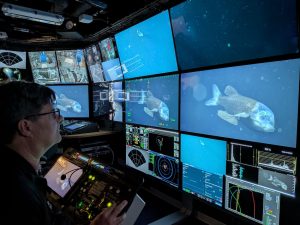
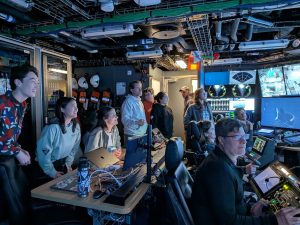
MBARI researchers film rarely seen deep-sea barreleye fish in 4K During a recent expedition aboard our flagship research vessel, MBARI scientists encountered a deep-sea barreleye, a unique fish with a transparent head. Why It Matters MBARI research and technology are revealing the astonishing diversity of life in the deep sea and humanity’s close connection to the ocean. Sharing footage of our unexpected animal encounters can inspire and engage the next generation of ocean explorers. During the Diving Deep for Delicate Drifters expedition aboard MBARI’s R/V David Packard, Senior Scientist Steven Haddock and team had a chance encounter with a barreleye fish (Macropinna microstoma). Image: Kyra Schlining © 2026 MBARI During a recent expedition aboard the research vessel David Packard, MBARI scientists encountered a rarely seen barreleye fish (Macropinna microstoma). This sighting is MBARI’s eleventh observation of this unique deep-sea fish with a transparent head. Researchers from MBARI’s Biodiversity and Biooptics Team were exploring waters approximately 90 kilometers (55 miles) offshore, filming and collecting deep-sea animals with the remotely operated vehicle (ROV) Doc Ricketts when they happened upon a barreleye fish approximately 600 meters (1,970 feet) underwater. “Seeing a barreleye fish is a rare treat. Crew from across the ship joined the science team in the control room, mesmerized by this remarkable animal. Deep-sea animals capture the imagination, creating wonder and awe that we hope will inspire stewardship of the largest living space on Earth,” said Senior Scientist Steven Haddock. During the eight-day Diving Deep for Delicate Drifters expedition, Haddock and team set out to study gelatinous animals like jellies, siphonophores, and ctenophores. Combining blue-water scuba diving near the surface with ROV surveys hundreds of meters underwater, this expedition supported the team’s ongoing work to understand how gelatinous animals have adapted to life in the deep water column. Once news spread that the team had encountered a barreleye fish (Macropinna microstoma), it was standing room only in the ROV Doc Ricketts control room. Image: Kyra Schlining © 2026 MBARI With science operations complete for the day, MBARI’s submersible pilots were “flying” ROV Doc Ricketts back to the surface for recovery when Research Specialist Shannon Johnson spotted the barreleye and called out for them to stop. Most of the science team had relocated to the ship’s wet lab to prepare to catalog the incoming specimens from the ROV and ran back to the control room, joined by the ship’s crew, when they heard the news. The sighting of a barreleye fish was an exhilarating surprise capping off a long and productive week of deep-sea research. Past MBARI observations by Senior Scientist Bruce Robison and Research Specialist Kim Reisenbichler were instrumental in revealing this fish’s unique feeding behavior. Macropinna lives in the ocean’s twilight zone, scanning the waters above for the silhouettes of prey. Large fins provide stability and maneuverability as a barreleye drifts in place, eyes transfixed on the waters above. After spotting a tasty morsel, those large tubular eyes rotate beneath a dome of transparent tissue to keep prey in sight. The gelatinous shield also protects the fish’s eyes when plucking small crustaceans caught in the stinging tentacles of deep-sea siphonophores. The expedition team spent approximately 20 minutes observing the barreleye, leveraging a high-resolution 4K camera on ROV Doc Ricketts to get a closer look at the animal’s body and behavior. They experimented with different lighting conditions to showcase the fish’s unique transparent head shield. ROV Pilot/Technician Cameron Law was even able to maneuver Doc Ricketts close enough to film the fish with the vehicle’s VR camera, capturing 3D stereo imagery that can contribute to future education and outreach efforts. The scientific name Macropinna microstoma translates to “large fins, small mouth.” These distinctive features of the barreleye fish were on full display as Research Specialist Shannon Johnson logged details of this sighting in MBARI’s annotation software. Image: Kyra Schlining © 2026 MBARI Scientists in the Biodiversity and Biooptics Team study how marine animals interact with light. They have conducted extensive research on the visual systems of deep-sea animals. MBARI researchers did not collect this barreleye, but the footage they recorded will be a vital resource for continued research on this elusive species. Their close-up examination of the eyes of Macropinna will help the team better understand vision in the dim depths of the ocean’s twilight zone. The pigments in the lenses of the fish’s eyes are thought to serve a similar function as the green pigments in the eyes of the strawberry squid (Histioteuthis heteropsis), one of the barreleye’s deep-sea neighbors that the Biodiversity and Biooptics Team has studied in the past. “Macropinna reminds us of the surprising ways that animals have adapted to thrive in the ocean’s midwater,” said Haddock. “So many of them survive by looking for subtle optical cues, like a shadow passing overhead, and this sets off evolutionary competition, pitting bioluminescent camouflage against increasingly sophisticated visual capabilities.” In nearly 40 years of ocean exploration, MBARI has completed roughly 7,000 ROV dives and recorded more than 41,000 hours of deep-sea video, yet we have only encountered this species 11 times. MBARI’s last sighting of Macropinna was in 2021. This recent sighting is our first to be filmed in 4K and the first from MBARI’s new flagship research vessel. This summer, MBARI researchers leading an expedition with Schmidt Ocean Institute in the mid-Atlantic Ocean recorded footage of another species of deep-sea barreleye, the binocular fish (Winteria telescopa). The Diving Deep for Delicate Drifters expedition was made possible thanks to the David and Lucile Packard Foundation’s longtime support of MBARI’s work. Learn more about the barreleye fish. Read logs from the Diving Deep for Delicate Drifters expedition. Story by Senior Science Communication and Media Relations Specialist RaĂşl Nava For additional information or images relating to this article, please email [email protected]. The post MBARI researchers film rarely seen deep-sea barreleye fish in 4K appeared first on MBARI. https://www.mbari.org/news/mbari-researchers-film-rarely-seen-deep-sea-barreleye-fish-in-4k/ #mbari #barreleyefish #rarelyseen #docricketts #rovdoc #davidpackard #team #stevenhaddock #mattersmbari #delicatedrifters #rss #feeds #linksharing #qwibbit
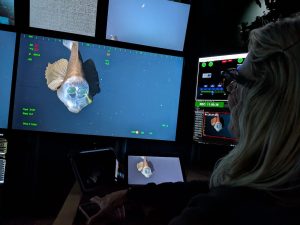
#mbari #barreleyefish #rarelyseen #docricketts #rovdoc
MBARI (Unofficial)
MBARI (Unofficial) 6d

Anchored in Paleochori Expedition log by Graduate Fellow Javiera Fuentes Guíñez Between launches and recoveries, sunrises and sunsets, the days in Milos fly by. As the team gains experience in our living laboratory of Paleochori Bay, a steadier routine has started to take shape. Our days begin early with a hearty breakfast to fuel the day ahead, then we load the van and head out to the deployment site for a day of fieldwork with MOLA, our portable mapping robot. Whether we’re deploying MOLA from a boat or from shore, the sequence is the same: set up our base station, run through the pre-dive checklist, and launch. The hours that follow are full. Some of us process the data, others pilot the vehicle to the areas of interest to launch autonomous missions, and still others keep an eye on the sensors and systems. As the sun begins to set, we recover the vehicle and head back to our lodging, where a few small, friendly kittens are always waiting to add some extra cuteness to the day. In the evenings, the expedition team has enjoyed exploring Greek cuisine, including a special dinner to celebrate Eric’s birthday. Image: Giancarlo Troni © 2026 MBARI Once MOLA is back on shore, the data backup starts, and the team gets ready for a group dinner. Guided by our local collaborators, these dinners have become a chance to enjoy Greek cuisine and learn a little more about Greek culture. Our Greek is improving, slowly, very slowly. Every now and then one of us still greets someone with “Calamari!” instead of “Kalimera,” especially when we’re hungry. Life doesn’t pause while we’re in the field, and some important personal moments come along with us. On this trip we celebrated the birthday of our lead pilot, Eric. It’s far from his first birthday away from home: Eric has spent several of them at sea, doing research and helping scientists understand the ocean a little better. The team gathered to celebrate him and his passion for ocean exploration. Thank you, Eric, for always lifting the team’s morale with your jokes and your laugh. Happy birthday! The long hours are more than worth it. The magic of the underwater world around Milos, the warmth of its people, and the beauty of the island make up for every early morning. Places like this reaffirm our commitment to understanding our ocean and providing the data and tools that communities need to protect and preserve marine life, ecosystems, and resources for future generations. Team Directory Javiera Fuentes Guíñez Graduate Fellow Collaborators TK The post Anchored in Paleochori appeared first on MBARI. https://www.mbari.org/news/anchored-in-paleochori/ #paleochori #greek #team #eric #fuentesguinez #javierafuentes #graduatefellow #mola #oncemola #milos #rss #feeds #linksharing #qwibbit
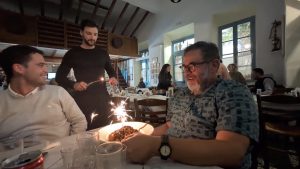
#paleochori #greek #team #eric #fuentesguinez
MBARI (Unofficial)
MBARI (Unofficial) 7d

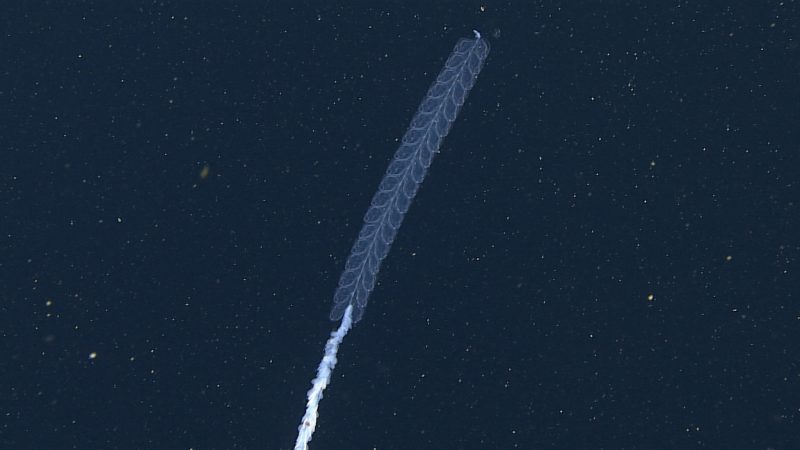
New research reveals the hidden diversity of deep-sea siphonophores New research is shedding light on the diversity of deep-sea siphonophores. A team of scientists from MBARI, the University of GdaĹ„sk, New York University, and Yale University conducted a comprehensive examination of Bargmannia siphonophores using museum material, submersible observations, and genomic sequencing. This work uncovered two previously unknown species: Bargmannia marlena and Bargmannia pyrosa. The team published their findings in the Zoological Journal of the Linnean Society last week. Led by Senior Scientist Steven Haddock, MBARI’s Biodiversity and Biooptics Team works with international collaborators to study the biodiversity of gelatinous animals. Image: Kyra Schlining © 2026 MBARI Siphonophores are elongate gelatinous animals related to jellies and corals that are some of the most dominant predators in the ocean’s midwater, the open water between the surface and the seafloor. Despite their abundance and important ecological roles, siphonophores remain challenging to study. Advanced underwater technology allows scientists in MBARI’s Biodiversity and Biooptics Team to observe the anatomy and behavior of deep-sea siphonophores in their natural environment and gently collect these delicate animals for further study in the lab. Bargmannia are among the most streamlined siphonophores, propelled by dozens of swimming bells that jet in unison. MBARI scientists and their collaborators conducted a comprehensive examination of this widely distributed group of deep-sea siphonophores. They documented the physical features of museum specimens, cataloged habitat data from in situ observations with underwater robots, and extracted DNA for genomic sequencing. The team was even able to sequence DNA from a historical museum specimen that had been preserved in formalin. This integrative approach allowed the team to resolve historical taxonomic ambiguities that underestimated the true diversity within this group of deep-sea siphonophores. The team identified seven Bargmannia species in MBARI’s extensive video archive, with an eighth species identified from museum collections. Two of these species—Bargmannia marlena with stretchy orange stomachs and Bargmannia pyrosa with a fiery red body—were previously unknown to science. The eight species represent two evolutionary lineages. While they overlap geographically, their distributions are structured along depth gradients, demonstrating how species evolve across a three-dimensional aquatic environment. Bargmannia amoena • offshore Central California • 405 meters (1,329 feet) • Image: © 2014 MBARI Bargmannia elongata • Monterey Canyon • 801 meters (2,628 feet) • Image: © 2018 MBARI Bargmannia lata • San Nicolas Basin, Southern California • 1,197 meters (3,927 feet) • Image: © 2020 MBARI Bargmannia marlena sp. nov. • Gulf of California • 1,113 meters (3,652 feet) • Image: © 2015 MBARI Bargmannia profunda • offshore Central California • 3,265 meters (10,712 feet) • Image: © 2018 MBARI Bargmannia pyrosa sp. nov. • Gulf of California • 1,696 meters (5,564 feet) • Image: © 2015 MBARI Bargmannia stenotes • Gulf of California • 1,584 meters (5,197 feet) • Image: © 2015 MBARI MBARI’s close collaborations with expert taxonomists are helping document deep-sea biodiversity. MBARI research and technology have contributed to the discovery of more than 300 new species in the depths of Monterey Bay and beyond. Each new discovery helps us better understand and protect the largest living space on Earth. This research was supported by the David and Lucile Packard Foundation through its longtime funding of MBARI’s work, with additional support from the US National Science Foundation (Grants OCE-1829805 and OCE-1829835), the Polish National Agency for Academic Exchange (grant BPN/BEK/2023/1/00388), and the University of GdaĹ„sk UGrants program (UGrants–start grant 1220/157/2024). Research Publication: MaĹ„ko, M.K., S.H. Church, D.A. Ramirez, S.H.D. Haddock, and C.W. Dunn. 2026. Integrating mitogenomes, morphology, and ecology reveals depth-structured diversification and two new species of deep-sea Bargmannia siphonophores (Cnidaria: Hydrozoa). Zoological Journal of the Linnean Society, 208(2): zlag150. https://doi.org/10.1093/zoolinnean/zlag150 For additional information or images relating to this article, please email [email protected]. The post New research reveals the hidden diversity of deep-sea siphonophores appeared first on MBARI. https://www.mbari.org/news/new-research-reveals-the-hidden-diversity-of-deep-sea-siphonophores/ #mbaribargmannia #siphonophores #team #bioopticsteam #newyork #diversity #yaleuniversity #california #linneansociety #zoologicaljournal #rss #feeds #linksharing #qwibbit

#mbaribargmannia #siphonophores #team #bioopticsteam #newyork
MBARI (Unofficial)
MBARI (Unofficial) 7d

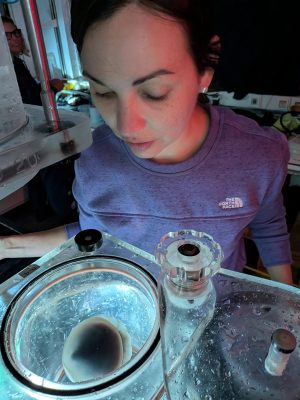
Light in the ocean Expedition log by MBARI Postdoctoral Fellow Natasha Picciani and MBARI Senior Research Technician Lena Vincent When we think of animal eyes, humans, birds, and cephalopods might come to mind. But gelatinous animals like medusa jellies also have eyes that vary in complexity and rely on light sensing for several important biological functions. In the deep sea, the dominant light deep-sea animals detect isn’t sunlight, but living light: brilliant displays of bioluminescence. Although these phenomena are common in the ocean, we know surprisingly little about the full diversity of ways organisms interact with light. One of our main goals as a research team is to better understand how animals produce and sense bioluminescent light in the ocean. MBARI Postdoctoral Fellow Natasha Picciani peers inside one of the ROV samplers that has just brought a deep-sea jelly up to the ship. Image: Kyra Schlining © 2026 MBARI On this research expedition aboard R/V David Packard, we are collecting animals to characterize their light-sensing capabilities, document their bioluminescent displays, and prepare samples for further study using the advanced genetic and biochemical tools we have on shore. We are particularly interested in examining poorly-studied animals with unique light-producing and light-sensing chemistries to better understand the evolution of these traits across the tree of life. So far, we have successfully collected many samples that will be useful for this. During our blue-water scuba dives near the surface and collections with MBARI’s remotely operated vehicle (ROV) Doc Ricketts thousands of meters underwater, we encountered numerous medusae, ctenophores, and siphonophores, including some deep-sea medusae with pigment eye spots in unusual places and shallow-water ones with eyespots that make them strongly reactive to light. On two of our ROV dives to below 2,000 meters (6,560 feet), we were lucky enough to encounter a rare bathypelagic nudibranch—a swimming snail—called Bathydevius caudactylus, which was described in 2024 by MBARI scientists Steve Haddock and Bruce Robison. We were really excited to find them because this species is one of the few known bioluminescent swimming nudibranchs, and its biochemistry is completely unknown. We were able to collect these two nudibranchs and observe them in our shipboard dark room to document their bioluminescent properties, including the color of their light, which is a beautiful blue-green. We preserved the samples for further study to identify the genes responsible for light production and compare them with those in other known bioluminescent systems. On this trip, we’ve also collected a number of other bioluminescent animals, including sponges, polychaete worms, and comb jellies, as well as filmed light displays in situ using an ultra-sensitive low-light camera mounted on the ROV. We’re really excited to see what we learn from all of these amazing animals! Team Directory Aaron Micallef Senior Scientist/Marine Geologist Collaborators Jong Kuk Hong (Korean Polar Research Institute), Young Keun Jin (Korean Polar Research Institute), Tae Siek Rhee (Korean Polar Research Institute), Scott Dallimore (Geological Survey of Canada). Mathieu Duchesne (Geological Survey of Canada) The post Light in the ocean appeared first on MBARI. https://www.mbari.org/news/light-in-the-ocean/ #light #mbaripostdoctoral #fellownatasha #natashapicciani #ocean #rov #lenavincent #technicianlena #kyraschlining #davidpackard #rss #feeds #linksharing #qwibbit
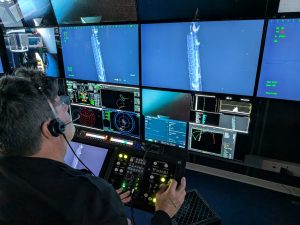
#light #mbaripostdoctoral #fellownatasha #natashapicciani #ocean
MBARI (Unofficial)
MBARI (Unofficial) 7d

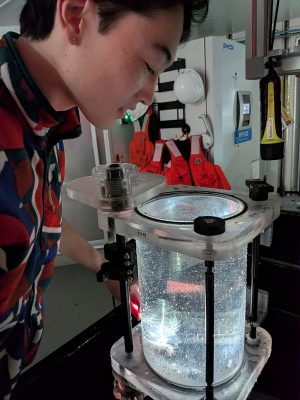
Siphonophores, served cold Expedition log by Graduate Student Collaborator Ethan Kahn, Yale University I’m a new graduate student in the Dunn Lab at Yale University, where we are interested in the biology and evolution of siphonophores, a group of long, slender jellies. In the past couple of months, I’ve read a lot about these animals, but because they mostly live far from shore in the open ocean, I had never seen one in person. Being invited to join an MBARI expedition on R/V David Packard has been an incredible chance for me to encounter live siphonophores and learn about their anatomy, taxonomy, behavior, and environments. My work begins at the end of the day when the ROV brings precious specimens up from the deep ocean. Image: Kyra Schlining © 2026 MBARI My first challenge: figuring out what in the world I’m looking at. Siphonophores have many specialized body units, called zooids, which are connected by a linear stem. Multi-zooid siphonophores evolved from ancestral solitary forms, and within the siphonophore, each individual zooid functions like an organ, specialized to help the animal swim, feed, defend itself, or reproduce. These zooids are often densely packed on the stem, and it takes a microscope plus a specialized eye to distinguish the various bumps and growths and recognize their functions. As I encounter specimens, I am preserving tissues for research—some samples will provide crucial data for ongoing projects, while others will be deposited in a natural history museum collection as a permanent record of the biodiversity we encountered on this expedition. Using MBARI’s remotely operated vehicle (ROV) Doc Ricketts, we’re able to collect deep-sea siphonophores that live hundreds or even thousands of meters underwater. After a full day of exploring, Doc Ricketts returns to the ship in the evening, and then my work can really begin. I scoop and ladle the delicate jellies into a photo tank, keeping them submerged at all times. Any time out of the water can introduce air bubbles or cause the temperamental animals to fragment. After photographing the full body, I look at each siphonophore under a dissecting microscope, where I can view each zooid individually, tracing ridges and noting colony arrangements that help identify each species. Some days, I work into the wee hours of the morning, while on others I only have a couple of specimens to process and can turn in by 10:00 p.m., but either way I’m up early the next day to watch the ROV dive back into the near-freezing ocean depths. It is especially cool to see how our knowledge is constantly expanding. For example, a new study coauthored by MBARI Senior Scientist Steve Haddock and members of my lab at Yale described two new siphonophore species in the genus Bargmannia, which we have been able to see on this cruise. This publication came out just in time to help me identify specimens that can provide important data for future phylogenetic and biochemical studies on these now-distinct species. Our expedition opens a small window into a strange and vast world, and I’m grateful to be along for the ride, witnessing and documenting an ecosystem that is too alien and too beautiful to be found anywhere else in the known universe. Team Directory Aaron Micallef Senior Scientist/Marine Geologist Collaborators Jong Kuk Hong (Korean Polar Research Institute), Young Keun Jin (Korean Polar Research Institute), Tae Siek Rhee (Korean Polar Research Institute), Scott Dallimore (Geological Survey of Canada). Mathieu Duchesne (Geological Survey of Canada) The post Siphonophores, served cold appeared first on MBARI. https://www.mbari.org/news/siphonophores-served-cold/ #yaleuniversity #graduatestudent #siphonophores #mbari #docricketts #ethankahn #collaboratorethan #rov #davidpackard #dunnlab #rss #feeds #linksharing #qwibbit
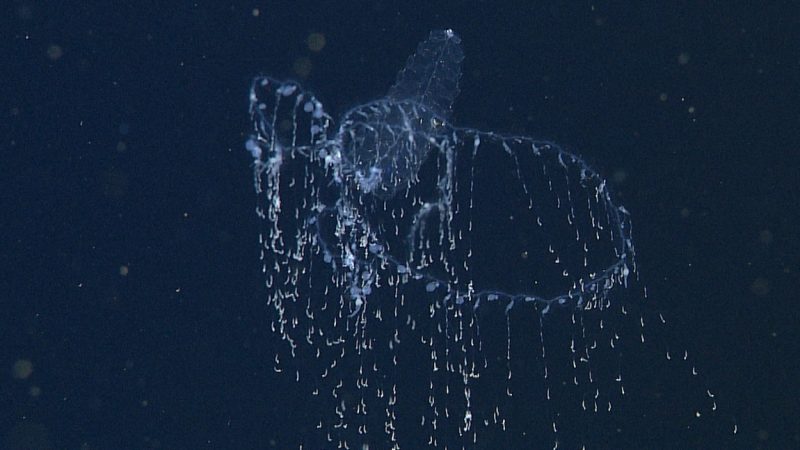
#yaleuniversity #graduatestudent #siphonophores #mbari #docricketts
MBARI (Unofficial)
MBARI (Unofficial) 9d

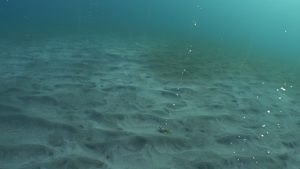
Ready, set, dive! Expedition log by Graduate Fellow Javiera Fuentes Guíñez The CoMPAS Lab designed the MOLA AUV to be a portable platform for seafloor mapping and ocean exploration. On Monday, our team journeyed from MBARI to Milos. The long day of travel started with a red-eye flight from San Francisco, California, to Athens, Greece, with a layover in London. After touching down in Greece, we loaded all of our gear into a van—a real-life game of Tetris—for the ferry from Athens to Milos, the little MOLA safely tucked away in a hard suitcase. One last 20-minute drive across the island, and there it was: Paleochori Beach. Tired and jet-lagged, the team and MOLA had officially arrived. We spent the first day exploring the area, scouting the best spot for our base station, and working out the logistics for deploying MOLA in the Sea of Crete. Next, we unpacked our many cases and ran a dry test, setting everything up as if we were about to deploy and confirming we had communications with the vehicle’s “brains” and sensors. The team went to bed excited for the next day’s dive in Paleochori Bay. On Friday morning, we packed our boxes, loaded the car, and drove to Paleochori Beach. There, we ballasted the vehicle, ran through our pre-dive checks, and deployed MOLA right from the beach. Onwards and downwards it went! MOLA’s main science camera gave the team a closer look at several “chimneys” releasing gas bubbles from the seafloor in Paleochori Bay. These bubbles contain a mix of carbon dioxide and methane. Image: © 2026 MBARI Over the next four hours, MOLA explored the seafloor with our science camera and saw an expansive hydrothermal vent field. For the first time, we watched through MOLA’s “eyes” as gas bubbles escaped through the sandy seafloor, circulating through the volcanic subsurface along fractures and permeable pathways. MOLA’s sensor systems collected detailed data about these vent fields. A monocular science camera captured high-resolution 4K video that we will later process for object detection. Our mapping rig, carrying a monocular RGB camera and a pair of grayscale stereo cameras, collected imagery that will allow us to reconstruct parts of the seafloor in Paleochori Bay using techniques like SLAM and photogrammetry. All of these images and other data will be processed into maps with software tools the CoMPAS Lab has already proven in the field. These data will also help us test new algorithms the lab is building for vent detection and characterization. CoMPAS Lab engineering innovation is bringing the vent fields of Milos to life. A reliable navigation stack powers the MOLA’s mapping software. Ours combines three sensors—a USBL, a DVL, and an IMU—along with drivers and algorithms developed by the team to make them work together and estimate the vehicle’s position. On top of the navigation stack sits our six-degrees-of-freedom controller, also developed in-house, which lets the MOLA AUV move in any direction: up and down, side to side, forward and backward, as well as pitch, roll, and yaw. The controller uses the position information from the navigation stack to guide the vehicle to its target. While we’re testing and refining our mapping sensors and software, we keep the vehicle tethered back to shore, but in the future, MOLA will be able to run missions all on its own. As the sun set, MOLA returned to shore carrying a treasure trove of data for MBARI’s engineers and our collaborators from the National and Kapodistrian University of Athens (NKUA). MOLA is now recharging and getting ready for the next dive! Team Directory Javiera Fuentes Guíñez Graduate Fellow Collaborators TK The post Ready, set, dive! appeared first on MBARI. https://www.mbari.org/news/ready-set-dive/ #mola #paleochoribay #fellowjaviera #fuentesguinez #graduatefellow #milos #lab #compaslab #dive #beach #rss #feeds #linksharing #qwibbit
#mola #paleochoribay #fellowjaviera #fuentesguinez #graduatefellow
MBARI (Unofficial)
MBARI (Unofficial) 9d

Into the blue Expedition log by MBARI Graduate Research Assistant Anik Grearson We woke up bright and early with the sunrise to launch remotely operated vehicle (ROV) Doc Ricketts on a dive to 2,200 meters (approximately 7,200 feet) below the surface at a station north of Davidson Seamount, an underwater mountain offshore of Central California. While part of our team stayed in the control room and worked with the ROV pilots to observe and collect deep-sea midwater animals, Steve, Lena, Shannon, Drew, and I set off in a smaller boat to collect shallow-water animals just below the surface using a specialized scuba technique called blue-water diving. In this setup, divers are tethered together via a central down-line to control our descent and ascent, and so we don’t drift too far apart from each other. The siphonophore Athorybia rosacea is typically found in warmer waters. Image: Anik Grearson © 2026 MBARI The amazing team on R/V David Packard got the dive boat safely over into the water, and we motored off with our trusty boatswain, Scott, at the helm. Today, a pod of common dolphins joined us, playfully leaping out of the water and riding the bow of the small boat as we headed a kilometer away from the larger vessel. Once on station, we donned our gear, rolled backward into the water, clipped into our lines, and dropped down 18 meters (60 feet) below the surface. We found ourselves surrounded by gelatinous animals of all kinds: delicate jellies, beautiful siphonophores, large salp chains, and hungry ctenophores! The water surrounding us had a bluish-green tinge, and the sunlight shining from above illuminated the near-invisible creatures we were seeking. Many of these animals are so fragile that the only way to truly see their natural behaviors and morphology is on a blue-water dive like this. We sometimes encounter rare and unexpected organisms on blue-water dives. Today, we found a species of tropical ctenophore called Ocyropsis, which has muscular lobes that it uses for quick swimming to escape predators. We also found a beautiful pink siphonophore, Athorybia rosacea, which uses its stinging tentacles like a jig to catch its prey. We typically only see Ocyropsis and Athorybia in warmer waters farther south, so we were surprised to find them 60 miles off the coast of Big Sur, California. As El Niño strengthens, warm water is moving up the California coast. During past El Niño events, we have seen visitors from tropical waters here in Central California, so we expected to see some southern species venturing farther north. We even encountered a tiny ribbonfish larva who greeted us with its long, thread-like fin rays. We carefully collected a variety of gelatinous animals in glass jars and brought them back to R/V David Packard for closer inspection. Back on the ship, our team examined, photographed, and preserved these specimens for scientific study. Our lab is particularly interested in gelatinous marine animals, such as ctenophores, jellies, and siphonophores. These precious samples will allow us to answer many new biological questions, including: Many ctenophores, siphonophores, and jellies produce their own light, a phenomenon known as bioluminescence. How do they do that? Why do they do that? Some jellies also have light-sensitive structures and even simple eyes. What is the molecular and genetic basis of light detection in these animals? Some of these shallow species have relatives living much deeper, even several thousand meters below the surface. How do some species survive in the deep sea, where the pressure is immense and temperatures drop to near freezing, while other species live only at the surface? The open ocean has seemingly no geographic barriers, so how do distinct populations of gelatinous pelagic species occur? After a productive morning of diving and processing samples, we had a delicious lunch prepared by the ship’s incredible cook, Sue. The next step is to get ready to process the precious deep–sea specimens coming up on the ROV, which usually takes us into the late evening. Then we get up tomorrow and do it all again! We hope our wetsuits have dried out a bit before the morning. While these long days at sea are a lot of work, very few people get to encounter these weird and wonderful animals, so I feel very lucky to be a part of this expedition exploring the largest and least understood habitat on our planet. Team Directory Anik Grearson Graduate Research Assistant Collaborators TK The post Into the blue appeared first on MBARI. https://www.mbari.org/news/into-the-blue/ #anikgrearson #centralcalifornia #davidsonseamount #docricketts #davidpackard #assistantanik #mbarigraduate #athorybia #rov #blue #rss #feeds #linksharing #qwibbit
#anikgrearson #centralcalifornia #davidsonseamount #docricketts #davidpackard
MBARI (Unofficial)
MBARI (Unofficial) 9d

MBARI President and CEO Antje Boetius elected to France’s National Order of Merit MBARI President and CEO Antje Boetius has been awarded the title of Knight of the French National Order of Merit, recognizing her contributions to ocean science and policy. Bestowed by the President of the French Republic, the Chevalier de l’Ordre National du MĂ©rite recognizes individuals who have dedicated more than 10 years of service to civil, military, and private service. A global leader in ocean sciences, Boetius’s work has provided vital insight into the impacts of climate change on the ocean and polar ecosystems, especially changes to marine microbial communities. She has acted as a policy advisor to numerous national and international commissions on climate, biodiversity, and science innovation. Boetius is a co-president of the board of trustees and executive direction for Mission Neptune, an international initiative under the high patronage of the President of the French Republic and the President of the European Commission that seeks to advance collective action for sustainable governance of the ocean. For additional information or images relating to this article, please email [email protected]. The post MBARI President and CEO Antje Boetius elected to France’s National Order of Merit appeared first on MBARI. https://www.mbari.org/news/mbari-president-and-ceo-antje-boetius-elected-to-frances-national-order-of-merit/ #antjeboetius #nationalorder #frenchrepublic #mbari #merit #france #missionneptune #europeancommission #knight #rss #feeds #linksharing #qwibbit

#antjeboetius #nationalorder #frenchrepublic #mbari #merit
MBARI (Unofficial)
MBARI (Unofficial) 12d

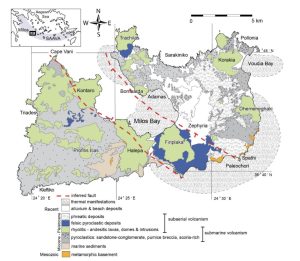
A mission across disciplines and continents Expedition log by Graduate Fellow Javiera Fuentes Guíñez Our collaborators from NKUA have done extensive work to map the geology of Milos and the surrounding seafloor. MBARI’s MOLA AUV will expand those efforts into deeper waters in Paleochori Bay, Spathi Bay, and the northwest portion of Milos Bay. Image courtesy of Paraskevi Nomikou/NKUA Beneath the warm waters that attract swimmers to the Greek island of Milos every summer, the seafloor is alive in a unique way. Gas bubbles rise from underwater vents and faults that cross the island, but scientists still don’t know much about seafloor processes in deeper waters, a crucial missing piece of the puzzle. For the next 10 days, the CoMPAS Lab team, our partners in MBARI’s Seafloor Processes Team, and our collaborators from the National and Kapodistrian University of Athens (NKUA) are headed to Milos to change that. Interdisciplinary work is embedded at the heart of MBARI’s mission. We believe that scientists and engineers working side by side are the key to advancing our understanding of a vast and changing ocean. So when NKUA Professor Paraskevi (Evi) Nomikou proposed a new collaboration with MBARI Principal Engineer Giancarlo Troni to use our lab’s MOLA AUV to help close a mapping gap around Milos, the CoMPAS Lab didn’t hesitate. The team immediately began preparing MOLA AUV for the mission ahead. Why Milos? Evi has extensive experience studying the marine environment of Greece’s active submarine volcanic arc, which includes Milos. Here, active tectonic faults and numerous underwater vents make the island a fascinating natural laboratory—and one where science has a real impact on people. Earthquakes can trigger landslides and damage homes, putting residents and tourists at risk. During these seismic events, gases may escape from the vents more violently, making the island and its surroundings even more unstable. That’s why mapping and studying this area, and sharing what we learn with local authorities, matters not only for science, but also for the community that calls Milos home and depends on lucrative summer tourism. The mapping gap In previous studies, Evi and her students dove in coastal waters to map vents from the shoreline down to about 30 meters (100 feet), while the research vessel Meteor deployed instruments to characterize vents below 80 meters (about 260 feet). But between 30 and 80 meters, the seafloor remains a mystery. It’s too deep for divers to survey and too shallow for large research vessels with bulky remotely operated vehicles to operate. When Evi watched the CoMPAS Lab team deploy the MOLA AUV in the Maldives two years ago, she knew right away it was the perfect tool for the job. The game plan The CoMPAS Lab’s mission is to develop scalable robotic technology that can be shared with our peers to advance ocean exploration and science. Milos is the perfect challenge for the MOLA AUV. This little robot is deceptively powerful, equipped with advanced sensors developed by our lab, including forward-looking sonar, cameras, lasers, and AI-assisted tools. It’s portable enough to launch and recover straight from the beach or a small boat, and then the MOLA AUV can get to work characterizing vent fields. That’s how our international and multidisciplinary team came together, drawn by a complex, active, and understudied environment that matters deeply to the people who live around it. Over the next 10 days, we’ll work to close this gap in knowledge, one dive at a time. Follow @compaslab on Instagram to discover Milos with us! Team Directory Javiera Fuentes Guíñez Graduate Fellow Collaborators TK The post A mission across disciplines and continents appeared first on MBARI. https://www.mbari.org/news/a-mission-across-disciplines-and-continents/ #milos #compaslab #auv #nkua #mbari #seafloor #bay #spathibay #paleochoribay #fellowjaviera #rss #feeds #linksharing #qwibbit
#milos #compaslab #auv #nkua #mbari

Welcome to MBARI (Unofficial) spacestr profile!

About Me

Ocean exploration and remarkable sea life. Unofficial automated fan feed. Content belongs to its respective owners; not affiliated with source publishers.

Interests

  • No interests listed.

Videos

Music

My store is coming soon!

Friends