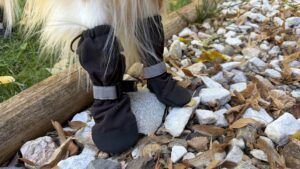
Best Winter Boots for Dogs Whether you live in a city that uses a lot of salt on its sidewalks in the winter or you just have a dog who gets cold feet in the snow, the best dog winter boots can help protect your pup’s paws. Whole Dog Journal is reader-supported. If you purchase through links on our site we may earn a commission. Whole Dog Journal does not accept money for its food and product reviews. Does My Dog Actually Need Winter Boots? Not all dogs need winter boots, but they are helpful in a variety of situations: Ice and salt: Dog boots with thick soles can help prevent chemical burns caused by walking on ice treated with salt or ice melt. Freezing temperatures: Dog boots can help dogs who have little or no hair on their feet stay warm and extend the amount of time you can walk or exercise them in the winter. Snow: For dogs with long coats, boots can help prevent snowballs from gathering in their hair. Traits We Want in Dog Winter Boots Fit and comfort: The best winter boots for your dog are ones that fit well, stay on, and are comfortable to wear while your dog is walking or running. Highly active dogs who need boots that move with them and stay on will likely do better with a sock-style bootie. Dogs who need additional traction and move at a slower pace will do well with a shoe style with a rubber sole. Regardless of the style of boot, make sure you measure your dog’s paws before purchasing. Front paws are often larger than back paws so the best size for your dog’s front paws might be different than the best size for their back paws. If that is the case with your dog, you might want to choose a dog boot option that comes in sets of two rather than sets of four. Also, if the brand you’re looking at doesn’t have a size that’s almost exactly your dog’s paw measurement, you might want to choose a different brand, as some have more variety in their sizing. Insulation: For dogs who get cold feet in the snow or freezing temperatures, choose a boot option that has insulation in them to keep your dog’s paws warm. Waterproofing: If you live in an area that gets a lot of rain or heavy, wet snow in the winter, opt for boots that are completely waterproof rather than water resistant. If the snow in your area is dry rather than wet, water-resistant boots will usually be fine, especially for short outings. Traction: For older pups or dogs with injuries or disabilities who need help with traction in the snow and ice, choose an option that has a thick rubber sole, rather than a sock-style choice without a separate sole. Read on for the best dog winter boots tested for Whole Dog Journal. Whole Dog Journal RatingProduct and MakerPriceNotes Canada Pooch Soft Shield Dog Boots$60-70 for four based on sizeSoft, flexible, insulated boots that will keep your dog’s feet warm in extreme temperatures and on snow and ice. Wilderdog Dog Booties$36 for fourA sock-style bootie with a rubber bottom for extra grip and traction. Non-stop Dogwear Contact Bootie High Dog Boots$25 for fourA thin, sock-style dog boot that stays on incredibly well, even if your dog is running and playing at high speeds. Ruffwear Polar Trex Dog Boots$47 per pairAn insulated dog boot with grippy rubber soles that will protect your dog’s feet from sharp ice, cold pavement, and salt or de-icer. Best Dog Winter Boots: Canada Pooch Soft Shield Dog Boots The Canada Pooch Soft Shield Boots offer a great balance between flexibility and protection. Credit: Jae Thomas The Canada Pooch Soft Shield Dog Boots check all the boxes for a dog winter boot: they’re insulated with a fleece lining, flexible, easy to put on and take off, and stay on decently well if sized properly. They’re also water resistant and have rubber grips on the bottoms for extra traction. These soft boots are heftier than some of the other sock-style dog booties on this list and will keep your dog’s feet warmer in freezing temperatures. These are an especially good choice for small breeds and breeds with short, single coats or low body fat who may get uncomfortably cold in extreme temperatures. Though they come in a variety of sizes, multiple sizes are often out of stock on Amazon, so you may need to purchase them directly from Canada Pooch, which means paying for shipping that would take longer to arrive than an Amazon order. Runner-up for Best Dog Winter Boots: Wilderdog Dog Booties The Wilderdog Booties are a bit boxy but are easy to use and provide good grip. Credit: Jae Thomas The Wilderdog Dog Booties feature all the pros of a sock-style dog boot—easy to get on and off, comfortable, and they stay on well—with a grippy rubber bottom that adds extra protection and traction. Though they don’t have insulation (extremely sensitive paws may do better with the Canada Pooch Soft Shield Boots or the Ruffwear Polar Trex), they offer a physical barrier between your dog’s paw pads and the ground and are grippy enough for mildly icy conditions. I wish that the shape of these boots was more contoured to dogs’ paws as they are a bit boxy with extra fabric at the corners. However, it didn’t seem to bother our tester dogs. These boots only come in 3 sizes, so dogs that are between sizes may want to size down or opt for the Non-stop Dogwear Contact High boots as they come in more sizes. Best Winter Dog Boots That Actually Stay On: Non-stop Dogwear Contact Bootie High Dog Boots When it comes to dog boots that won’t go flying at the first sign of the zoomies, the Non-stop Dogwear Contact Bootie are our top choice. High Dog Boots Credit: Jae Thomas These sock-style booties are some of the few that I’ve found that actually stay on my dogs when they’re running at full speed, hiking, and rolling in the snow in the winter. The Non-stop Dogwear Contact Bootie High Dog Boots are soft and flexible with elastic and Velcro-like closures that cinch the boot to your dog’s foot but are more flexible than traditional Velcro closures. The higher-profile design definitely helps keep them on, too. These dog boots are best suited for quick walks in cold weather, hikes, runs, or as dog snow boots for skijoring in dry, powdery snow. They’re also great at keeping the feathers on long-haired breeds clean in wet grass or light rain. However, they’re not completely waterproof and your dog’s feet will get wet if they’re splashing through puddles, or trekking through soggy, wet snow. They also don’t have any grip, so they don’t add any additional traction on slippery surfaces. It’s also worth noting that since they’re fabric with no sole, they’ll see more wear faster than other options. Despite some of the minor drawbacks, these boots are my go-to option for preventing snowballs on my Rough Collie’s feet and legs and she seems most comfortable running and hiking in them compared to other options. They also stay on the best for highly active dogs of the dog boots I’ve tested. Best Winter Dog Boots for Salt and Ice: Ruffwear Polar Trex Dog Boots The waterproof Ruffwear Polar Trex Dog Boots offer good paw protection and traction on icy surfaces. Credit: Jae Thomas If your main concern in the winter is protecting your dog’s paws from de-icer and adding additional traction on ice and slippery, wet surfaces, the Ruffwear Polar Trex Dog Boots are a good option. These anti-slip dog boots have a structured Vibram rubber sole to protect your pup’s paws. They’re waterproof, feature a small amount of insulation, and have a zip-up gaiter upper that’s meant to keep snow out—though during testing, the gaiter was too loose on my dogs to adequately keep snow out. These boots need to be sized correctly if you want them to stay on properly. Luckily, they come in sets of two, so you can buy a larger size for your dog’s front paws and a smaller one for their back paws, since most dogs have larger front paws. Ruffwear has also recently introduced a new version of these boots with improved traction, fit, and an updated gaiter closure. Winter Dog Boot FAQ How do I measure my dog for winter boots? To measure your dog for winter boots, you’ll need to measure the widest part of your dog’s paw while they’re standing and putting weight on it. Front paws are often slightly bigger than rear paws, so measure both to ensure a proper fit. Place your dog’s paw on a sheet of paper and use a pencil to mark each side. Then, use a tape measurer or ruler to check the exact measurement. Why do dogs need winter boots? Dogs need winter boots if they’re prone to cold feet in freezing temperatures, to help reduce snowballs, and to protect their paw pads from ice and salt. How do I train my dog to wear boots? When it comes to teaching your dog to wear boots, start slow with just one boot at a time. Reward your dog with a tasty treat as you put their boot on. Take them to play in the yard or for a quick leashed walk with the boot on. As they get comfortable, you can increase the length of time they wear the boot and add on additional boots. How do I stop my dog from losing their boots?To stop your dog from losing their boots, ensure you purchase the correct size. A boot that is too big will often slide off while your dog walks or runs. Ensure the boot is tightened properly before heading out on a walk. Sock-style boots typically stay on better than options with grippy soles. The post Best Winter Boots for Dogs appeared first on Whole Dog Journal. https://cdn.whole-dog-journal.com/uncategorized/best-winter-boots-for-dogs/ #winterboots #dog #dogjournal #wholedog #snow #need #dogactually #ice #shielddog #traction #rss #feeds #linksharing #qwibbit